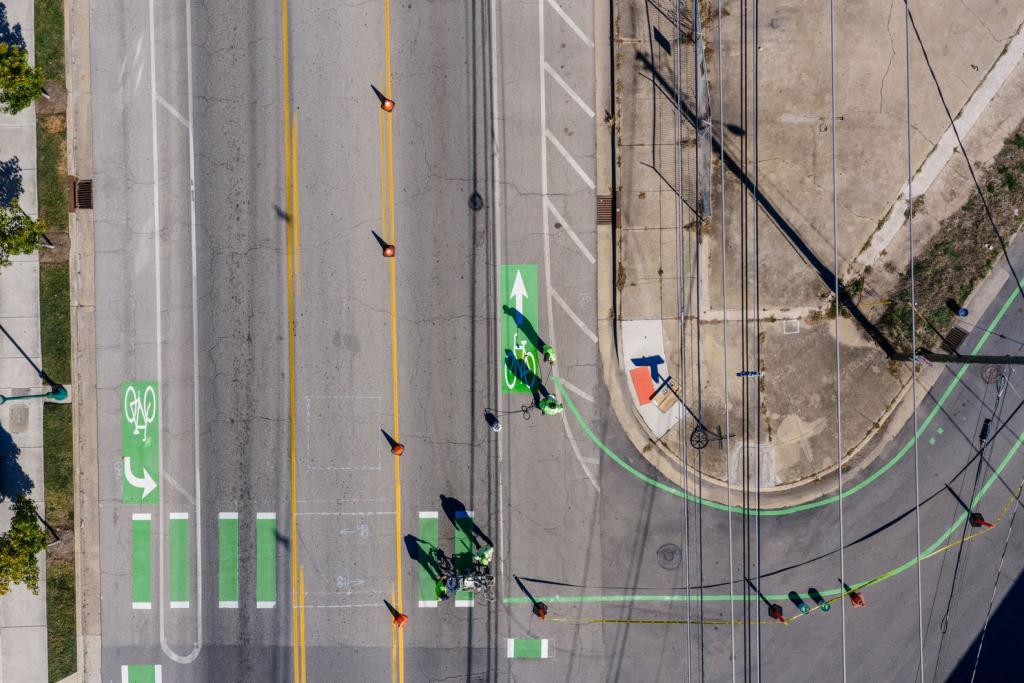
The Toronto bike lane protest that stopped Ontario's first removal crew on Tuesday night is now a full-blown standoff over who gets to decide what a city street looks like. Hundreds of cyclists swarmed Bloor Street West in Etobicoke, surrounded the construction trucks, and sent the crews home before a single pylon went down, according to The Canadian Press via CP24.
What Happened on Bloor Street
The province planned to start tearing out a stretch of protected lane of just over one kilometre, running between Clissold Road and Royal York Road. Work was supposed to begin around eight in the evening. Instead, riders gathered at Tom Riley Park, filled the lanes on both sides of Bloor, and ringed the trucks near Islington Avenue.
The trucks, which carried stacks of orange traffic cones, eventually drove away without removing anything. Organizers said the point was to send a message that ripping out the lanes makes roads less safe for everyone, according to CBC News.
It was not a one-night story. On Wednesday, advocates returned as crews lined up pylons along the lanes again, and Toronto police arrested a woman during the gathering, CityNews reported.
Queen's Park Says the Lanes Are Still Coming Out
Transportation Minister Prabmeet Sarkaria did not blink. "Work to restore vehicle lanes on Bloor Street West was scheduled to begin tonight but was halted by protesters. Make no mistake: these bike lanes are coming out. We have a clear mandate and we will deliver," he wrote on X, as quoted by the Toronto Sun.
His office has framed the whole plan as a traffic fix. A spokesperson said voters gave the government a mandate to tackle congestion that costs the economy over fifty-six billion dollars a year. The Etobicoke stretch is only phase one. The wider plan targets roughly nineteen kilometres of protected lanes on Bloor, Yonge and University, with the remaining work expected next spring.
The Legal Fight Moves to Ottawa
While riders blocked trucks, the lawyers moved too. Cycle Toronto and its co-applicants announced they will ask the Supreme Court of Canada for leave to appeal, according to The Canadian Press.
The backstory matters. A lower court judge first ruled the plan an unconstitutional risk to cyclist safety, finding the province pressed ahead even though its own advisers said it would not reduce traffic and might make it worse. The Ontario Court of Appeal overturned that decision in August, saying the judge had effectively created a right to bike lanes and strayed into policy-making.
Ecojustice lawyer Bronwyn Roe says the case is about Section Seven of the Charter, which protects life and security of the person. Cycle Toronto's executive director Michael Longfield put it bluntly: "bike lanes do not cause traffic congestion, ripping them out will put people's lives at risk."
There is a catch. The Supreme Court typically takes several months to decide whether it will hear a case, which is far too slow to save the Bloor lane, according to the Globe and Mail.
Torontonians Are Split, but Not Evenly
Here is the twist for anyone assuming the whole city is on the cyclists' side. A new Canada Pulse Insights poll for CityNews found sixty-two per cent of Torontonians support the province turning bike lanes back into car lanes on major streets, while thirty-eight per cent oppose it. The online survey covered about five hundred adult residents in September.
That gap explains why the politics are so tense. Mayor Olivia Chow's office says the city offered designs that keep both car and bike lanes intact, and some work has already restored a car lane while preserving the bike lane between Kipling and Islington stations. The province turned that offer down.
Mayoral candidate Brad Bradford has also vowed to rip out the Etobicoke lane, even though he voted for it in the past. Meanwhile, safety advocates point to city reporting that injuries on Bloor dropped after the lanes went in while cycling jumped by more than forty per cent.
What to Watch Next
Expect the Toronto bike lane protest to keep rolling. Organizers have promised to keep showing up, and the province has promised the machines will follow. The real test is whether crews can finish the first kilometre while a court request sits unanswered. For a generation that bikes, scoots and rides transit to class and work, this is a fight over whether the street belongs to cars by default. Follow more Canadian news on GenZ NewZ as the standoff unfolds.
Comments 0
No comments yet. Be the first to share your thoughts!
Leave a comment
Share your thoughts. Your email will not be published.