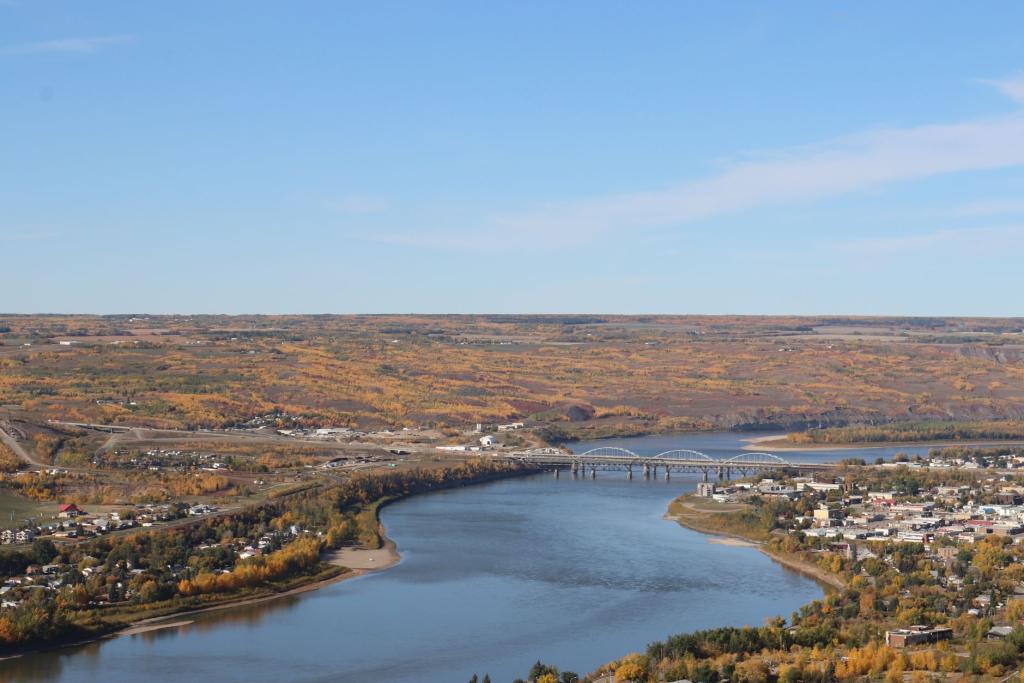
The Pacific Link pipeline just picked up a second front in its fight over who got invited to the table. On Tuesday, leaders from six Métis nations around Fort McMurray told reporters that nobody in Ottawa or Edmonton consulted them about the project, even as a First Nation is already taking the federal government to court over the very same issue.
Six Métis nations say they were left in the dark
According to the Edmonton Journal and Financial Post, Métis communities in the Regional Municipality of Wood Buffalo want a meeting with both Ottawa and Alberta. They say none of them has been consulted since talks on the project began this summer, and that no Métis leader was invited when the governments revealed details of the plan.
The leaders say Ottawa met First Nations leaders the day before the big announcement, but the Métis were not in the room. Their joint statement calls the prime minister's commitment to reconciliation "a hollow promise." Ruby Ladouceur, president of Fort Chipewyan Métis Nation, called the exclusion "shameful" and said it "definitely is not an act of truth and reconciliation."
What Pacific Link actually is
On October first, Prime Minister Mark Carney and Alberta Premier Danielle Smith stood together in Fort McMurray and listed the line as a project of national interest. According to APTN News, it is the first project to get that label under the Building Canada Act, which is built to fast-track approvals for big infrastructure.
The government says the proposed line would move an extra one million barrels of oil a day toward Asian markets, following a southern route that avoids British Columbia's North Coast and the Great Bear Sea. Canada and Alberta would share equal ownership, Pembina Pipeline is a private investor, and the federally owned Trans Mountain Corporation is leading development. Alberta has estimated the build at somewhere between thirty-five point two billion and forty-three point seven billion dollars.
The ten per cent promise
Carney said Indigenous communities would have the chance to own at least ten per cent of the pipeline, financed through federal and Alberta loan guarantee programs. He said the line was being developed "with Indigenous peoples involved from the start," and the Major Projects Office says it consulted more than one hundred and thirty Indigenous communities near or along the potential routes.
The Métis leaders say that math does not work for them. Stella Lavallee, president of Willow Lake Métis Nation, said equity ownership and co-development of pipeline conditions went only to those who were invited. Asked about the ownership stake, she put it bluntly: "Zero per cent of ten per cent is zero per cent."
A First Nation already filed in court
Last week, Cold Lake First Nations filed an application for judicial review in Federal Court. According to CBC News, the application challenges Ottawa's decision to designate the line a project in the national interest. The nation wants the court to quash the designation and declare that Canada owes it a duty to consult.
The Globe and Mail reported that it is the first legal challenge to the federal push to fast-track the project. Officials also warned in a technical briefing that legal fights should be expected. The designation does not erase the consultation requirement, since the stated goal is to finish the reviews over the next year so that construction can begin in September of twenty twenty-seven.
Not against the pipe, but against the process
Here is the twist. The Métis leaders say they are not opposed to the Pacific Link pipeline itself. Their worry is the expansion of oilsands production that the line would require, which they say means more emissions, heavier water withdrawals and the risk of spills. Ladouceur put it in simple terms: "our food sovereignty depends on healthy water."
Asked whether they would head to court too, Lavallee said it "all depends" on what a meeting with the two governments produces. "Silence is acceptance, and that's why we're not silent," she said. Ladouceur added that the problem reaches beyond one group: "anything done without us is actually against us."
Why this matters for you
The legal backdrop is the Constitution. Section thirty-five recognizes and affirms the existing rights of Indigenous peoples and names the Métis alongside First Nations and Inuit. Under a Supreme Court of Canada ruling from two thousand four, governments must consult, and if needed accommodate, when a decision could touch those rights. The Métis argue that talking to First Nations does not replace talking to them.
For Canadians in their twenties, this is a preview of how the next decade of resource politics may play out: big money, fast timelines and courtroom fights over who gets a say. Alberta says it will keep working with Indigenous communities, industry and Ottawa, and its Indigenous relations minister has met Métis leaders in the region. The prime minister's office had not commented by deadline. Follow more in our Canada coverage.
Comments 0
No comments yet. Be the first to share your thoughts!
Leave a comment
Share your thoughts. Your email will not be published.