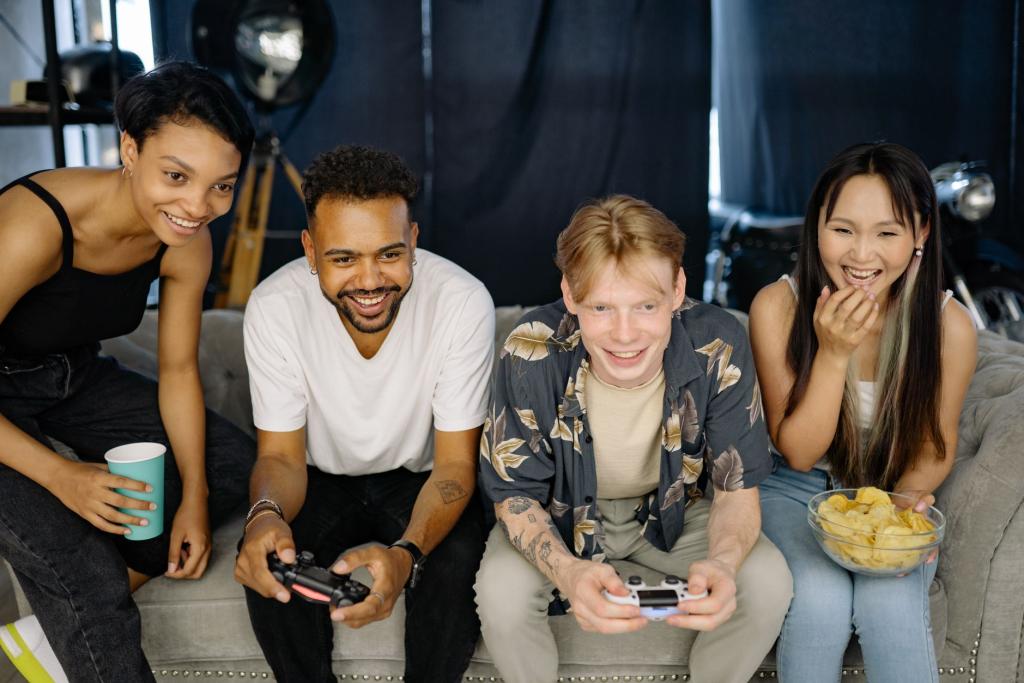
For a growing share of young players, gaming is social life, not a break from it. That line comes from a new edition of Hub Entertainment Research's annual gaming survey, and it lands because it matches how many people under thirty actually spend their evenings: logged in, headset on, talking to friends inside the game itself.
The numbers back it up. Among younger gamers surveyed in August 2026, fifty-seven percent said most or all communication with their gaming friends takes place inside a game, according to TheDesk.net's write-up of the research, which covered the findings in full. Even more striking, eighty-two percent said they use in-game chat to discuss subjects that have nothing to do with gameplay at all. The lobby has become the living room, and the match queue is the small talk before the conversation starts.
- Fifty-seven percent of younger gamers say most or all communication with gaming friends happens inside a game.
- Eighty-two percent use in-game chat to talk about things unrelated to the game.
- Forty-three percent have at least one gaming friend they have never met in person.
- Forty percent of weekly gamers first connected with someone through a game, then became friends.
Source: Hub Entertainment Research's annual gaming survey, covering more than two thousand five hundred American consumers ages sixteen to seventy-four, conducted in August 2026.
This shift did not arrive overnight. Older adults still treat games as entertainment you consume and then discuss elsewhere, but the generational split on this question is wider than ever. When gaming is social life, the usual metrics of a hangout apply: who showed up, how long everyone stayed, and whether anyone was actually paying attention. Games win on all three, because showing up is as easy as accepting an invite and the activity gives the conversation somewhere to live. This is what the shift looks like up close: gaming is social life with a scoreboard attached.
The lobby replaced the group chat
Think about how plans get made now. The group chat still exists, but it increasingly functions as a scheduling tool for the real gathering, which happens in a party lobby. Two of the report's most social findings explain why: gaming is social life that comes with built-in structure, so nobody has to decide what to do, where to go, or how much to spend. That low friction matters when a night out keeps getting more expensive and coordinating schedules keeps getting harder.
The free-to-play model supercharges this. Eighty-eight percent of gamers surveyed said they play free-to-play titles, which means joining the hangout costs nothing up front. When gaming is social life, the entry fee disappears, and roughly half of those players, forty-eight percent, said they had paid for downloadable content inside those games, which suggests the social pressure to keep up is real but arrives after the friendship, not before it. Nobody is charging cover at the door of the lobby.
- Group chat era: plan in text, travel somewhere, pay for food and drinks, talk in one long thread.
- Lobby era: drop a party invite, talk over headsets while doing something, stay as long as the squad stays, spend nothing unless you want the cosmetic.
- What moved: the casual, unstructured part of friendship, the part that used to need a couch or a bar stool.
Brands noticed the hangout moved
Where the crowd goes, the advertisers follow, and in this case the crowd seems fine with it. Sixty-five percent of respondents said branded playable advertisements feel more relevant than conventional advertising, and sixty-nine percent said branded playable content actually makes games more fun, as reported by Advanced Television, whose coverage breaks down the franchise angle. That is a remarkable stat in an era when almost every other ad format is treated as an interruption. Inside a game, the brand is part of the scenery rather than a pop-up blocking it.
Entertainment companies are responding by treating games as one node in a franchise rather than a separate product. The report points to streaming platforms promoting major game releases, and the logic is simple: when gaming is social life, the game lobby is the most reliable place to find the audience.
Among gamers who subscribe to a leading streaming service, thirty-six percent said they had already preordered or definitely intended to buy the upcoming Grand Theft Auto installment, more than double the sixteen percent of gamers who do not subscribe. Jason Platt Zolov, the Hub senior consultant who authored the study, put the strategy plainly, saying entertainment companies should treat television programs, movies and games as one story told in three places rather than three separate products competing for the same hour of attention.
Friendships that start with a respawn
The most human finding in the data may be the one about how these friendships begin. Forty percent of weekly gamers said they initially connected with someone through a game before developing a real friendship, and forty-three percent reported having at least one gaming friend they have never met in person. When gaming is social life, the lobby functions the way a dorm hallway or a first job once did: a place where proximity turns into familiarity and familiarity turns into friendship.
None of this means in-person friendship is dying. It means the definition of hanging out has expanded, the way the phone call expanded it a generation ago and the group chat expanded it after that. The skeptics who call gaming antisocial are measuring it against a version of social life that assumed everyone lived within driving distance and had the same free evening. For a generation scattered across cities, schedules and time zones, gaming is social life that actually fits the logistics of their lives. Recognizing that gaming is social life also reframes the old screen-time panic: the hours are not empty, they are occupied by friends.
- You catch up with your closest friends most often while waiting for a match to load.
- Your longest conversations of the week happen over voice chat, not over text.
- You have inside jokes that only make sense to people who were in the same lobby.
- Making plans means checking who is online, not who is free to drive somewhere.
There is a broader lesson here for anyone trying to reach young audiences, whether selling a show, a sneaker or a cause. The Hub data suggests the winning move is not to drag gamers away from the game toward your content, but to show up inside the place where gaming is social life and become part of the hangout. The generation that grew up with a controller in hand did not abandon friendship. They just moved it somewhere with better lighting, no cover charge, and a respawn button.
If you want to understand how young people socialize in 2026, start with the premise that gaming is social life, and the rest of the data falls into place. deep dives into their culture keep pointing to the same place, and the record crowds logging into gaming platforms are the receipt.
Comments 0
No comments yet. Be the first to share your thoughts!
Leave a comment
Share your thoughts. Your email will not be published.