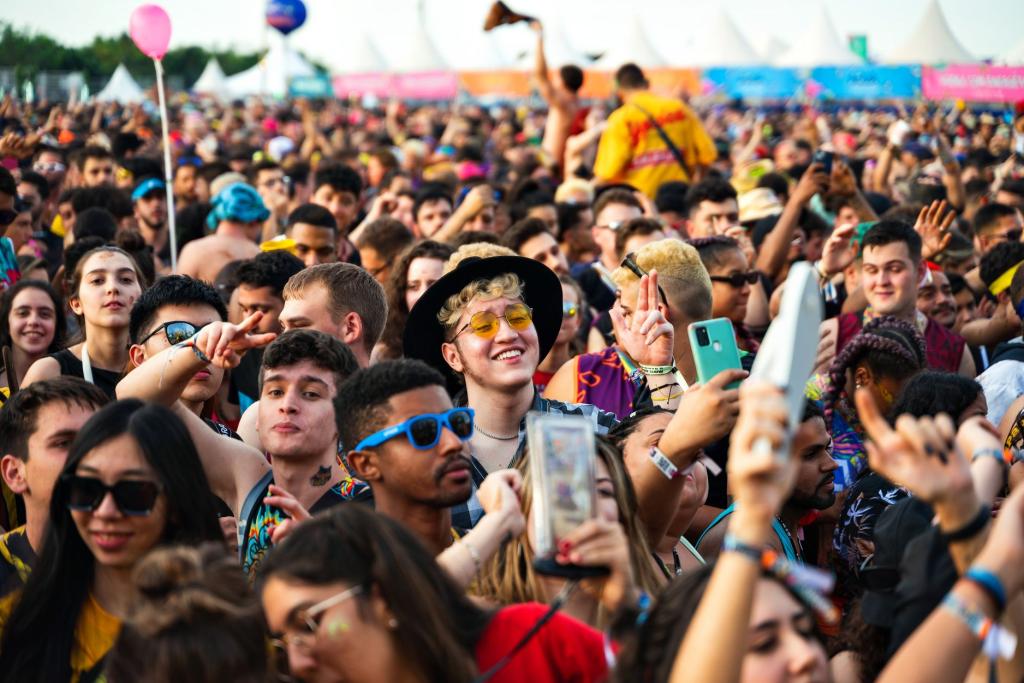
Young adults are planning to go out more, not less — and the Third Space Boom is the name the industry has given to the rush back to real-life gathering. According to a new analysis of Eventbrite's 2026 Social Study, published this week by Conference News, 79 percent of 18-to-35-year-olds plan to attend more events this year, with local connection doing most of the pulling.
The numbers come from a survey of 4,051 people in the United States and the United Kingdom, carried out by the research firm dcdx in the summer of 2025. Nearly nine in ten respondents want events that connect them to their local community, and three-quarters of Gen Z say in-person experiences matter more to them than digital ones. At the same time, close to half are actively limiting their screen time, and roughly three-quarters say they are more likely to show up for an event tied to a cause they care about.
The loneliness paradox
The Third Space Boom looks contradictory at first glance. About a quarter of 18-to-29-year-olds report feeling lonely, yet the same generation is hunting for plans with unusual determination — the study frames it as a generation actively seeking connection to combat isolation. The loneliness is real, but so is the response: rather than withdrawing, young adults are trying to rebuild the social muscle the phone era weakened.
That instinct is already visible in adjacent corners of culture. A recent survey found most Gen Zers identify with soft hermitting, but the main reason was money, not mood — a finding covered in our earlier look at the stay-home trend. Put the two studies side by side and a clearer picture emerges: young people are budgeting their social lives, and when they do spend, they want the evening to count.
Off-script nights and soft socializing
What counts has changed. The study's Reset to Real theme found that 79 percent of young adults value spontaneity over a perfect plan, and respondents are 44 percent more likely to open their wallets for a venue that feels one of a kind. Eventbrite's own platform data backs the appetite for the unexpected: forest bathing events rose by a quarter across the two countries, while Afro-music rooftop parties in the UK surged by more than fourfold. A third trend, soft socializing, may be the most Gen Z of them all — a majority say they prefer it when socializing is not the main focus, opting for flower-arranging classes, puzzle competitions and music bingo nights where connection happens sideways. Attendance at flower arranging events jumped 282 percent in the UK, puzzle contests climbed 151 percent in the US, and music bingo attendance rose 149 percent.
Discovery has gone underground too. More than half prefer under-the-radar events, and nearly seven in ten rely on personal networks and word-of-mouth to find them. Eventbrite's own write-up of the study frames the shift as gatherings offering agency, authenticity and connection that feels earned rather than engineered.
Why it matters
The practical upshot for readers is simple: the best nights are getting cheaper to find and harder to market. Organizers are being told to ditch the polished rollout and design for discovery instead — secret lineups, after-hours venues, mash-up formats that blend wellness with music or crafting with cocktails. If the study is right, the invitation that spreads is the one a friend forwards, not the one an algorithm boosts.
For brands and organizers, the Third Space Boom is both an invitation and a warning. Separate research from EventTrack found that 61 percent of consumers felt more inclined to buy after interacting with a brand at an event — but analysts at Boston Experiential Group, part of the emc3 Collective, caution that holding attention once people show up is getting harder. Every activation still competes with a gig, a run club or an evening on the sofa.
The winners will be the events that feel human rather than manufactured. From record crowds at the Busan festival to young collectors outspending older generations on art, the throughline is the same: Gen Z will leave the house for something that feels unrepeatable. Less curated, more real — that is the era the data says we are entering.
Comments 0
No comments yet. Be the first to share your thoughts!
Leave a comment
Share your thoughts. Your email will not be published.