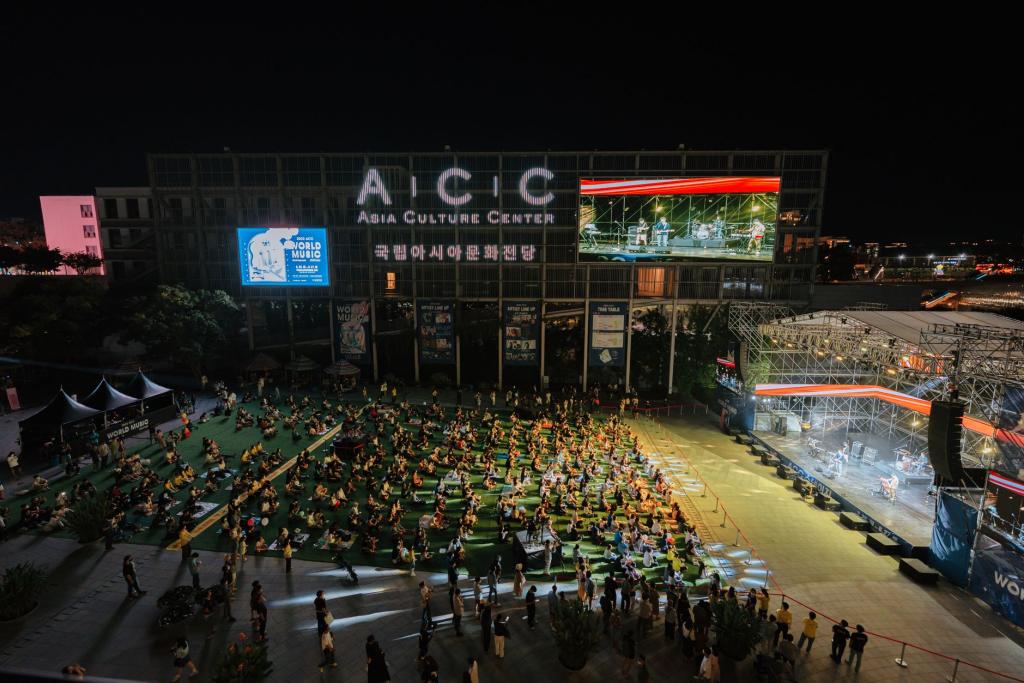
The Busan festival closed its 31st edition on October 15 after nine days of screenings, ceremonies, and political arguments that followed the event from start to finish. The closing ceremony at the Busan Cinema Center in Haeundae-gu drew the curtain on Asia's largest film festival with record attendance, a unanimous jury verdict for the top prize, and two controversies that put the festival at the center of wider debates in South Korea and beyond.
Iranian director Majid Majidi took the Grand Prize of the Busan Awards competition for "Bread and Books," a film about a schoolteacher in a drought-stricken village fighting to keep a school meal program alive. The winner was announced by jury president Zhang Yimou, who said the decision had been unanimous and described the film as the closest thing to the ideal he carried in his heart. Majidi, known internationally for "Children of Heaven," dedicated the award to his family and the film's crew, and told the audience that the public is the true protagonist of cinema, according to STARNEWS, which translated reporting from NEWSIS.
The award matters beyond prestige. Busan has been newly accredited as an A-list festival by the International Federation of Film Producers Associations, and that status makes the Grand Prize winner eligible for submission to the Academy Award for Best International Feature Film. The prize also includes a cash award of fifty million won. The Busan Awards competition, introduced last year, featured 13 films from across Asia this year.
A festival that broke its own records
Organizers screened 316 films over the festival's nine days. The official selection held 247 titles from 59 countries, including 93 world premieres and 10 international premieres. Ticket sales passed two hundred thousand admissions, the best showing since 2015, and total attendance across screenings, talks, and outdoor events came in about forty thousand ahead of last year's milestone 30th edition.
Community BIFF, the audience-programmed strand in the Nampo-dong district, drew more than one and a half times as many visitors as last year. BIFF Everywhere expanded to a record 18 locations, among them Buddhist temples, traditional markets, and a National Assembly building in Seoul. The Asian Contents and Film Market ran October 10 to 13 at BEXCO under the theme "Core and Expansion," counted more than thirty thousand visitors, and registered 3,158 participants from 1,266 companies in 58 countries. ACFM director Ellen Y.D. Kim told Variety that funding remains the market's biggest problem, saying public support has not kept pace with its growth and that national funding has stayed flat for two years.
Politics takes center stage
Even before the festival opened, "The Assassin(s)" had become a national argument. The Korean historical thriller opened on September 23 and passed 2 million admissions in eleven days, according to the Korean Film Council, making it one of the country's biggest commercial hits of the year. At the same time it drew sustained criticism from conservative groups and lawmakers over scenes suggesting the Korean Central Intelligence Agency may have been involved in the 1974 shooting that killed first lady Yuk Young-soo during an attempt on President Park Chung-hee's life.
The dispute hit the festival directly. On October 2, distributor Hive Media Corp. said the film's cast and crew would skip all Busan events, citing safety concerns, and the Busan Film Commission canceled a planned public screening. Advertising partners paused campaigns featuring the stars. But festival jurors and industry figures pushed back in defense of the film. Some Busan jurors argued that fiction is fiction, and filmmakers attending the festival said audiences, not politicians, should judge artistic works, as reported by the Korea JoongAng Daily. Singapore's film festival reaffirmed its decision to screen "The Assassin(s)" as its opening film on October 21.
The closing ceremony brought a second political moment when Majidi used his acceptance speech to speak about war and the Iranian people. He recalled losing his mother a few months before starting the film and called her the hero of his life. He then dedicated the honor to Iranians living under war and oppression, saying the people of Iran had endured nearly forty-eight years of sanctions and pressure without surrendering. He claimed more than five thousand people had died in a recent conflict, said all cities in his country had been attacked and bombed, and described a village school struck on the first day of the war, where innocent students were harmed and some bodies had not been found. He asked what crime his nation had committed, saying Iranians simply wished to live independently, and ended by saying he wished for a world without war.
Other honors and what comes next
The rest of the Busan Awards went to filmmakers across the region. Li Wenchan won the Directing Award for "For the Sake of Being Ordinary," Edi Chahyono took the Jury Special Prize for "My Mother," and the Acting Award went to Zhou Shun for "Loneliness at First Meeting" and Himeno Kasun for "Satoko Is Always." The New Currents Award went to Shashank Walia's "Birds in the Dark," with a special mention for Lim Ha-yeon's "Taeju on That Day." Presenting the Acting Award, Jang Dong-gun told the winners he still feels fear and excitement in front of the camera after more than thirty years as an actor, and urged them to keep going without losing themselves.
With A-list accreditation, the Busan festival now sends its top winner toward the Academy Awards race, and its jury choices will draw attention well beyond the waterfront in Haeundae.
More from genznewz: Jailer 2 Smashes Tamil Box Office Records on Opening Day and Ball Hog Aesthetic: TikTok's Designer-in-Disguise Trend.
Reporting for this article draws on STARNEWS, Variety's festival takeaways, Soompi, and the Korea JoongAng Daily.
Comments 0
No comments yet. Be the first to share your thoughts!
Leave a comment
Share your thoughts. Your email will not be published.