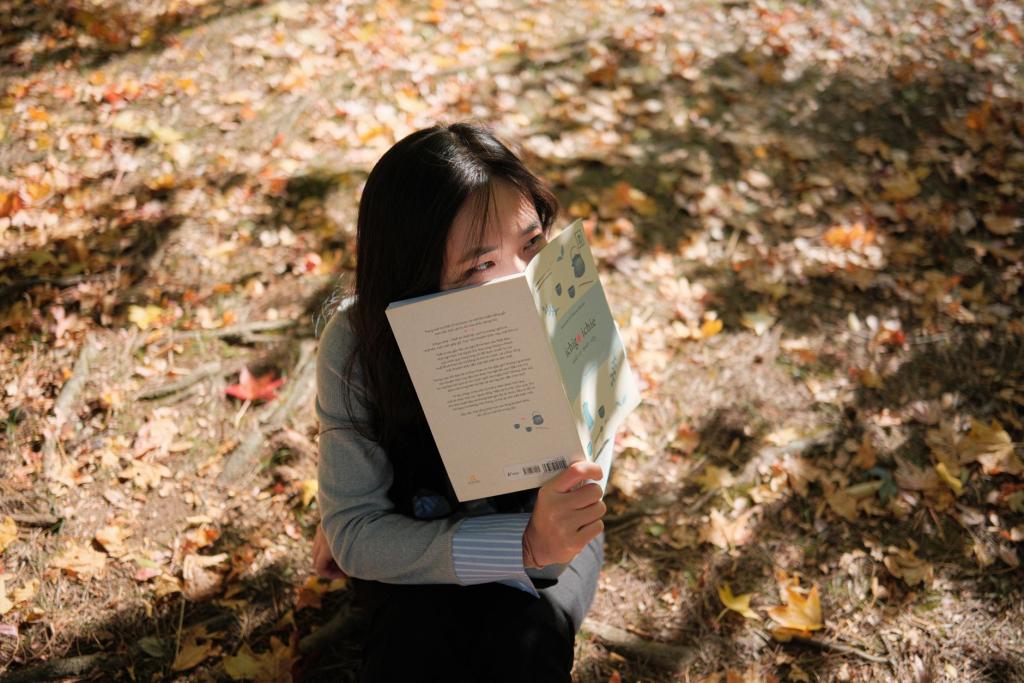
What slowing down actually looks like
September has a way of making everyone feel behind. The school year starts, summer plans end, and January's energy comes back around as a fresh push to optimise every hour. This year, a growing number of people are refusing the push. They are calling it the Slow September trend, and the idea is plain: treat this month as a time to slow down instead of speeding up.
The movement picked up attention after the Guardian highlighted it as an answer to the culture of constant self-optimisation. Rather than treating the end of summer as a cue to reset and grind harder, the Slow September trend asks people to take a deliberate step back and question whether every minute really needs to be measured, improved, or turned into a side hustle.
What makes it different from most lifestyle moments is that it comes with no programme to follow. There is no app to download and no streak to protect. It is closer to a mood: leave some evenings unplanned, let a hobby stay just a hobby, and stop treating rest as something you have to earn. For anyone who has spent years colour-coding calendars and tracking steps, that almost counts as radical.
Heejung Chung, a professor of work and employment at King's College London, said in the Guardian that digitisation has made everything more intense. "In the age of digitisation, from work to socialising, we are seeing everything intensify," Chung said. "There is a creeping set of collective expectations that we can do everything, especially women, and we need to change it." The point is that over-scheduling is not just a personal habit; it is a shared norm that keeps raising the bar for everyone.
That lands because so many people are running on fumes. The Guardian's report pointed to figures from Mental Health UK showing that up to ninety percent of adults were at risk of burnout over a recent twelve-month period. When nearly everyone feels fried, deliberate idleness starts to look less like laziness and more like common sense.
The science behind doing nothing
There is real neuroscience underneath the Slow September trend. When the brain is not locked onto a specific task, it switches on the default mode network, a set of brain regions that stay busy during idle time. Writing about the science, the tech site iHaveAPC described how the network keeps processing problems in the background, sorts and stores new memories, and helps regulate emotions.
The upshot, according to that report, is that people who build unstructured rest into their routines tend to recover from stress more fully, come up with more creative solutions, and burn out less often than people who push through a structured block after another. Even rest has been colonised by optimisation culture, measured out in timed power naps and guided relaxation sessions, and the Slow September trend pushes back against that too.
None of this means quitting a job or going off grid. It means protecting the kind of downtime where the mind can wander without a timer running: a long walk, a boring Sunday, an evening with no plan. The brain does some of its best work precisely when it looks like nothing is happening.
How to try it for the rest of the month
September is already well past the halfway point, but that still leaves plenty of time to test the idea. Pick a single day this week and change nothing on the calendar, but add nothing either; let the gaps stay. Eat a meal without a screen in front of you. Take a walk without earbuds and notice what your brain does with the quiet. If you catch yourself opening a habit tracker to log the walk, that is the optimisation instinct talking, and the point is to ignore it for once.
At work, cancel a meeting that could have been a message and leave the freed slot deliberately empty. If you manage people, model it: say you are logging off on time, then actually do it. Always-on availability does not change because someone quietly rests; it changes when enough people make rest visible.
For parents, the experiment is simpler still: leave a weekend afternoon unscheduled and let boredom do the entertaining. Kids who get the chance to be bored tend to invent their own games, and that boredom does developmental work no enrichment class can replicate.
The Slow September trend will probably fade like every lifestyle moment does, replaced by some new slogan next month. That is fine. The point was never the label. It was the permission to spend a month noticing what happens when you stop trying to make every hour count. What happens, according to the research, is that ideas come easier, moods stay steadier, and the body gets a break. You can read more on the movement's cultural roots in Daily Waffle's coverage of the Slow September trend. For a counterpoint on how work culture keeps pushing the other way, see our pieces on the report on Sunday work creeping back into the week and what happens when AI productivity rises at work. And if rest is really a brain-body project, the science on the link between gut bacteria and sleep makes a good companion read.
Comments 0
No comments yet. Be the first to share your thoughts!
Leave a comment
Share your thoughts. Your email will not be published.