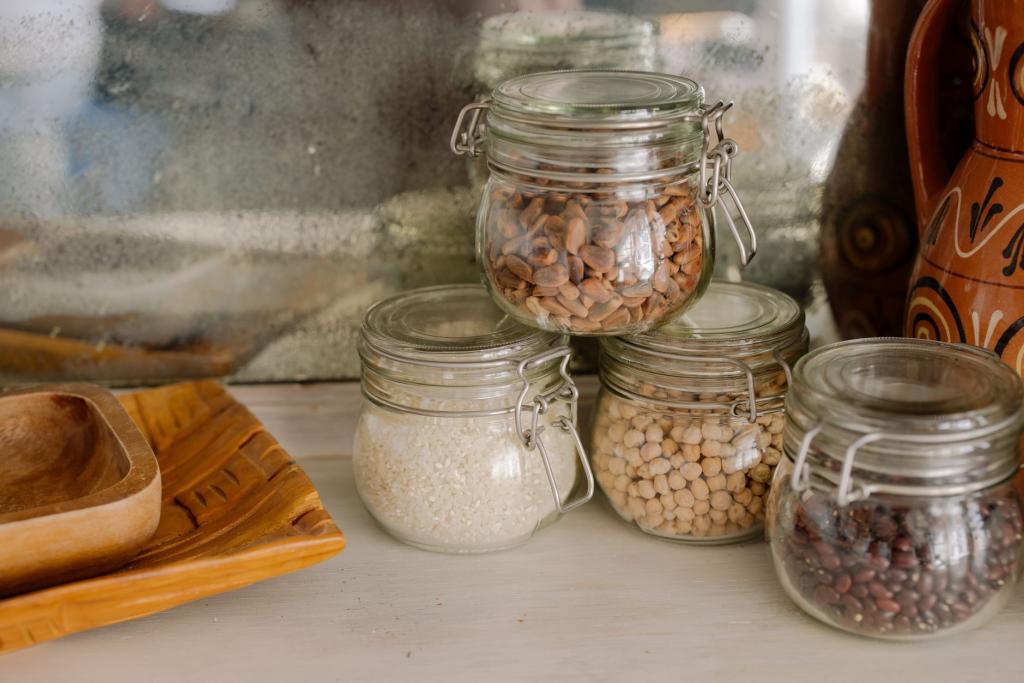
Somewhere in your kitchen sits a bag of dried beans you bought with big plans and a can of corn that has survived multiple moves. According to Brian Vines, marketplace reporter for Consumer Reports, that forgotten pantry stock is the cheapest grocery run you will make all year. His advice is simple: eat down the house before you write a shopping list.
Vines has a name for the strategy: eating down the house. "Now it's time to start eating those things that you've been banking on. So before I'm going grocery shopping, I'm exhausting every dried bean that's been in there and every can of corn I have," he told USA Today. The idea is older than the name, he said, but with food prices climbing again, it lands differently now. The whole approach flips the order of operations: shop the kitchen before you shop the store.
Why the receipt keeps getting longer
The U.S. Bureau of Labor Statistics said groceries cost 2.2% more this August than a year earlier, and surveys keep finding shoppers borrowing from relatives or putting food on credit cards they cannot pay off the following month. Cooking at home still beats delivery apps and eating out, Vines said, but only if the shopping is done right: "But cooking at home in itself cannot save you money if you're not doing the right things with your shopping."
Relief is not obviously on the way. At a briefing hosted by FMI, the Food Industry Association, experts warned that grocery inflation is set to accelerate as rising fuel costs wear down retailers that have held price increases in check through much of the year, according to Grocery Dive. Diesel prices recently hit a record of more than six dollars a gallon, per J.P. Morgan data cited in the coverage, and the Iran war has already added more than one hundred thirteen billion dollars to American fuel costs since late February, according to a tracker from Brown University's Watson School. Cal Poly agribusiness professor Ricky Volpe told the briefing he expects food price inflation to "tick up somewhat for the last quarter of 2026," landing near an annual pace of about 2.7% for the year.
Eat down the house first
The pantry sweep is where Vines starts. To eat down the house, take stock of every shelf before buying more, then build meals around what is already home. Vines estimates that shopping smart, pantry included, can claw back as much as five thousand dollars a year. Before writing a list, inventory what is already home and build meals around it. Canned tomatoes, rice, lentils, and opened pasta boxes become the starting lineup instead of the food that expires quietly in the back of the cupboard. It also cuts waste, since you use up what you already bought instead of letting it age out.
Next, plan around the weekly circular instead of planning around cravings. Vines does not dash to the store mid-prep for a missing ingredient. "We're just being a lot more intentional about what we're going to eat for the week," he told USA Today. "Think about your weekly food spend or your monthly food spend and start early." Pick a few dinners that share ingredients, check what is on sale, and let the circular shape the menu rather than the other way around.
Outsmart the store layout
Stores run marketing plays most people never notice, according to Ellen Van Loo, an associate professor of agricultural economics at Purdue University who studies how shoppers make decisions. Eggs labeled hormone-free sound premium, she told USA Today, yet U.S. rules bar hormones in egg production entirely, so the label buys you nothing.
Her counter-moves are simple. Compare serving sizes and package weights, because tall boxes can hide extra air. Order groceries online for pickup so the list stays the list and impulse buys never make it into the cart. And scan the whole shelf instead of grabbing at eye level, because manufacturers pay for that placement. "It's good for consumers to not limit yourselves to eye level," she said. "Know that there is a reason why it is on eye level and it's not to make it ... the cheapest product or the healthiest product."
Make the savings stick
The throughline from both experts is intention: Vines told USA Today that shoppers are getting far more deliberate about food spending because, unlike rent or a mortgage, groceries are among the few budget lines where real money can be clawed back.
A pantry-led routine pairs well with other budget defenses. If subscriptions are quietly draining your budget, our Amazon Prime price hike survival guide walks through moves that trim monthly bills, and the Fed rate hike money moves piece covers how to keep more of each paycheck. For the full expert rundown, read the original USA Today report and Grocery Dive's account of the FMI briefing. The beans are already in your kitchen, and they are already paid for.
Comments 0
No comments yet. Be the first to share your thoughts!
Leave a comment
Share your thoughts. Your email will not be published.