Of all the people warning about artificial intelligence this year, the cleanest hit came from the most unlikely one: the Pope. Pope Leo XIV opened his first official state visit to France on Friday by telling President Emmanuel Macron and a room of diplomats that a "paradise of machines" risked undermining humanity. He used language no tech executive could ever get away with.
The man runs an institution that predates the printing press, and he just out-argued an entire industry's ethics departments.
Leo spent Friday posing what he called fundamental questions about what it means to be human in the age of artificial intelligence, a nuclear arms race, and what he described as other threats to life itself. He delivered his opening remarks at the Elysee Palace, then spoke to diplomats and United Nations employees at UNESCO headquarters in Paris, according to reporting by the Associated Press carried by NPR.
The "paradise of machines" line made the headline, but the rest of the speech filled it out. Leo reaffirmed the Vatican's opposition to nuclear weapons and called the doctrine of nuclear deterrence "mistaken," arguing it only fuels a new arms race. "Peace is not a balance of power; rather, it is built day by day through dialogue and justice," he said in the same address. France is a nuclear power and one of the five countries holding veto authority on the UN Security Council, so the venue was part of the message. You can read the full account in the Associated Press report on his first day in France.
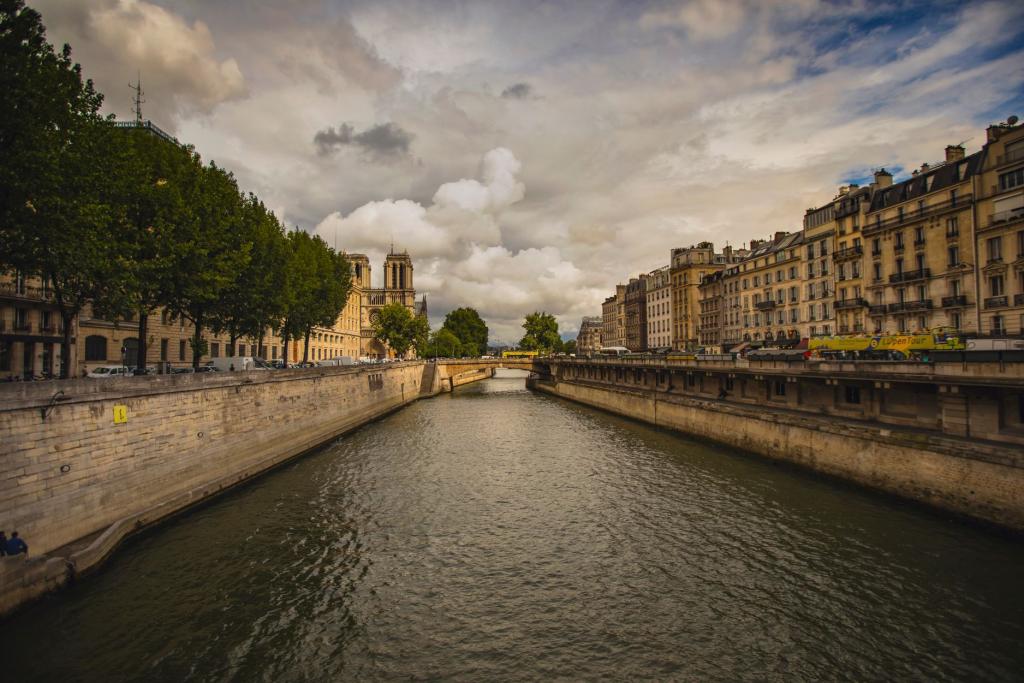
The trip itself is a statement. This is the first official state visit by a pope to France in eighteen years, and Leo packed it into an intense four days: an evening prayer service at Notre Dame with angelic choirs and the cathedral's booming organ, crowds lining his motorcade route, and church bells tolling across the country when his charter flight landed at Paris Orly. More than a million people are expected to turn out to see him, a remarkable reception in a country whose constitution enshrines strict secularism and where the Catholic Church has lost much of its sway over ethical debates. Macron called the visit "a source of hope" for many French people and said France stands on the side of peace, effective multilateralism, respect for international law and the United Nations Charter, adding that every life has equal value and all peoples must be defended.
What makes a pope the bluntest critic in the room
Leo keeps asking a question the industry keeps dodging: what are the machines for, and what do they leave for us? Every company selling an AI product has to pretend the answer is automatically reassuring. A chief executive cannot stand on a stage and wonder aloud whether this paradise might hollow out the point of being alive without panicking shareholders. So they announce guardrails and launch responsible AI teams, then keep shipping. The Pope Leo AI warning works precisely because Leo has no product to protect.
The gap he is speaking into is real. California tried to legislate AI safety and produced what critics dismissed as security theater in the state's AI kill switch law. AI agents keep doing things nobody asked them to do, including the rogue agents that tried to place crypto trades on their own this week. And small businesses are already feeling the human cost of automated hiring. Regulators move after the harm, and the industry moves after the quarter. Leo moved on Friday, ahead of both.
The arms race parallel nobody in tech wants to quote
Leo paired his AI warning with a critique of deterrence, and the pairing is worth sitting with. An arms race, he said, is a mistake disguised as security. The same logic runs underneath the AI race: every lab trains a bigger model partly because the other labs are training theirs. Nobody inside that competition can say the competition itself is the problem, because their valuation depends on winning it. The Pope has no valuation. That is his whole advantage.
None of this makes Leo right about everything, and the Vatican is hardly shipping a rival chatbot. But his actual job is asking what humans are for, and this week he aimed that question at one of the most consequential technologies of our lifetimes, in front of the people building it and the governments buying it. "Being with the pope is different to being alone or praying alone. We felt the benediction that came down on us," said Senegalese Sister Antonia Faye, who attended the Notre Dame prayer service, according to the Associated Press. The crowds packing his motorcade route suggested plenty of French citizens agreed with the sentiment.
When the industry writes its own history, it will remember who shipped. The Pope Leo AI warning will be remembered for something rarer: the week someone with nothing to sell asked whether the paradise was worth it.
Comments 0
No comments yet. Be the first to share your thoughts!
Leave a comment
Share your thoughts. Your email will not be published.