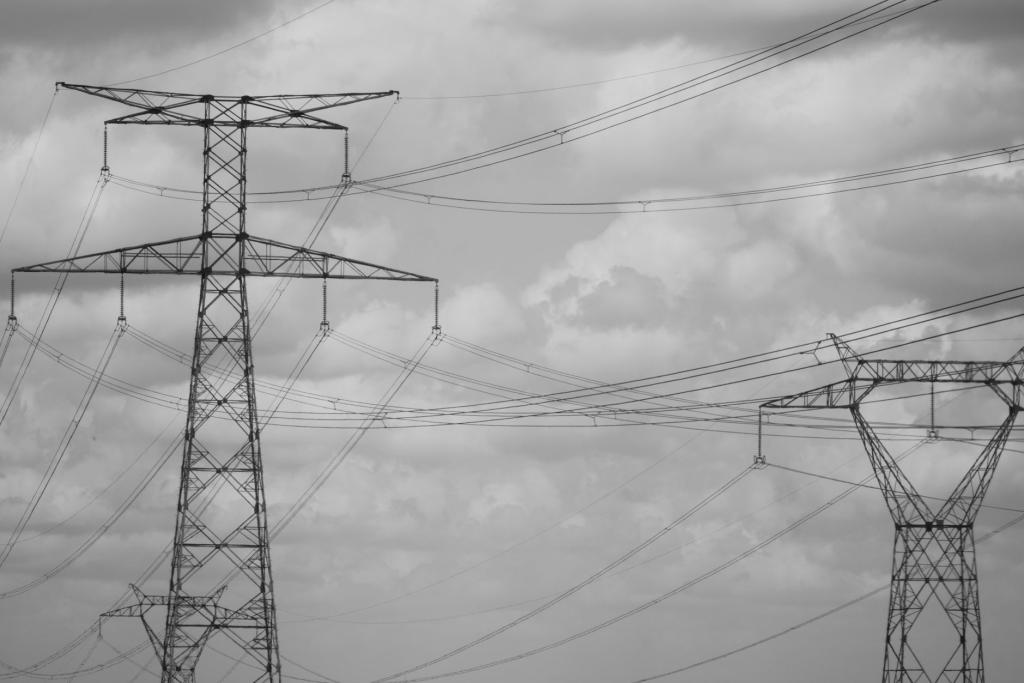
The Texas data center ghost demand has officially hit a wall. On September 21, Governor Greg Abbott ordered the Texas Commission on Environmental Quality to stop issuing permits sought by data centers until two audits are finished. No state agency may move a data center project approval forward until the Electric Reliability Council of Texas and the Texas Water Development Board have the information they need to evaluate it, according to the governor's office. The order came seven weeks after Abbott directed the Public Utility Commission of Texas and ERCOT to audit every large load waiting to connect to the state grid. Together, the two moves freeze what Reuters has called it as the fastest-growing region in the world for AI and cloud server warehouses.
The numbers that forced the freeze are startling. Requests from data centers and other large electricity users to connect to the Texas grid climbed from about 48 gigawatts in 2023 to more than 474 gigawatts, according to a Reuters review of ERCOT documents and the governor's office. Roughly 90 percent of the new requests come from data centers, and the total is more than five times ERCOT's record peak demand.
Outside Texas, large-load requests at ten big utilities across the Midwest, Mid-Atlantic and South reached about 270 gigawatts, Reuters found, part of a nationwide total topping 700 gigawatts. That is more than ten times current estimates of how much power American data centers actually consume. Phantom load is the polite name for it; the industry calls it ghost demand. It is a different bottleneck than the one in Big Tech's push to feed data centers with nuclear power, but the two stories are colliding over the same AI buildout.
The dispute comes down to the gap between the queue and what will ever be built. A developer shopping for a site often asks several utilities for power at several locations at once, so a single project can occupy multiple queues. Other filings have no financing, no land, and no customer signed on. Reporting practices differ as well: some utilities count only signed contracts, while others tally early inquiries. People in the power industry call the difference "ghost demand," and Texas officials say they cannot plan transmission lines and power plants around numbers that may never materialize. "When you don't know what is real, you really don't know how to build the infrastructure for it," Public Utility Commission Chairman Thomas Gleeson said at an industry conference in March.
Making the queue pay for itself
Texas started answering its ghost demand problem before the freeze. In 2025 the legislature passed Senate Bill 6, ordering the PUC to protect retail ratepayers from the cost of transmission built for data centers. On September 18 the commission issued its final rule: any customer asking for 75 megawatts or more at a single site must pay a flat $100,000 study fee, submit officer-attested technical disclosures, and post financial security of $50,000 per megawatt of requested peak demand before any interconnection study begins. The security is calculated on gross contracted peak demand, White & Case reported, so a project cannot shrink its bill by pointing to backup generators it owns. A customer that walks away after transmission capacity is allocated forfeits a fifth of the posted security. That is the state's filter for ghost demand: only projects that are real will risk the deposit.
The rule aims to do what utilities in other states have already demonstrated. After Exelon imposed stricter collateral requirements, its tally of high-probability data center demand fell about 40 percent to 11 gigawatts, the company said in an investor presentation on July 30. AEP Ohio's pipeline dropped by more than half after the state introduced data center study fees. "The entities that rushed into the space, because there was a sort of pot of gold, are maybe now learning the hard way just how difficult some of this is to actually construct and bring online," said Daniel Farris, a lawyer at Foley & Lardner who advises data center developers and hyperscalers, in the Reuters piece.
The conditions for getting back in
Abbott's September 21 letter takes the ghost demand fight further than the PUC rule. To resume permitting, data center sponsors must satisfy six conditions: absorb the full cost of dedicated grid infrastructure, show their projects will lower residential electric bills rather than raise them, clear the ERCOT and water board audits, prove they will not drain water that local communities need, file mandatory electricity and water consumption reports, and comply with local setback ordinances. The governor also signaled he will ask lawmakers in the next legislative session to strip state tax exemptions and economic development incentives from projects that fail the test.
The environmental quality commission must file a compliance report by October 19. ERCOT expects to finish its audit around December 10.
Water is the second front in the ghost demand crackdown. On September 14 Abbott directed the Texas Water Development Board to enforce mandatory water-use reporting for data centers and to coordinate joint resource assessments with ERCOT. Local resistance has been building for months: a Texas Tribune investigation found at least 335 data centers already operating in Texas, second only to Virginia, and residents near proposed sites have packed hearings to complain about noise, heavy water use, and strain on rural wells. One planned campus near Amarillo, from a company tied to former Governor Rick Perry, could eventually require up to 11,000 megawatts, enough for millions of homes, according to WebPro News.
Texas is not acting alone. New York froze data center permits in July and Pennsylvania tightened permitting rules in August, according to reporting on the Abbott order. Analysts expect developers to accelerate site searches in Virginia, Georgia, Arizona and other states with clearer rules. As Big Tech's planned AI data center spending tops $700 billion this year, the fight over who pays for the wires is only starting, even as the industry keeps arguing about how fast the AI buildout should move. Every state now wants a way to tell ghost demand from real load before it builds for it. Texas has become the first major American data center hub to freeze new grid connections, according to Reuters. Whether the Texas data center ghost demand is mostly real will be settled by December, when ERCOT expects to finish the audit.
Comments 0
No comments yet. Be the first to share your thoughts!
Leave a comment
Share your thoughts. Your email will not be published.