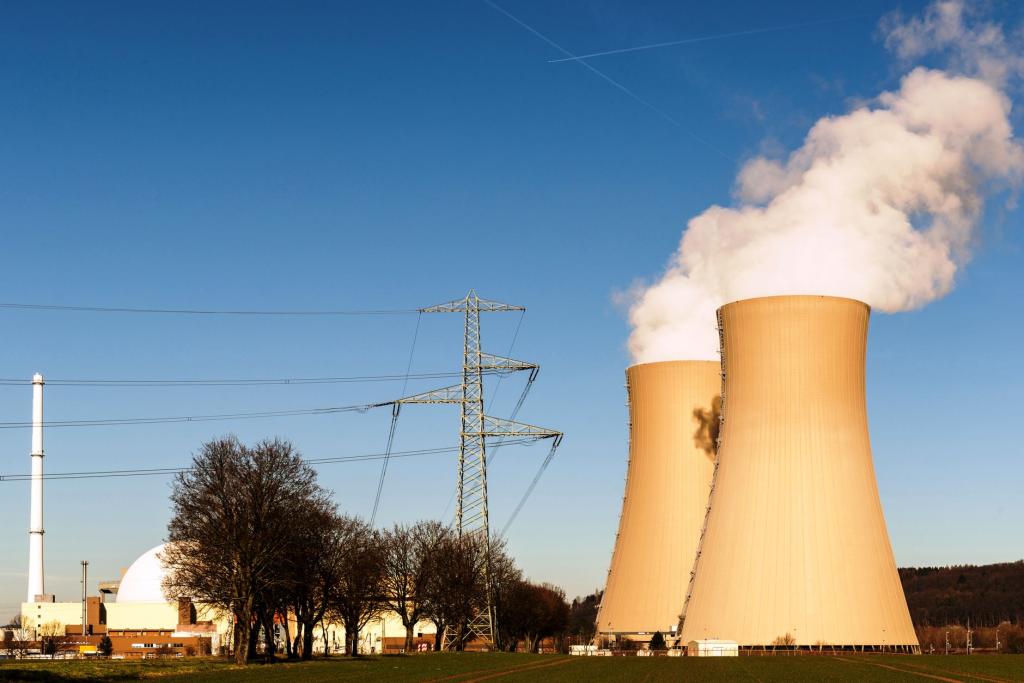
On September 16, a startup called Blue Energy submitted the first part of a construction permit application to the U.S. Nuclear Regulatory Commission for a planned gas-to-nuclear power plant at the Port of Victoria, Texas, built to feed a nearby Crusoe AI data center campus. The filing is the latest sign of big tech going nuclear: the company wants permission to start foundation work for its first small modular reactor (SMR), and it asked regulators to approve an unusual staged approach that builds the natural gas portion first and then adds nuclear reactors using much of the same equipment. World Nuclear News reported the filing, which also included a nearly 300-page environmental report.
The project is aimed at delivering up to 2.5 gigawatts of total capacity, with gas turbines supplying the first power later this decade and up to five GE Vernova Hitachi BWRX-300 reactors following around 2032, subject to a final investment decision in 2027. Blue Energy told regulators the plant would be project-financed rather than paid for by utility customers. Chief executive Jake Jurewicz called the filing a major step toward what the company describes as the world's first gas-to-nuclear power plant. Blue Energy, founded in 2023 out of MIT's nuclear science and engineering department, has raised more than $400 million, including an investment from Constellation Technology Ventures.
Why AI's power problem pushed tech toward atoms
The appeal is supply. AI training clusters draw electricity at a scale far beyond conventional computing, and industry forecasts suggest U.S. data center electricity use could roughly triple by 2035. Connecting a big new facility to the grid in major regions can take years, with interconnection queues in some places stretching toward the better part of a decade. Nuclear plants produce steady output around the clock without carbon emissions during operation, which matters for data centers that cannot tolerate downtime. That is why big tech going nuclear is no longer a thought experiment but a procurement strategy.
The deals stacking up
Microsoft is backing the restart of the Crane Clean Energy Center in Pennsylvania, formerly Three Mile Island Unit 1, under a 20-year agreement with Constellation Energy, another entry in the story of big tech going nuclear. The plant's 835 megawatts of output is slated to return to service in 2027, the first time a retired American nuclear plant has been brought back to life to serve a single corporate customer.
Meta moved earlier, in January 2026, with a package of agreements with Vistra, Oklo and TerraPower covering up to 6.6 gigawatts by 2035, the largest single commitment in big tech going nuclear so far. The Vistra portion secures up to 2.6 gigawatts from three existing plants in Ohio and Pennsylvania, with purchases beginning in late 2026, according to Morningstar's account of the announcement. Oklo, an advanced nuclear company once chaired by OpenAI's Sam Altman, is developing a 1.2 gigawatt reactor campus in Pike County, Ohio, with its first reactor targeted around 2030. TerraPower, backed by Bill Gates, is developing Natrium reactors with first units expected as early as 2032. Meta said the agreements make it one of the largest corporate buyers of nuclear power in American history, enough energy to cover the consumption of about 5.4 million homes.
Amazon took a different path at the Susquehanna Steam Electric Station in Pennsylvania, buying the Cumulus data center campus next door so it can draw up to 960 megawatts directly from the plant without relying on the public transmission grid. Google signed a 500-megawatt agreement with Kairos Power for advanced reactors by 2035, plus a 22-year deal for up to half the output of the Loviisa nuclear plant in Finland, helping extend that facility's operating life to 2050. Together, the deals show big tech going nuclear is not a single-company bet. The Breakthrough Institute counts more than 70 gigawatts of prospective new U.S. nuclear capacity in the pipeline, with hyperscalers directly tied to 41 percent of it.
Why reactors are still the hard part
Skeptics point to execution risk. The Bulletin of the Atomic Scientists argued in July that AI companies are not spending enough to bring small modular reactors online at scale, and new reactor projects still face the cost overruns and delays that stopped earlier builds. Fuel supply is another constraint: the high-assay low-enriched uranium that advanced reactors need has limited commercial supply. Waste disposal debates continue, and local opposition to new plants can add years. These are the obstacles that could slow big tech going nuclear from contracts to actual electrons.
The costs are already showing up on electricity bills. PJM Interconnection, which serves 65 million people, saw capacity auction prices hit their caps for a third straight year, with data center demand driving much of the increase. A House bill passed in September aims to shift more of those infrastructure costs onto the large users themselves. Nuclear stocks jumped after the news, according to Yahoo Finance.
For now the direction is clear: tech companies are treating reactors as a supply problem rather than a gesture, and the momentum behind big tech going nuclear keeps building. They are financing development, signing long-term purchase agreements and lobbying for faster licensing, while the Trump administration has accelerated approvals and offered loan guarantees worth billions. Whether the reactors arrive on schedule will shape how much AI computing the industry can actually build over the next decade. Blue Energy's filing is a test of the fastest route in, turning gas turbines into a bridge to nuclear on a single Texas site. Regulators and investors will be watching whether that bridge holds.
Comments 0
No comments yet. Be the first to share your thoughts!
Leave a comment
Share your thoughts. Your email will not be published.