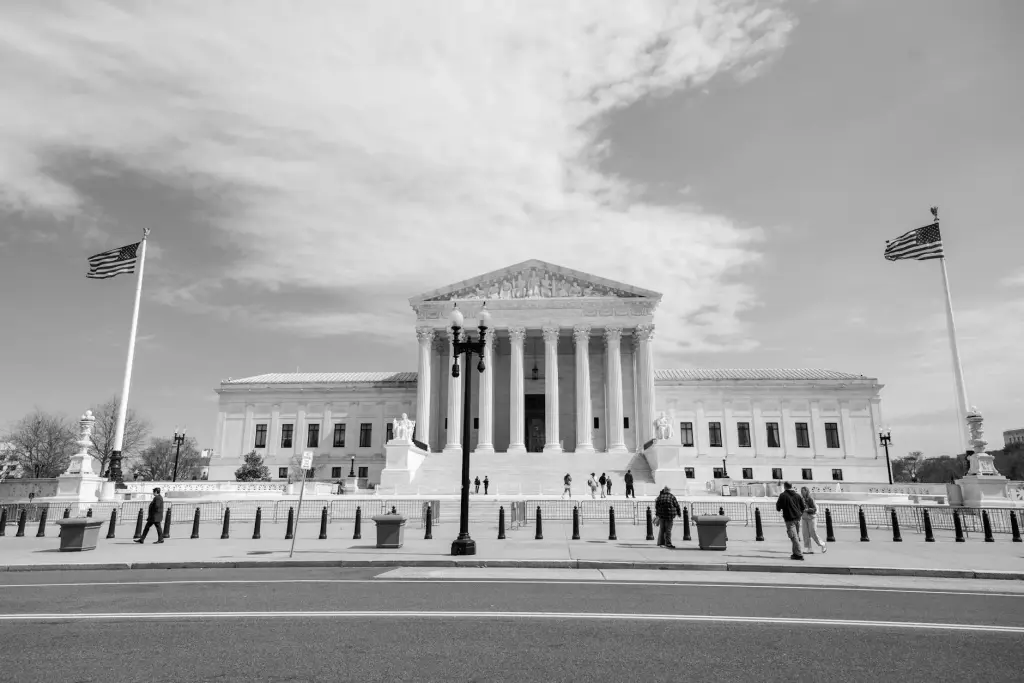
The Supreme Court is about to hear one of the most consequential immigration cases in decades. On Wednesday, justices will weigh whether President Trump's executive order to end birthright citizenship violates the Constitution's 14th Amendment — a ruling that could impact millions of American families and reshape what it means to be a U.S. citizen.
What Is Birthright Citizenship and Why Does It Matter?
Birthright citizenship is the principle that anyone born on U.S. soil automatically becomes an American citizen. This concept has been the law of the land for over a century, rooted in the 14th Amendment's Citizenship Clause which states that "all persons born or naturalized in the United States and subject to the jurisdiction thereof, are citizens of the United States." According to CBS News, this provision has been widely understood to guarantee citizenship to virtually all children born in the country, regardless of their parents' immigration status.
The issue impacts thousands of families every month. The executive order Trump signed on his first day back in office would deny citizenship to children born to mothers who are in the country unlawfully or temporarily, and fathers who are not citizens or lawful permanent residents. This directive applies to babies born more than 30 days after the order takes effect — though it remains blocked by lower courts while the legal battle plays out.
The Legal Battle Over the 14th Amendment
The Trump administration argues that the 14th Amendment has been "misread" since the mid-20th century. Solicitor General D. John Sauer claims the phrase "subject to the jurisdiction thereof" means children must have parents who owe "direct and immediate allegiance" to the U.S. to qualify for citizenship. The administration says birthright citizenship for children of undocumented immigrants "degrades the meaning and value of American citizenship" and encourages illegal migration and "birth tourism."
But the ACLU and other groups challenging the order say the government's interpretation would "remake our Nation's constitutional foundations." They point to the 1898 Supreme Court decision in United States v. Wong Kim Ark, which affirmed that children born in the U.S. to foreign nationals are citizens. According to the Associated Press, Justice Sonia Sotomayor previously called the administration's defense "an impossible task in light of the Constitution's text, history, this Court's precedents, federal law, and Executive Branch practice."
The case also has significant political implications. Trump recently claimed on Truth Social that other countries are "selling citizenships" to the U.S. and attacked federal judges as "stupid" and "dumb." A decision in the case is expected by the end of June or early July, and if the court rules against the administration, it would mark Trump's second major loss after the Supreme Court struck down many of his tariffs in February.
For Gen Z, this case hits differently. Many of us are children of immigrants or know someone who is. The idea that your citizenship could depend on your parents' status when you were born — something you have zero control over — feels fundamentally unfair. As one immigrant mother told reporters, she rushed to get her newborn son a U.S. passport because the document represents "tangible evidence" that he belongs here. That anxiety is real for thousands of families waiting to see what the Supreme Court decides.
Beyond the immediate impact, legal experts warn that if the court accepts Trump's interpretation, millions of Americans could suddenly find their citizenship questioned. Over 200 Democratic members of Congress filed a brief warning that "millions of Americans will suddenly no longer be citizens" and would be barred from voting, obtaining passports, and accessing other rights. The ripple effects could last generations and create a permanent underclass of stateless individuals.
What's clear is that this case represents more than just a legal technicality. It's about who gets to be "American" and whether the Constitution's promises apply equally to everyone born on U.S. soil. For a generation already facing economic uncertainty, climate anxiety, and political polarization, the outcome could define what citizenship means for decades to come. The hearing Wednesday is just the beginning of what will likely be a historic and closely watched decision.
Comments 0
No comments yet. Be the first to share your thoughts!
Leave a comment
Share your thoughts. Your email will not be published.