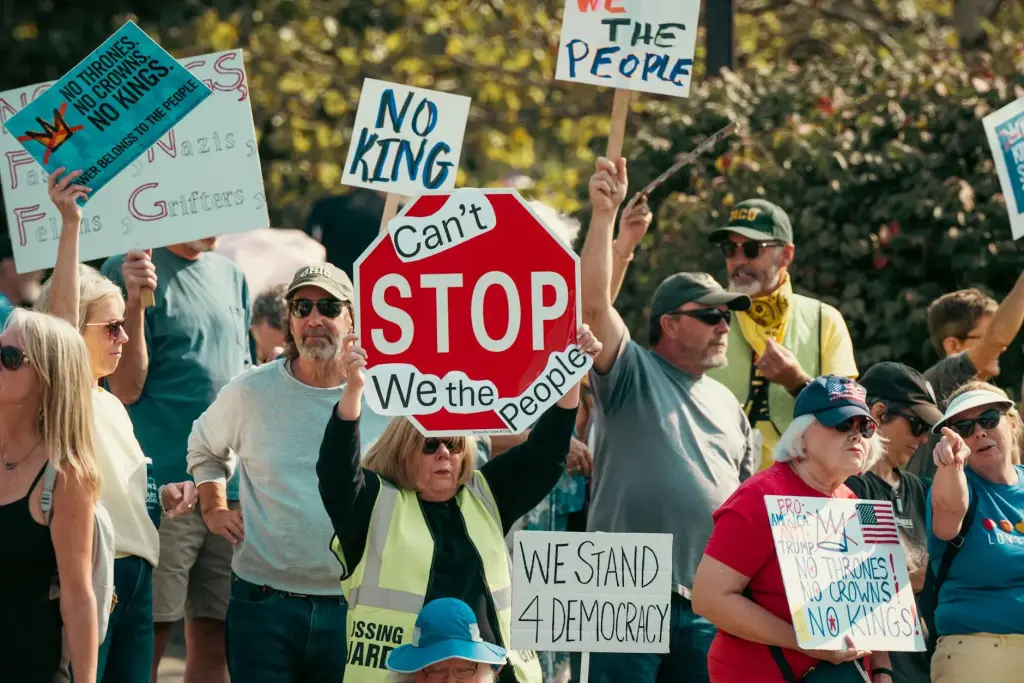
Why Millions Just Hit the Streets for the Biggest Protest in US History
Saturday marked a historic moment in American activism. More than 8 million people showed up at over 3,300 No Kings protests across the United States and around the world, making this the largest single-day demonstration in American history. According to The Guardian, Saturday saw the greatest number of protests in US history, with events spanning from major metropolitan areas to small rural communities.
Contrary to stereotypes about political apathy among young Americans, Gen Z turnout at these No Kings protests demonstrated significant engagement. CNN reported that organizers stated nearly half of all demonstrations occurred in red states or battleground areas, indicating widespread geographic diversity in the movement. These locations required considerable courage from participants given the political climate in those regions.
What Are People Actually Protesting?
The No Kings protests represent more than opposition to a single policy. Participants are challenging the Trump administration's immigration enforcement actions, military operations in Iran, rising living costs, and perceived threats to democratic institutions. The movement's name explicitly references America's foundational rejection of monarchical rule.
In Minneapolis, activist Tom Arndorfer traveled from suburban Edina to join a rally. According to CNN's reporting, Arndorfer described democracy as being under threat, which motivated his attendance. Meanwhile in New York City, Mao Valentin, a 22-year-old nursing student from New Jersey, carried signs opposing immigration enforcement policies. Gothamist reported Valentin's concern that people were being sent to detention facilities and the need to speak out against such practices.
Chris Holy, another protester interviewed by reporters in Washington DC, expressed similar sentiments. According to CNN's coverage, Holy described seeing injustices happening to people in the nation and the desire to voice dissatisfaction with those conditions. This perspective resonated across generational lines, from college students to retirees.
The Gen Z Impact on Modern Protest Culture
What distinguishes the current wave of No Kings protests is the sophisticated use of digital organizing tools. While traditional media documented the massive turnout, Gen Z participants leveraged TikTok, Instagram, and other platforms to share real-time documentation of events. One particularly striking image—a protester dressed as the Statue of Liberty in chains—became a viral symbol of the movement, with social media users describing it as the defining visual of this political moment.
The Guardian conducted interviews with 14 protesters across Chicago, New York City, Washington DC, and Saint Paul to understand the motivations behind this activism. A consistent theme emerged: participants described this movement as qualitatively different from previous demonstrations. Organizers explained that increased pressure from authorities only strengthened solidarity among participants. This sentiment reflects a belief that the stakes extend beyond any single election cycle to fundamental questions about national identity.
The scale of regional participation underscored the movement's reach. The Bozeman Daily Chronicle reported over 3,500 people marched in Missoula, Montana, chanting "No Kings" and "No more ICE." In Billings, approximately 3,300 demonstrators gathered. Even smaller communities like Orland Park outside Chicago saw between 3,000 and 4,000 participants lining the streets, according to local organizers.
These participants represent a cross-section of American society—neighbors, coworkers, and first-time activists who determined that remaining silent was no longer acceptable. Organizer Sarah Einwohner told WBOI that events like the No Kings protests create crucial connections between community members who might otherwise feel politically isolated.
The movement has also generated significant intergenerational dialogue. During a recent Budapest rally that drew over 100,000 people in a parallel European protest, Tisza supporter Dorina Csobán described the political tensions within families. According to the Associated Press, Csobán stated that the political divide had become pretty divisive among older family members, because younger people were saying clearly that there must be change. Similar dynamics are playing out across American households.
Looking ahead, organizers indicate that the No Kings protests represent only the beginning. With ongoing immigration enforcement actions, escalating international conflicts, and persistent economic pressures, participants show no indication of retreating from activism. A speaker at a Los Angeles rally declared before performing a protest anthem that this reactionary nightmare and these invasions of American cities would not stand.
The central message from the 8 million participants is unambiguous: Gen Z and allies have transitioned from waiting for institutional change to actively demanding it. Whether this mobilization produces lasting political transformation remains uncertain, but the scale of participation ensures that dismissing these voices will prove increasingly difficult for any administration.
Comments 0
No comments yet. Be the first to share your thoughts!
Leave a comment
Share your thoughts. Your email will not be published.