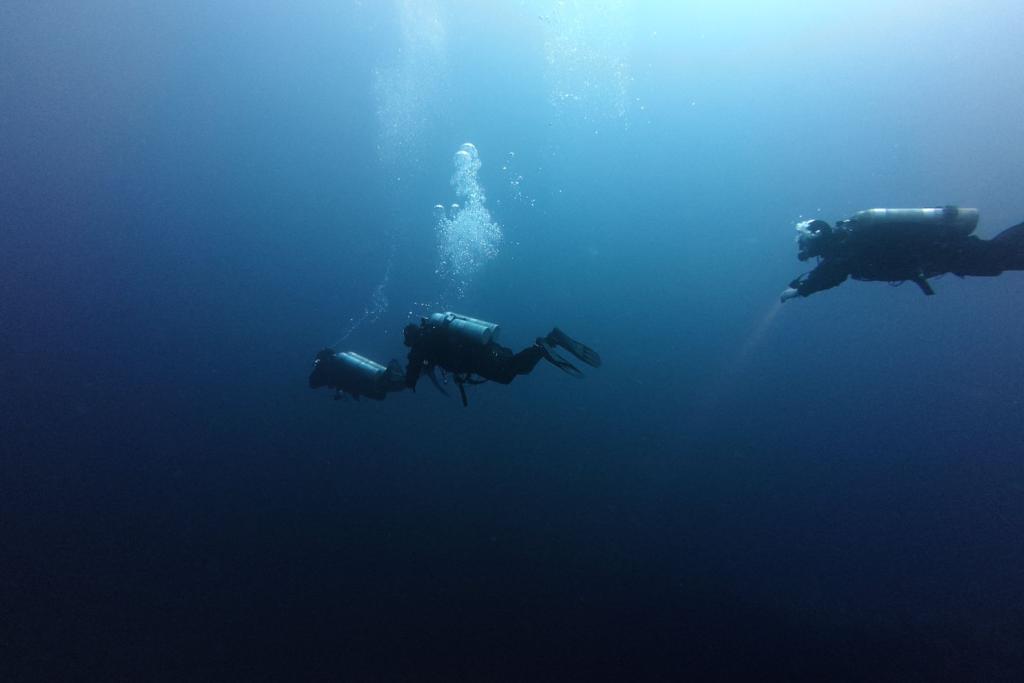
Somewhere off the coast of Adrasan, Turkey, a merchant ship went down with its cargo of fine tableware and never reached its destination. More than two thousand years later, divers have found the sunken luxury dishes almost exactly as they were loaded: plates nested inside plates, stacked in wooden crates, cushioned with clay as if the crew were expecting rough weather. According to reporting from Gizmodo, the wreck holds an unprecedented collection of intact ceramics that archaeologists are now bringing up from the seabed piece by piece.
The find was announced this week by Türkiye's Ministry of Culture and Tourism after underwater excavations organized in 2025. The ship lies between forty-two and fifty-five meters beneath the Mediterranean, and researchers from Akdeniz University's Underwater Archaeology Research Center led the investigation alongside public partners. Marine Insight reported that the excavation, working at depths of up to fifty-five meters, recovered thousands of vessels whose survival in such condition is virtually unheard of for a wreck of this age.
Packed so well the sinking did not break them
The miracle of the wreck is not just what survived but how. The dishes were nested into each other, separated by clay that acted as a shock absorber, then packed into wooden crates before loading. As Gizmodo noted, the system worked so well that plates did not even break when the ship went down. In the first excavation season alone, the team recovered 6,511 intact pieces of ceramic tableware, plus thousands of fragments, according to The History Blog's account of the announcement.
Those intact pieces come in 122 different shapes and sizes, from plates and bowls to fish plates and trays, including vessels sized for serving soup and nuts. That variety matters to researchers because it captures a full dinner service of the ancient Mediterranean in a single cargo, something scholars normally have to reconstruct from broken fragments scattered across dozens of sites. Most ancient ceramics reach archaeologists as shards; here, entire place settings arrived stacked and waiting.
The tableware a Roman statesman ordered by name
Analysis of the cargo traced the ceramics to the ancient city of Rhosus, in what is now the Arsuz region of southern Türkiye. Rhosus was one of the ancient world's foremost producers of fine tableware, and its reputation traveled all the way to Rome. In a letter written around 50 B.C., Marcus Tullius Cicero teased his friend Atticus about his own order of Rhosian ware, writing "I have ordered the Rhosian ware for you," then joking that fine pottery was wasted on someone who served plain vegetarian fare on fern-pattern plates.
The wreck was not carrying Rhosian goods alone. Amphorae made on Aegean islands were part of the cargo, and coins from Antioch dating to the first century B.C. were found at the site. As Türkiye's Anadolu Agency reported, that combination points to a trade network linking Antioch, the Aegean, Greece, and the Italian coast, with the vessel likely sailing from Rhosus toward Rome before it foundered. The sunken luxury dishes are therefore not just beautiful objects: they are physical evidence of how luxury goods moved across the Mediterranean by sea.
What happens to the dishes now
The recovered ceramics are headed for conservation. Intact pieces went to Antalya Museum, while fragments were sent to the conservation and restoration laboratory at Akdeniz University in Kemer, where specialists will attempt to reassemble what can be saved. Türkiye's Culture and Tourism Minister Mehmet Nuri Ersoy announced the find in a social media post, describing the work as bringing the tableware "to light from the depths of the Mediterranean" and noting that the collection carries Anatolia's craftsmanship and the Mediterranean's trading history into the present.
Excavation at the site is expected to continue, and more of the cargo likely still rests in the crates where it was packed. For anyone who has ever eaten off a nice set of plates and imagined them surviving a shipwreck, the Adrasan wreck is the closest thing to that fantasy becoming real. It joins other recent ancient cargo stories, including the Danube riverbed hoard of Iron Age iron bars that was probably lost in a shipwreck on a trade route, and it is a reminder that the past keeps washing up exactly where ancient merchants left it. For more forgotten stories from the ancient world, explore The Old World.
Comments 0
No comments yet. Be the first to share your thoughts!
Leave a comment
Share your thoughts. Your email will not be published.