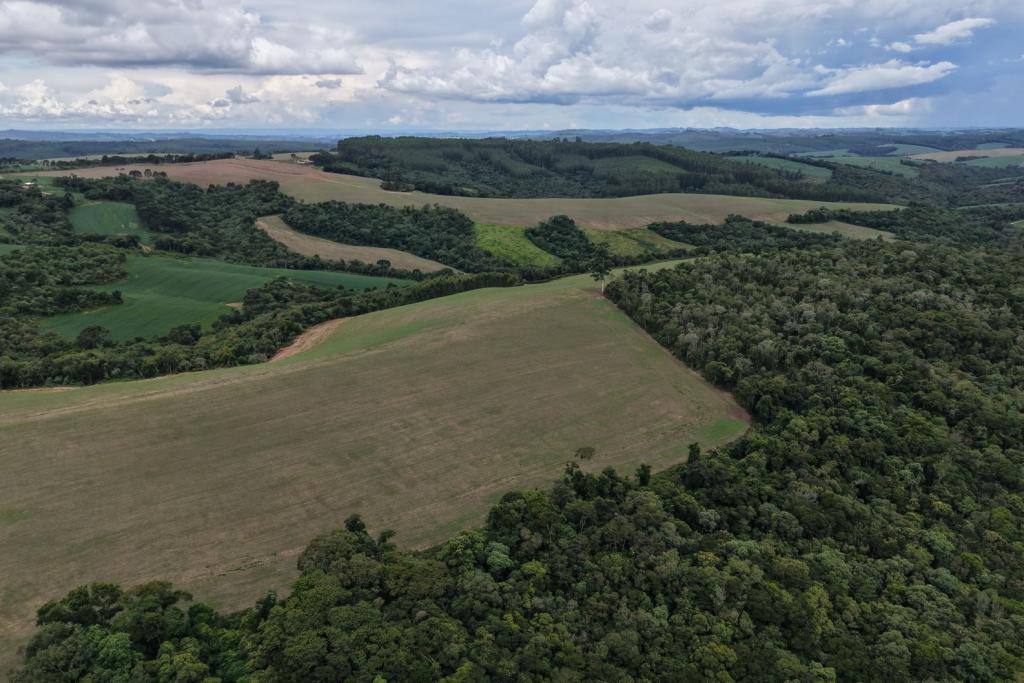
Ecologists have long treated fast growth as something a tree pays for. The trees that shoot up are supposed to fold first when the rain stops. A new study of Southern Hemisphere pines says some pines are not paying.
The research, led by Alex Fajardo of Chile's Institute of Ecology and Biodiversity and the University of Talca, tracked nine conifer species that have become Southern Hemisphere pines, from radiata and ponderosa to lodgepole, Scots and slash pine. His co-authors work in ten countries, and the paper appeared in the journal Nature.
Up to four times faster
Between 2021 and 2023 the team bored a thin core out of each of 1,625 trees at 192 sites across the Americas, Europe, Africa and Oceania, taking more than sixty-five thousand ring-width measurements of Southern Hemisphere pines and their northern counterparts.
Between 2000 and 2020 the Southern Hemisphere pines laid down wood faster than the same species in the Northern Hemisphere, by up to four times in the fastest cases. They also resisted drought better and recovered from it faster than the northern trees, according to the study.
The age gap could have explained it, since plantation trees tend to be younger. So the team ran the comparison again using only trees aged 30 to 50, and the Southern Hemisphere pines still came out well ahead.
The speed does not look bred in. Most of the sampled plantations were not established for timber. They went in to hold soil in place or cover open ground, so high-growth seed stock is unlikely to explain the gap. Pines planted inside their own native range, in Montana and the southeastern United States, grew slowly like the wild stands around them. And 27 of the southern stands were never planted at all: the trees seeded themselves from nearby plantations and grew just as fast as the Southern Hemisphere pines in the managed stands.
Why the trees thrive abroad
A tree can meet a drought more than one way. Some species reach deeper for water. These pines seem to be working with what they keep in storage. Wood is not only structure: a tree holds a reserve of sugar and starch in its living tissue, and it draws on that reserve when its leaves cannot cover the day. Sugar, starch and the two combined all ran higher in the Southern Hemisphere pines than in the same species at home, according to the study.
A second signal came out of the wood chemistry. Leaves take in carbon dioxide through pores, and a tree short of water closes them, which shifts the mix of carbon atoms locked into each ring. The Southern Hemisphere pines carried the signature of pores that stayed open, meaning they were taking in more carbon while keeping larger reserves.
Fajardo's reading is that the trees left something behind. The most likely explanation for the pattern, he said, is that the exotic conifers escaped their natural enemies: the specialized herbivores, pathogens and competing species that are present or more abundant in their native range. A pine in Montana spends part of every year feeding and fighting insects and fungi that evolved alongside it. In Patagonia, most of those are absent. The team counted no insects or fungi, so the enemy idea stays a hypothesis with circumstantial support, the authors noted.
Milder southern winters could plausibly stretch a growing season, but two of the species involved, Monterey pine and slash pine, come from parts of North America with winters milder still, which weakens winter as a general explanation. There is a wrinkle in the pattern too: North American pines planted in Europe also grew faster and recovered from droughts better, yet their carbon reserves came in lower than at home, not higher.
Native beeches hold their own
The team also cored the trees next door. In Chile, Argentina and New Zealand, stands of Nothofagus, the southern beeches, often grow right up against pine plantations. The Chilean species in the survey, rauli, coihue, roble and lenga, grew faster than northern pines do at home and slower than the Southern Hemisphere pines beside them. Through drought they held up about as well as the pines did.
Their wood is heavier, which matters for carbon. Southern beech sapwood came in at about 0.511 grams per cubic centimeter against 0.457 for the non-native conifers. A slower tree is not storing proportionally less. Fajardo said maintaining and expanding these native secondary forests would be a more sustainable way to raise carbon sequestration than planting more exotic conifers.
No free pass for plantations
None of this makes Southern Hemisphere pines a climate fix, and the authors said so directly. Chile alone has roughly three and a half million acres planted with Monterey pine, while the wild forests the species came from survive as a few remnant stands on the California coast. Plantations on that scale have replaced native ecosystems across the Southern Hemisphere, and the pines that escape them cut the number of native species growing underneath. Lodgepole pine spreading out of plantations is already a conservation problem in Chile's Aysen Region, and the authors named the Brazilian Cerrado among the places escaped conifers could strip.
The costs are not only ecological. The authors listed rural people displaced by plantations, higher fire risk to homes and infrastructure, and the economic inequality that follows. The business case has limits of its own: the sampled trees were older than the typical rotation age of fewer than twenty-five years. Fajardo noted that any forestry use of the results should serve carbon sequestration, not timber and pulp production.
In a comment piece accompanying the paper, West Virginia University biologist Steven Kannenberg said the finding challenges the long-standing expectation that rapid growth comes at the cost of stress tolerance. He said it also complicates the debate over which forests and species to promote for climate mitigation, a debate that is playing out elsewhere: the IPCC has gathered experts in Bangkok to draft its next climate blueprint, while Europe's 2025 heat wave showed how fast extreme weather is testing the forests that already stand. The study itself was published in Nature; a News and Views piece and the full paper lay out the evidence, and Earth.com covered the findings with comment from Fajardo.
Comments 0
No comments yet. Be the first to share your thoughts!
Leave a comment
Share your thoughts. Your email will not be published.