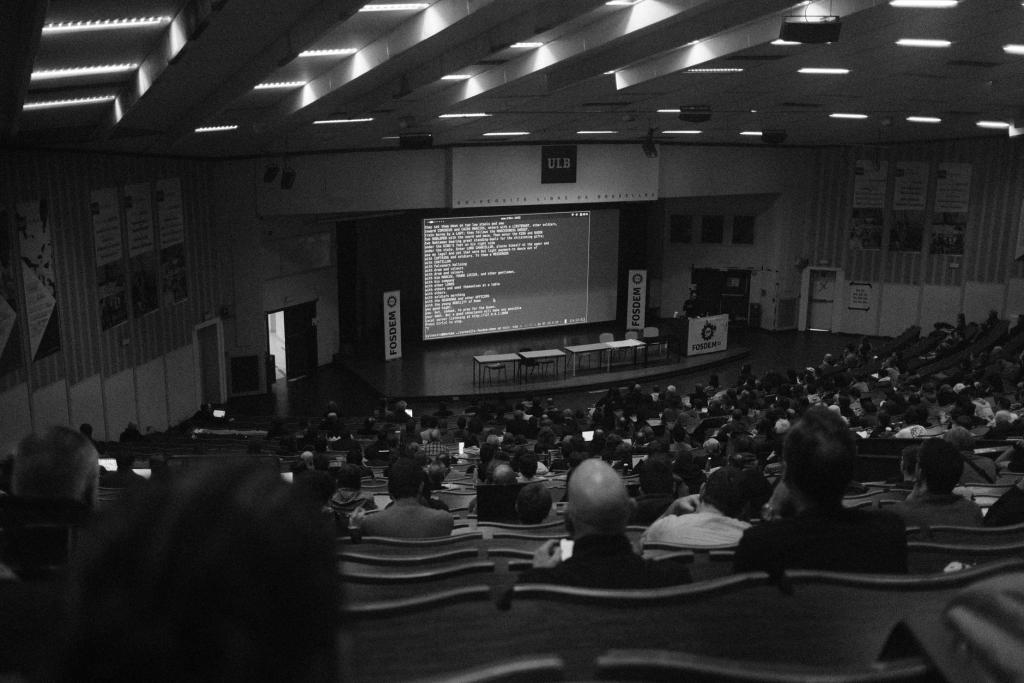
Nearly 200 authors from 79 countries are gathered at the Asian Institute of Technology in Pathum, Thailand, from Sept 28 to Oct 1 to draft the Working Group III contribution to the IPCC Seventh Assessment Report on climate change mitigation.
This is the second meeting of the Working Group III authors. The first joint lead author meeting of all Seventh Assessment Report authors took place in Paris last December.
"As policymakers around the world consider climate action, they have many questions about mitigation opportunities and challenges. This meeting brings together leading experts to assess the latest evidence on pathways, technologies and policies that can support effective and equitable emissions reductions. Our task is to provide policymakers with a clear and authoritative assessment of the options available to address climate change," said Joy Pereira, one of the Co-Chairs of IPCC Working Group III.
The meeting lets the report's authors discuss and refine the initial drafts of their chapters, strengthen cross-chapter integration, and advance the scientific assessment that policymakers worldwide will use.
Working Group III assesses the scientific, technical and socio-economic literature on mitigating climate change. According to the IPCC, the Working Group III contribution to the Seventh Assessment Report will evaluate progress in reducing greenhouse gas emissions, assess mitigation pathways consistent with global climate goals, and examine mitigation opportunities across sectors including energy, industry, transport, buildings, agriculture and land use.
It will also assess the enabling conditions for climate action, including finance, technology, governance and international cooperation, as well as the links between mitigation, sustainable development, equity and just transitions.
After the meeting, the authors will develop the First-Order Draft, which will open for review by experts from around the world.
"The strength of the IPCC lies in its rigorous and transparent assessment process. The First-Order Draft review allows experts from around the world to contribute their knowledge and perspectives, helping ensure that the report reflects the breadth of available evidence and meets the highest scientific standards," said Kate Calvin, Co-Chair of IPCC Working Group III.
IPCC reports pass through several review stages, first by experts and then by governments and experts. Experts who comment on the First-Order Draft will also be invited to review the Second-Order Draft, and all expert reviewers will be acknowledged in the published report.
The timing is tight
The Bangkok meeting comes as the window for cutting emissions narrows. Global fossil carbon dioxide emissions reached a projected 38.1 billion tonnes last year, a record high, according to the Global Carbon Budget analysis reported by Carbon Brief. Total global CO2 emissions, including land use, were projected at roughly 42.2 billion tonnes, effectively tied with the previous year as the highest on record.
The remaining carbon budget for limiting global warming to the Paris Agreement's lower warming limit is "virtually exhausted," the Global Carbon Project's research team reported. "With CO2 emissions still increasing, keeping global warming below 1.5 degrees is no longer plausible," said Professor Pierre Friedlingstein of the University of Exeter's Global Systems Institute, who led the study.
The IPCC said in a statement that it is the UN body for assessing the science related to climate change. It was established by the United Nations Environment Programme and the World Meteorological Organization in 1988 to give political leaders periodic scientific assessments of climate change, its implications and risks, along with adaptation and mitigation strategies.
The IPCC has three working groups covering the physical science basis of climate change; impacts, adaptation and vulnerability; and mitigation. It also has a Task Force on National Greenhouse Gas Inventories that develops methods for measuring emissions and removals.
What happens next
The Panel has agreed to produce three Working Group contributions to the Seventh Assessment Report in this cycle: the physical science basis, impacts adaptation and vulnerability, and mitigation reports. The Synthesis Report will follow the completion of the Working Group reports and is due for release by late 2029.
At its 62nd Plenary Session in Hangzhou, China, in February 2025, the Panel agreed on the outlines of the three Working Group contributions. It also decided to produce a Special Report on Climate Change and Cities, scheduled for approval and publication in March 2027, and a methodology report on short-lived climate forcers due in the second half of that year.
For this blueprint, the path runs through Bangkok this week and then into the open review process. Thousands of people from all over the world contribute to the work of the IPCC, and the First-Order Draft will go to experts worldwide before the Second-Order Draft takes shape.
Comments 0
No comments yet. Be the first to share your thoughts!
Leave a comment
Share your thoughts. Your email will not be published.