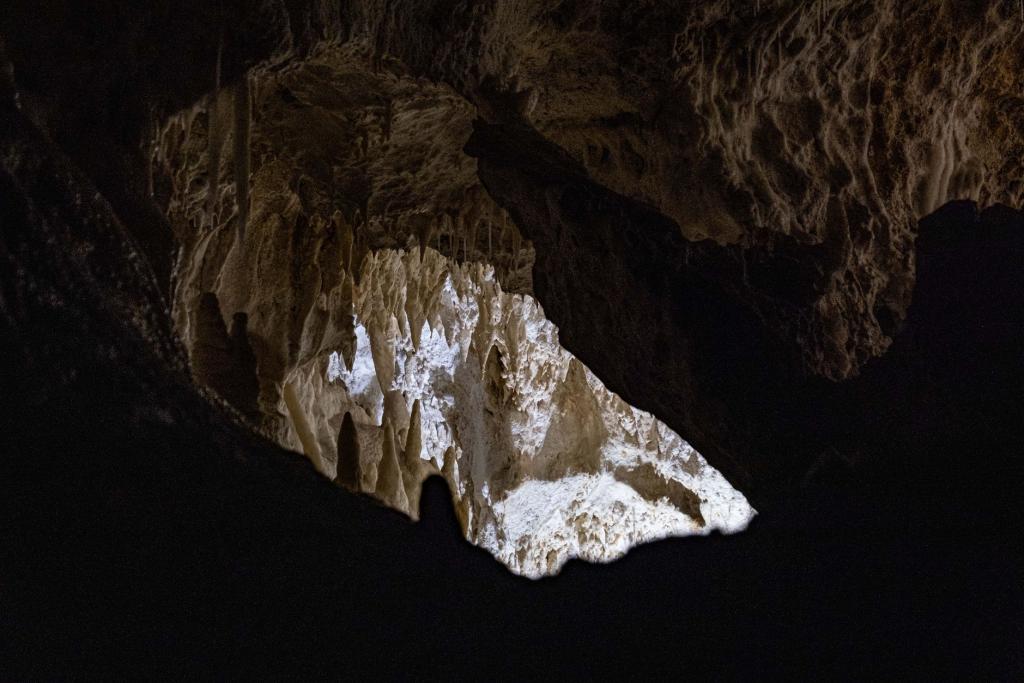
In a cave in Iraqi Kurdistan, archaeologists have lifted out a Neanderthal shoulder blade with a round hole punched clean through it — and the Shanidar Neanderthal Spear Wound may be the oldest evidence of a lethal spear attack anywhere in the human family record. The bone belonged to an adult who died around 75,000 years ago, and the wound's forensic details suggest the thrust was aimed straight at the heart.
The remains, dug from beneath almost eight metres of rock and sediment, are known to researchers as Shanidar A, after the famous cave where they were found. The left shoulder blade that bears the injury survived nearly intact, an extraordinary outcome given that the bone is so thin in places it turns translucent when held to the light. According to the University of Cambridge, which led the excavation, the 15-millimetre circular perforation was made by a sharpened wooden spear: a flint or stone tip would have left a flat or angular hole, while experiments with reconstructed wooden spears produce exactly this round wound.
The spear entered the left chest from the front, passed through the lung and likely the major arteries, then punched out through the shoulder blade. Beveling around the hole is typical of an exit wound, and tiny shards of bone displaced by the weapon indicate the thrust came from above at a downward angle. The team even pieced part of the hole back together using those fragments, guided by faint ridges where muscle had marked the bone. Three fractures radiated outward from the hole, showing the force of the blow.
A kill shot — or a hunting accident?
Whether the wound was an intentional attack or a hunting mishap is the question the researchers cannot settle. The angle and force point toward a deliberate "heart shot," and the lead author told reporters she did not think a wound like this happens accidentally. Yet Neanderthals hunted large prey at close range with thrusting spears, so a companion's weapon could conceivably have struck the victim during a hunt. The study's own conclusion leaves both readings open, and an outside expert, as reported by Popular Science, noted that the wound's position and extent make a deliberate attack the more likely story.
Either way, the Shanidar Neanderthal Spear Wound is remarkable for what it implies about weapons of the era. Wood almost never survives tens of thousands of years, so the hole in the bone may be the only trace of a whole arsenal. The finding could be the first evidence that sharpened wooden spears were used in the prehistoric Middle East at all — a technology archaeologists have long suspected from much older, waterlogged finds in Europe but could never tie to a specific death.
Violence beside care
The same skeleton tells a second, gentler story. The individual's teeth show a lower incisor split vertically in half, with neighboring teeth twisted inward — a severe facial injury sustained long before death, and one the person survived. Healing from that kind of damage without help is hard to imagine, so researchers read it as evidence that others looked after the injured individual for months or years. Violence and care, written into the same body.
The wider context deepens the picture. Five Neanderthals were buried at the same spot over a span of years or even decades, with some bodies apparently laid atop others that were still decomposing. That pattern, seen nowhere else quite like this in the Neanderthal record, suggests the cave was a deliberately chosen place of burial rather than a coincidence — the team describes it as meaningful behavior in how the dead were deposited. Shanidar has been famous since the 1960s, when excavations there sparked a claim — now discredited — that Neanderthals buried their dead on beds of flowers.
Why it matters
This discovery stitches two of the biggest questions about Neanderthals — how violent they were, and how much they cared for each other — into a single find. The Shanidar Neanderthal Spear Wound offers the earliest known glimpse of lethal spear violence against a human ancestor, while the healed face tells of a community that kept an injured companion alive. The full findings are reported in the journal Scientific Reports, and they echo other recent cases where digging has rewritten assumptions, like the Neanderthal woodworking that revealed an unexpected craft tradition and the seabed archaeology that revealed Australia's drowned ancient world.
Comments 0
No comments yet. Be the first to share your thoughts!
Leave a comment
Share your thoughts. Your email will not be published.