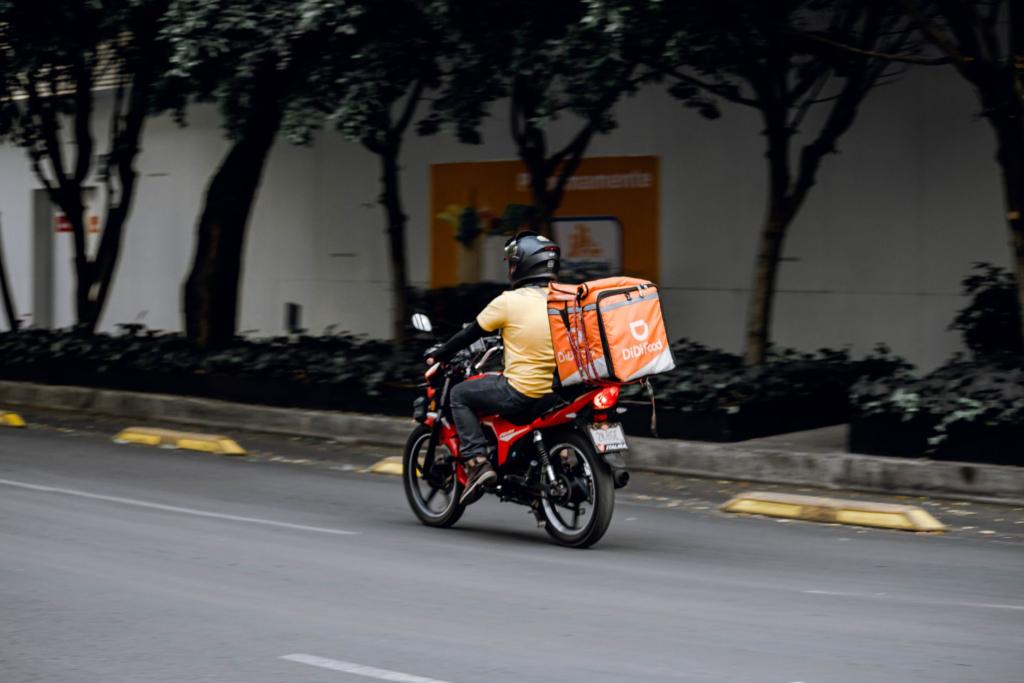
Seattle tried to hand its delivery drivers a raise. In January 2024, the city put an App-Based Worker Minimum Payment rule into effect, setting a pay floor for every food delivery that starts or ends inside city limits. The idea was straightforward: gig workers keep the on-demand economy running, so their pay should track the city minimum wage. Base pay per delivery roughly doubled, from about five dollars to about twelve and a half dollars, almost overnight. The Seattle delivery pay law looked like the kind of policy win that other cities would copy.
Then the apps changed the math. Within weeks of the Seattle delivery pay law taking effect, DoorDash added a regulatory fee of four dollars ninety-nine cents to Seattle orders, and Uber Eats tacked on a comparable local surcharge. Customers noticed immediately. DoorDash said its marketplace saw thirty thousand fewer delivery requests and about a million dollars in lost revenue within the first two weeks, and those are the company's own reported figures. Uber Eats saw order volume fall by nearly a third in the same early window, according to a review of the fallout published by Reason. Higher fees meant fewer orders, and fewer orders meant fewer paid tasks for drivers.
The raise the Seattle delivery pay law never delivered
The part that stings is what happened to driver paychecks. Carnegie Mellon economists Andrew Garin, Brian Kovak and Yuan An reported that they tracked delivery drivers through detailed cross-platform earnings data from Gridwise, an app gig workers use to log income across the services they drive for. Their finding: despite base pay per delivery roughly doubling, drivers' total monthly earnings barely changed. Competition among drivers for each task intensified, customers placed fewer orders, and tips shrank. Those forces washed out almost all of the intended gains, the economists wrote in a piece republished by Phys.org.
A National Bureau of Economic Research working paper reached the same conclusion from task-level data across platforms. Researchers found base pay doubled, but tips fell and the number of tasks each driver completed dropped too. Within a month of the law taking effect, the most active drivers had seen no increase in monthly total earnings, according to a summary of the paper published by Reason. The researchers' explanation for why the Seattle delivery pay law underdelivered comes down to how gig labor markets work: anyone can sign up to deliver, so when per-task pay rises, more drivers log on to chase the same pool of orders, and the extra pay spreads thinner.
Tips took a separate hit. Many customers tipped during checkout before the ordinance, when the tip screen appeared early in the order flow. After the law, several platforms moved tipping until after the order was placed, and overall tip levels dropped. Tipping often falls when base wages rise in tipped occupations, but the timing of the platform changes made the decline sharper under the Seattle delivery pay law.
City Hall says the fight was worth it
Seattle's Office of Labor Standards, which enforces the Seattle delivery pay law and handles worker complaints, has also gone after platforms for alleged violations. The office secured a multimillion-dollar settlement from Uber Eats, according to reporting by US News Network. Supporters of the Seattle delivery pay law argue those cases prove the city is making workers whole when companies fall short, and they point to Seattle's high cost of living as the reason higher pay floors are necessary.
City leaders have kept defending the policy. The Council President described the law as ensuring fair pay aligned with the city minimum wage, US News Network reported. The labor office says it offers compliance help to employers and protects workers from retaliation for asserting their rights. Backers add that fairer pay can reduce turnover in low-wage jobs over time. Those goals are real, even if the early data shows trade-offs that Seattle residents are feeling at checkout.
Other cities are reading the same study
The Seattle delivery pay law is not the only test of this idea. New York City's delivery minimum wage led to a ten percent spike in delivery costs and a forty-seven percent decline in driver tips, according to the Reason summary of the research. The number of active drivers in New York fell by eight percent as gig companies capped how many drivers could be online at once to manage higher labor costs. The pattern rhymes with Seattle's: the rule raised the floor, the platforms rearranged the room, and workers ended up standing in roughly the same spot.
For anyone treating delivery as a side hustle, the lesson is uncomfortable. Almost three years after the Seattle delivery pay law took effect, it has doubled the headline number on each task, and monthly income barely moved. Promising higher pay per job only helps if customers keep ordering and tipping at the same pace, because customers who face higher fees simply order less. Seattle is one chapter in a bigger gig-pay fight: GenZNewZ has also covered the NYC DoorDash settlement that paid dashers back and a record wave of minimum wage violations cutting into workers' pay.
Comments 0
No comments yet. Be the first to share your thoughts!
Leave a comment
Share your thoughts. Your email will not be published.