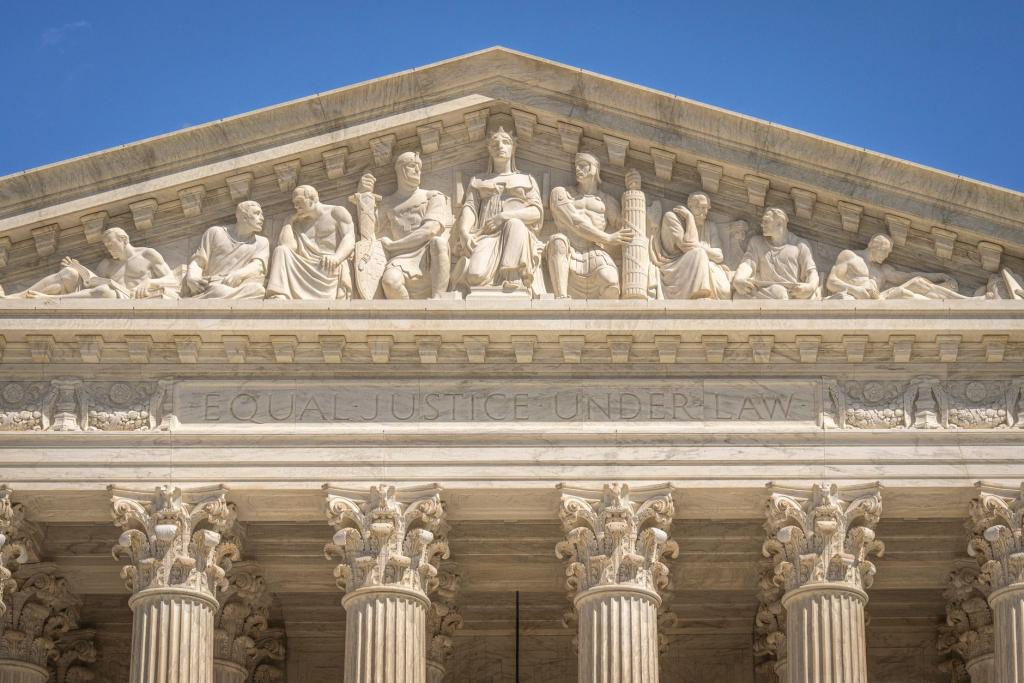
The Trump administration asked the Supreme Court on Monday to let federal prisons enforce new restrictions on trans health care for incarcerated people — a move that could strip hormone therapy and other gender-affirming care from hundreds of transgender inmates while their lawsuit is still pending. According to the Associated Press, the Justice Department filed an emergency request to freeze a lower-court order that has blocked the Bureau of Prisons policy for months. The bureau itself said last year that it was providing hormone therapy to more than 600 inmates — care the new policy would generally halt for new patients and gradually taper for everyone else.
The policy reaches beyond medicine. Alongside a ban on gender-affirming surgeries and the hormone phase-out, the February directive ends what it calls "social accommodations": makeup, wigs, certain clothing, and hair-removal items. Only psychotherapy and psychiatric medication would remain available. The administration says the bureau "reasonably considered its prior experience" in concluding the interventions are not medically necessary — and, from its emergency filing as reported by Reuters, that "security and prison-administration concerns independently justified a change in policy."
How the case reached the high court
The dispute began on the first day of the second Trump term. The January 20, 2025 executive order declared that federal funds may not be spent "for the purpose of conforming an inmate's appearance to that of the opposite sex." Three transgender inmates — held in federal prisons in New Jersey, Florida, and Minnesota — sued in March 2025, represented by the ACLU and the Transgender Law Center. In June, U.S. District Judge Royce Lamberth, a Reagan appointee, issued a preliminary injunction blocking the policy, finding the agency had effectively "reverse engineered" its medical conclusion from the executive order — and certified the case as a class action covering roughly 2,000 current and future inmates diagnosed with gender dysphoria, legal affairs outlet Law Commentary reported.
Lamberth kept the block in place when the bureau issued its restrictive policy anyway, writing that "with this opinion, the court has no intention of wading into the culture war being waged against transgender individuals" — a notable line from a conservative-appointed judge ruling on administrative-procedure grounds rather than ideology. On September 18, the D.C. Circuit declined to lift the injunction over a dissent from Judge Justin Walker. Ten days later, Solicitor General D. John Sauer took the emergency request to the justices. The administration wants the restrictions enforced during the litigation, not after it.
What the fight over trans health care could change next
The stakes go beyond one policy. The inmates' lawyers argue that yanking treatment constitutes cruel and unusual punishment: withholding care they call "a direct threat to the well-being of transgender people in federal custody and an open violation of their fundamental rights." Even the bureau, Lamberth noted, "doesn't dispute that gender dysphoria can cause severe side effects, including depression, anxiety and suicidal thoughts" — making hormone tapering a concrete medical harm, not an abstract debate. The Eighth Amendment angle matters because of Estelle v. Gamble, the precedent barring "deliberate indifference to serious medical needs" in prisons. If the high court lets the government unilaterally redefine a recognized diagnosis as medically unnecessary, that logic could travel to other forms of prison health care.
And the pattern is hard to miss. This is the latest front in the administration's broader rollback of transgender protections — the same 6–3 Court has already allowed restrictions on trans military service, passport gender markers, youth medical care, and sports participation to take effect while cases were pending, Reuters noted. Supporters of the prison policy argue that consistency is the point: the restrictions, in their view, are not an outlier but the same legal posture the justices have endorsed before. That record is also why advocates are bracing for the outcome — the court has rarely hesitated to let these policies operate during litigation.
For now, the roughly two thousand people in the class are in limbo: protected by an injunction the administration says should never have issued, under a policy their lawyers call unconstitutional, awaiting a decision from nine justices that could arrive at any moment. Whatever the court decides about emergency relief, the underlying lawsuit will grind on — and the question of what the Constitution requires when the state controls someone's body, their medicine, and their mirror, will outlast this filing — and the underlying fight over trans health care in federal prisons will grind on regardless. For more on how courts are shaping everyday rights, see our social justice coverage, including the landmark TikTok teen-safety settlement.
Comments 0
No comments yet. Be the first to share your thoughts!
Leave a comment
Share your thoughts. Your email will not be published.