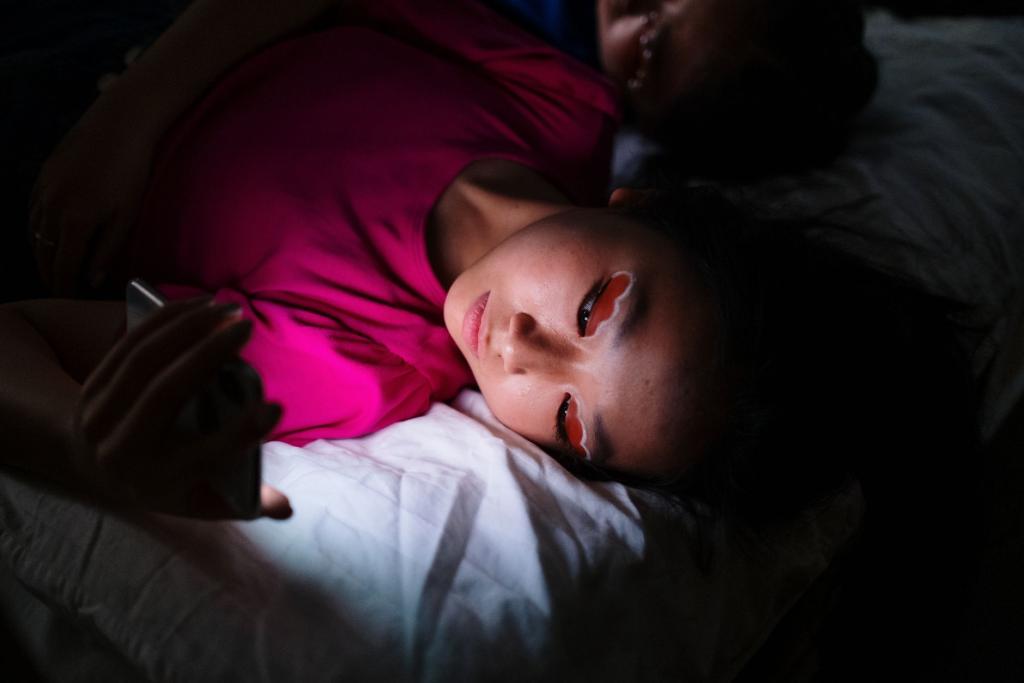
TikTok is giving its youngest users in Alabama something they have never had before: a mandatory bedtime. Under a landmark agreement announced Friday, the company will pay the state a nine-figure sum and impose a two-hour daily cap on teen accounts, with access shut off between midnight and 6 a.m., according to TBS News. The TikTok Alabama settlement, the first of its kind with a U.S. state, landed days before a jury trial that would have been the nation's first over claims that a platform was designed to addict kids.
The payout starts at $100 million and must reach the state within 45 days, but the final number could be much larger. According to Reuters, the total can climb to as much as $300 million if 40 other attorneys general strike qualifying agreements with TikTok within a set window. At least 27 other states and Washington, D.C., have already filed related lawsuits accusing the platform of harming young users, which turns this single-state deal into a template with national ambitions.
Alabama's attorney general, Steve Marshall, framed the outcome as a win for parents. "Tonight, they can rest easier knowing real protections are in place to shield their children from the dangers of social media addiction," he said in the state's announcement. TikTok, for its part, admitted no wrongdoing. A company spokesperson told AFP the agreement "builds on our commitment and core objective to continually enhance our robust safety tools to protect teens," according to The News.
What teens in Alabama get under the settlement
The restrictions are strikingly specific. Teen accounts face a default daily limit of two hours, which parents can lower further. After 15 minutes of continuous scrolling, the app must interrupt with what the attorney general's office calls a "productive pause," and again at the 60- and 90-minute marks. Messaging and push notifications get throttled overnight and during school hours. Cosmetic filters — the face-altering effects that have become a rite of passage for teenage selfies — are banned outright for teens, and young users get a feed that is not personalized around their viewing history by default.
The deal also targets the people around the teens, not just the teens themselves. The company must make it harder for adult strangers to discover teen accounts, notify parents about certain suspicious interactions between adults and younger users, and strengthen its age-verification measures. TikTok has up to a year to roll out the longer-term requirements, though the headline limits take effect immediately.
The TikTok Alabama settlement as a blueprint for the rest of the world
The Alabama deal did not arrive out of nowhere. It follows a framework from August, when Instagram owner Meta reached an agreement with 52 state attorneys general over similar claims — an agreement that reportedly included Meta's own $18 billion payout. The two frameworks — the Meta agreement and the TikTok Alabama settlement — now share a core playbook: daily time caps for teens, overnight shutdowns, quiet hours during school, and stronger age checks.
The momentum is global. Last week, European Commission President Ursula von der Leyen announced a proposed E.U. KIDS Act that would bar children under 13 from social media entirely and put 13- to 15-year-olds in parent-supervised mini accounts, reported by WebProNews. On Monday, India's Supreme Court asked the government to consider an 18-year minimum for social media accounts, according to the Indian Express. For a generation that grew up with these apps, the question is no longer whether teen social media will be regulated — it is which version of the rules arrives first.
What happens next matters more than the signatures. Alabama sued in 2025, alleging TikTok intentionally built addictive features and misled families about safety; those claims were never tested in court because the deal arrived during mediation. The controls now have to prove they work: age checks must actually identify kids, the pauses must interrupt compulsive loops, and the filters must stay off. As regulators elsewhere watch, the TikTok Alabama settlement has turned one state's courtroom near-miss into the largest live experiment in forcing a social platform to parent its youngest users.
Related reading: see our Social Justice topic page for more stories on tech accountability, and why Australia's under-16 social media ban is a test case for exactly this kind of rule.
Comments 0
No comments yet. Be the first to share your thoughts!
Leave a comment
Share your thoughts. Your email will not be published.