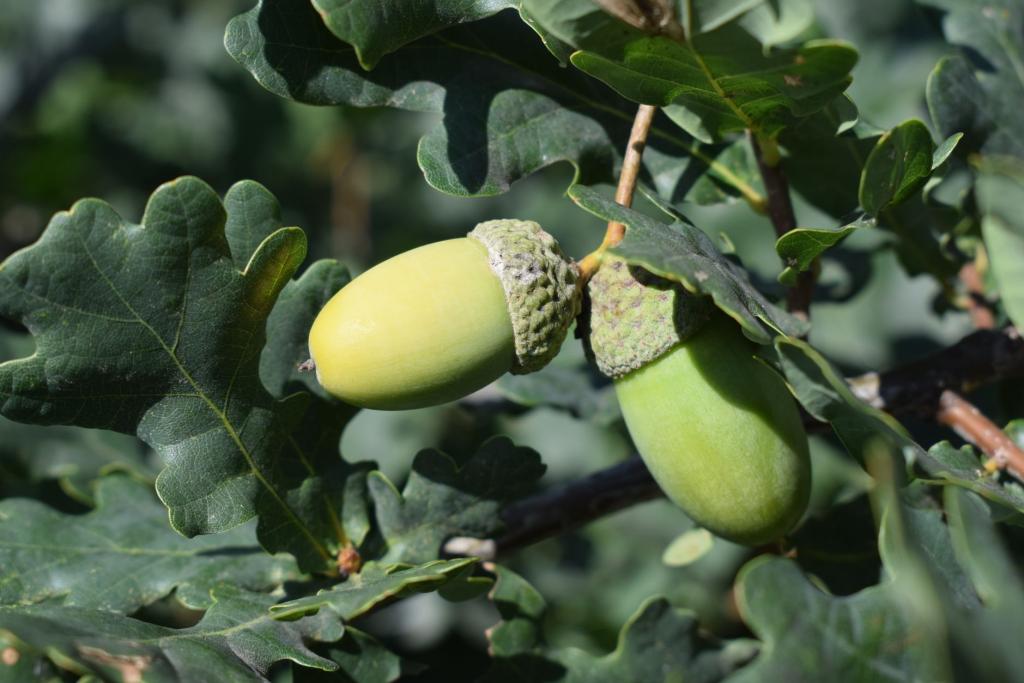
A team of British scientists has launched a project to teach trees to fight back. The IMPULSA project, led by researchers at the University of Birmingham, will spend £2.5 million working out whether trees can be given a faster, stronger immune response within a single lifetime, rather than leaving adaptation to play out over generations.
The work begins with English oak. The researchers plan to develop what they call primedmax, a prepared state in which young oak seedlings are readied to defend themselves, responding faster and more strongly when disease or stress arrives. The aim is practical as well as scientific: to help trees keep pace with threats that are now changing far quicker than the forests themselves.
Funding comes from the Advanced Research + Invention Agency through its Accelerated Adaptation programme, according to the University of Birmingham. The project announcement was made on 21 September 2026.
Luna-Díez says the team wants to go beyond shielding trees from single threats. The larger ambition, she says, is to turn trees' own capacity to prepare for stress into a usable technology, producing a generation of trees better equipped for the forests of the future. In effect, the researchers are training oak tree immunity rather than replacing it, coaxing the seedlings' own defences into a higher state of readiness.
How primedmax works
The team is combining expertise in plant immunity, protein biology, epigenetics, microbiology and environmental science. Researchers from the University of Birmingham, the University of Edinburgh and the University of Southampton will take fundamental discoveries about how genes and proteins regulate plant immunity and apply them in living trees for the first time.
Professor Estrella Luna-Díez, who holds the chair in Plant and Forest Resilience at Birmingham and directs the Birmingham Institute of Forest Research, is leading the project. She says trees have evolved over millions of years, but the threats facing forests are now shifting within decades, and IMPULSA tests whether trees can adapt more quickly by unlocking the power of their own immune systems.
Professor Steven Spoel, Professor of Cell Signalling and Proteostasis at the University of Edinburgh, says the project carries decades of discovery in protein biology into trees for the first time. He describes it as a chance to uncover, and eventually use, the molecular machinery that could help forests fight back against disease.
Nurseries put the science to a real-world test
The research is being shaped around commercial tree production from the start. Three commercial nurseries, Prees Heath Nurseries, Elsoms Trees and Hillier Nurseries, are partnering on the project to bring their expertise in how trees are grown and what growers will actually need from the technology.
Prees Heath and Elsoms will also help identify the disease and herbivory pressures that young oaks face in practice, giving the laboratory work a concrete target. Luna-Díez says the nurseries provide the real-world benchmark, helping the team define what successful protection has to look like if the science is going to make a difference to the trees being planted in landscapes.
Because the work is being developed alongside growers, the team will measure success by what nurseries actually need: young trees that survive being planted into harsher, less predictable conditions.
The longer-term ambition is to establish tree immunisation as a predictable and scalable technology. If the approach works, nurseries could eventually produce young trees that arrive in the ground already prepared for the harder environments waiting for them.
The project will test whether priming young oaks against one set of pressures leaves them better equipped for others, and whether the approach can move from English oak to other species. For now, the starting point is simple: seedlings that notice danger sooner and answer it harder.
The scientists will first establish whether resistance can genuinely be strengthened within one lifetime. If primed oak seedlings react more quickly and forcefully when challenged, the approach could extend beyond English oak and beyond single threats, the university says, offering a new model for how oak tree immunity research moves from the laboratory into the nursery.
The project sits within ARIA's broader push to help wild species adapt faster, described in the agency's annual report and accounts. For more coverage of forests and plant science, see the plants and trees topic.
Source: University of Birmingham announcement on the IMPULSA project.
Comments 0
No comments yet. Be the first to share your thoughts!
Leave a comment
Share your thoughts. Your email will not be published.