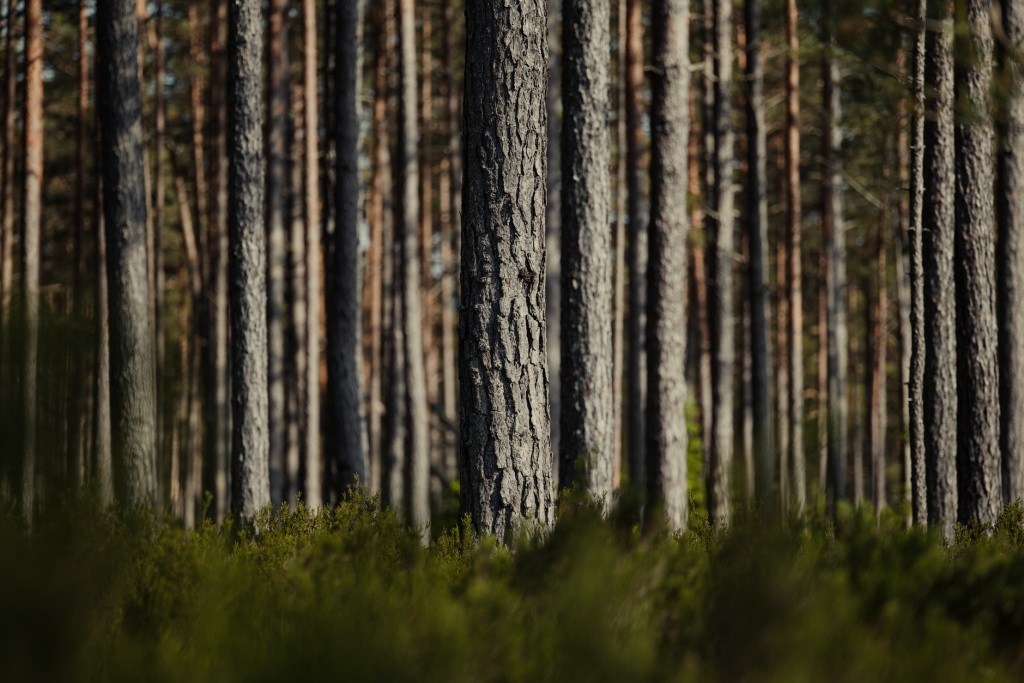
Across the colder half of the planet, spring arrives earlier than it used to and autumn holds off longer. That gives conifer forests more days to grow each year, and for a long time scientists treated a longer growing season as a straightforward climate win: more days should mean more wood, and more wood should mean more carbon pulled out of the air.
A new study says that arithmetic is misleading. Researchers led by Antoine Cabon of the Swiss Federal Research Institute WSL and a CSIC research station in Granada, Spain, counted wood cells in conifers across four continents and compared the two sides of the equation: how many days a tree's growing tissue works each season, and how many new wood cells it makes per day. The conifer growth rate, the number of new wood cells made each day, won decisively.
Speed matters more than extra days
Every tree ring is a count. Just under the bark sits a thin layer called the cambium. It divides through the growing season and builds new wood cells, and the ring visible in a cut stump is that year's stack of them. The height of the stack depends on two things: how many days the cambium works, and how many cells it makes per day.
Cabon's team built a model that multiplied the two, then asked which one a year's total actually tracked. Annual cell production was more sensitive to rate, at 62 percent, than to season length, at 38 percent. When the researchers split up the sources of variation more carefully, rate accounted for roughly 78 percent of the differences in how much wood a tree made. In the subset of sites with several years of data, rate's share rose to 89 percent, according to the study published in Science.
The pattern held in every forest type in the set, cold and dry alike. That consistency matters, because it suggests the finding is not a quirk of one region's climate. Across boreal, temperate, and semiarid conifer forests, the speed of wood formation set the year's growth far more than the calendar did. The study of the hidden system trees use to sense their own shape showed a similar surprise: trees run more of their own growth machinery than earlier models assumed.
The temperature ceiling
The reason extra days stop paying off has to do with temperature. The team found that the pace of cell production peaks when spring averages about 5 degrees Celsius, roughly 41 degrees Fahrenheit. Warmer than that, the rate of wood formation drops off fast enough to cancel out the days that warming adds.
In warmer Mediterranean and temperate forests, the potential benefit of a longer growing season is often offset, or even outweighed, as cell production slows down, the researchers found. That flips the standard assumption. The forests where warming stretches the season the most are often the ones where the extra heat also brakes the growth rate.
"As temperatures continue to rise, even boreal forests may eventually experience slower wood formation and lose the benefits of a longer growing season," Cabon said, as reported by phys.org. Boreal forests sit in the far north where warming is fastest, so the warning applies to the largest remaining stretches of conifer forest on Earth.
What this means for climate plans
The results challenge the expectation that longer growing seasons necessarily improve carbon storage in forests and thereby mitigate climate change. "Although carbon storage depends on more than xylem cells alone," said Patrick Fonti, a co-author of the study, "slower wood formation ultimately reduces the capacity of forests to act as carbon sinks."
That has practical consequences. Climate models and reforestation plans that credit warming-driven season extensions with extra carbon uptake may be overcounting. Efforts like the crowdfunded effort to save the Elwha rainforest work because they protect trees that are already storing carbon, not because planting more of them anywhere will automatically work. Most of what these records compare is one place against another rather than one year against the next, the researchers note, so the next step is pinning down how the rate-versus-duration balance plays out over time at the same sites.
For now, the takeaway is plain: a longer summer does not guarantee a fatter tree. In a warming world, how fast a tree builds its wood counts more than how many days it gets to try, and the conifer growth rate sets the ceiling for forest carbon storage. Read more about the research on phys.org and earth.com.
Comments 0
No comments yet. Be the first to share your thoughts!
Leave a comment
Share your thoughts. Your email will not be published.