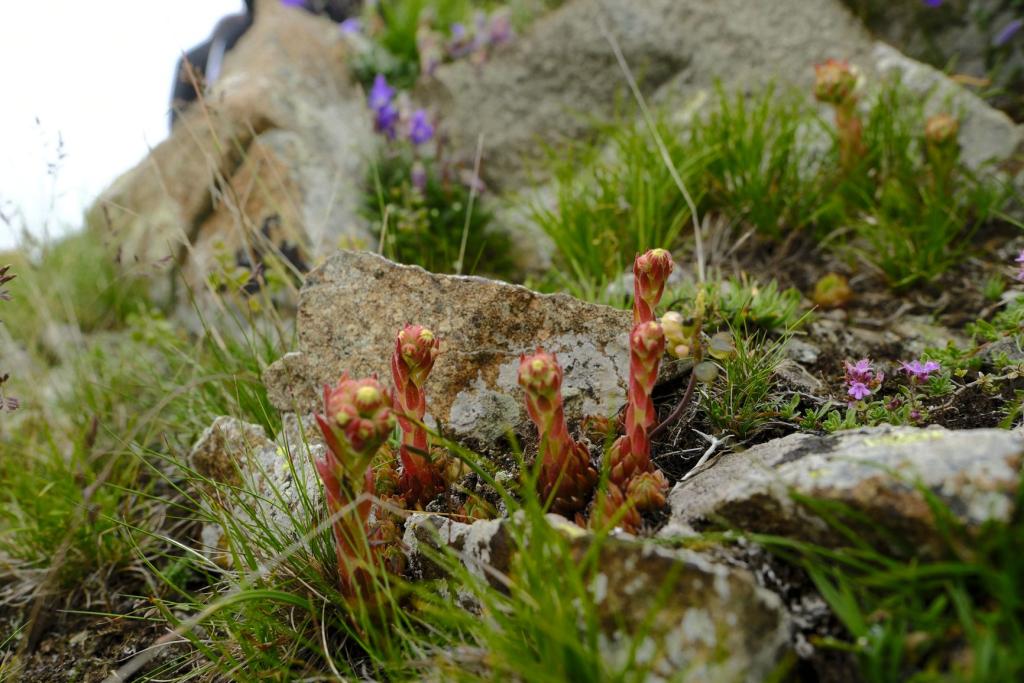
A new reverse tulip species has been described from southeastern Türkiye after a botany lecturer spotted an unfamiliar flower during a nature walk. The plant, named Fritillaria xiyanensis and given the Turkish common name Sason Lalesi — the Sason tulip in English — was reported on September 17, 2026, according to Türkiye Today, with photographs credited to Anadolu Agency.
The discovery began with Dr. Resit Ugran, a faculty member at Batman University’s Vocational School of Technical Sciences. Ugran was walking in the rural Yucebag area of Sason district in Batman province when he noticed a flower he did not recognize. Because he photographs plants as a hobby, he knew when something looked unfamiliar, and he suspected the plant could represent an undocumented species. The first photograph of the Sason tulip started the chain that led to its formal description.
Ugran contacted biologist Veysel Sonay and Associate Professor Mehmet Maruf Balos, a botanist. The team returned to the site, an area locally known as Hiyan, and collected samples to study. Laboratory analysis and comparison with closely related species followed, and the researchers concluded the plant had never been recorded in the scientific literature.
How a plant earns the label “new”
Confirming a new species is slower and more methodical than spotting one. Ugran said the team had to compare the plant’s roots, height, flowers, and inner and outer leaves with closely related species already described in the literature. Only after that comparison and a round of measurements did the team publish its findings in Phytotaxa, a peer-reviewed journal of botanical taxonomy, and formally conclude the plant was a new species.
“We took samples of this plant, carried out measurements and after publishing this in a scientific journal, concluded it was a new species and named it,” Ugran said.
The Latin name Fritillaria xiyanensis refers to the Hiyan area where the tulip grows, while Sason Lalesi translates to the Sason Tulip. With the addition, Türkiye’s tally of known reverse tulip species rises from 61 to 62, Ugran said. Roughly 175 reverse tulip species have been identified around the world. The Sason tulip is now officially part of the record.
Two tulip discoveries in one year
The Sason tulip arrives in a year that has already been unusual for Türkiye’s wild tulips. In June, botanists confirmed that the lost Amasya tulip, Tulipa sprengeri, was growing wild in Amasya province, 130 years after it was last recorded there in 1896. According to FloralDaily, the flower had been noticed by Ercan Eftelioglu, a nature enthusiast from Amasya, during a countryside walk. Botanists from Bolu Abant Izzet Baysal University and the Nezahat Gokyigit Botanical Garden then visited the site and confirmed the identification on the spot. The Amasya find also began with a non-scientist’s photograph, which makes the Sason discovery the second Türkiye tulip headline this year to start with an amateur’s sighting. The Sason tulip joins a busy year for plant discoveries, from Thailand’s devil flower to the newly described baobab Adansonia bozy and 15-million-year-old fossil flowers in amber from China.
Both discoveries share a pattern that botanists keep seeing: a hobbyist with a camera fills a gap that formal surveys missed. Ugran told Türkiye Today that he regularly goes on nature walks and photographs plants as a pastime, which put him in the right place with a trained eye. In Amasya, it was a local walker who flagged the strange flower first. The professionals still do the hard work of confirmation, but the first sighting increasingly belongs to amateurs.
That shift matters because field botany is expensive and vast areas of the region remain poorly surveyed. When a regular walker notices a flower that does not match anything familiar, and researchers take the tip seriously, new species can move from a hillside to the scientific record in a single season.
Protection comes next
Ugran said removing endemic plants, particularly their bulbs, is prohibited, and he believes the newly identified Sason tulip should be placed under formal protection. The call reflects a familiar problem for rare bulbs: collectors can wipe out a local population quickly, and a species known from a small area has little margin for loss.
For now, the Sason tulip exists in the scientific record and in a set of Anadolu Agency photographs of the flower growing among rocks in Sason’s hills. Its Latin name is fixed. Its future will depend on whether the protection Ugran called for follows.
Comments 0
No comments yet. Be the first to share your thoughts!
Leave a comment
Share your thoughts. Your email will not be published.