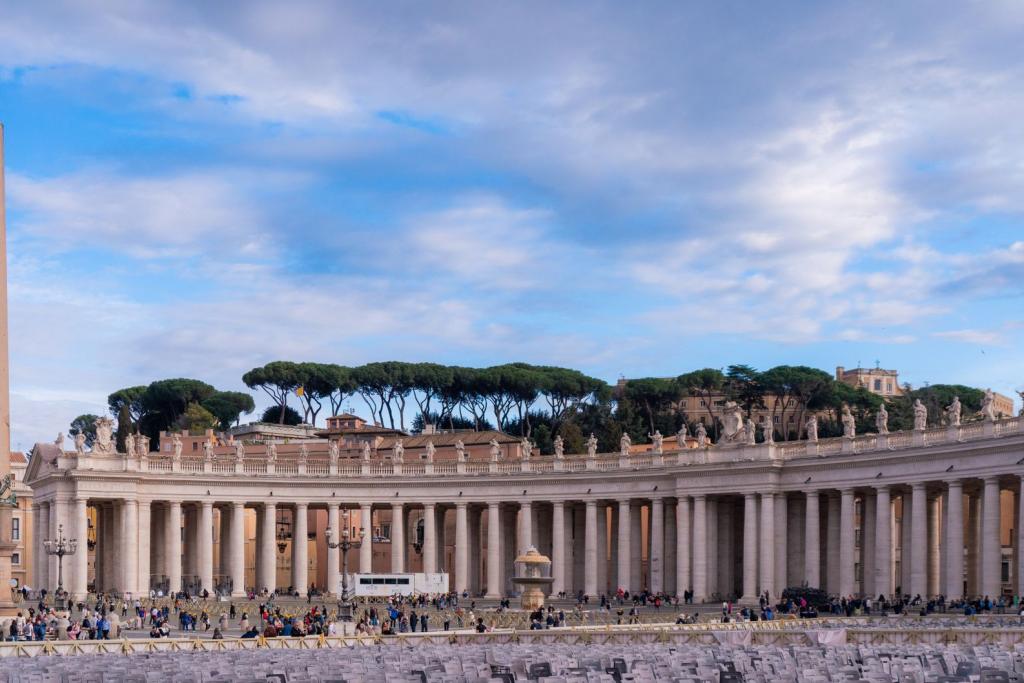
On Sunday morning, October 11, Pope Leo XIV gave his regular blessing in St. Peter's Square and did something popes almost never do. He delivered his own medical bulletin. Doctors had found a small nodule on his lung during recent checkups, he told the pilgrims below. It was localized, in what he called a very initial phase, and he had decided to have it removed on his doctors' advice. For the leader of one point four billion Catholics, a pontiff the world is still getting to know after his election in May 2025, this was an odd and strangely direct way to start a very public week. As NPR's Scott Detrow noted, a new biography of Leo that Detrow coauthored came out just last week, so readers were meeting this pope on the page at the exact moment he was telling the world he was sick. It set the tone for the Pope Leo lung cancer coverage that followed.
Two days later, the timeline moved fast. Leo, the American-born pontiff in his early seventies, walked into Rome's Gemelli Hospital on Tuesday, October 13, greeting the crowds on his way in. He was in the operating room for roughly three hours, though the operation itself lasted about ninety minutes, according to the Holy See Press Office. Surgeons used a video-assisted technique to remove the lower lobe of his right lung, and tissue testing during the procedure confirmed what the pre-operative exams had suggested: lung adenocarcinoma. The Holy See said the operation was successful, with no complications, and that Leo woke up as expected before returning to his room on the hospital's tenth floor. He is expected to remain hospitalized for about a week. All of his public audiences have been cancelled through October 20, though the planned apostolic trip to Uruguay, Argentina, and Peru, set to begin November 6, remains on the schedule, the Vatican said. The Pope Leo lung cancer diagnosis is a serious test of how this papacy communicates under pressure.
Gemelli is familiar ground for papal illness. The hospital is where ailing pontiffs are usually taken for treatment, and Leo's predecessor, Francis, spent weeks in the same facility in 2025, first battling a pulmonary infection and later recovering from abdominal surgery, according to Bloomberg. But Francis's stays played out the old way: carefully managed bulletins, days of speculation, and a press operation that treated the pope's body like a state secret. Leo, by contrast, walked in, smiled at the cameras, and told everyone why he was there. Even the hospital room carried a small symbol of the break with the past. According to NPR, Gemelli has a permanent papal suite where Francis spent more than a month during his illness last year, but the suite is being renovated, so Leo is recovering in an ordinary room like anyone else. That contrast between the old handling and the new approach is what makes the Pope Leo lung cancer news worth paying attention to.
An unusual amount of honesty
The Vatican Press Office, led by director Matteo Bruni, has given running updates since the weekend: the routine exams that found the nodule, the admission, the length of the operation, the surgical technique, the diagnosis itself. By Vatican standards, this is practically a live blog. The Pope Leo lung cancer timeline has played out almost entirely in public, from the balcony announcement to the hospital bulletins. For decades, the Holy See's approach to papal health was silence, then a carefully worded bulletin, then more silence. Questions about disclosure and medical decision-making keep surfacing outside the church as well; in India, courts recently weighed in on who gets a say in medical decisions when a patient cannot speak. NPR also noted the detail that makes Leo's case remarkable: the surgery was far more serious than the initial plan had suggested. What started as removing a small nodule became removing an entire lobe of a lung. The Vatican said so anyway, in the same statement as the diagnosis. On the evening of the announcement, Vatican officials led a gathering of the faithful praying the rosary, a reminder of how personally Catholics around the world were taking the news.
The missing prognosis
What the Vatican has not said matters too. No outlet has reported the stage of the cancer, whether it has spread beyond the removed tissue, or what further treatment Leo may need. An independent review of the coverage found that nearly every outlet carried the same Holy See statement and stopped there; the New York Times was the lone exception, naming adenocarcinoma's high early-stage survival rate as the clinical detail that changes how the story reads. That is the missing paragraph in the Pope Leo lung cancer story so far. That gap is where the old instinct lives on. If the pontiff can stand on a balcony and tell the faithful about a nodule before surgery, there is no good reason to withhold the rest of the picture after it. The Pope Leo lung cancer diagnosis deserves the same candor in its prognosis as it received in its announcement. Silence about a leader's health does not protect the institution; it feeds the speculation the Vatican says it wants to avoid.
Why the balcony matters
There is an argument that this is how powerful institutions should handle bad health news, full stop. The papacy runs on ritual authority, and admitting frailty before anyone demands it builds the kind of trust that cannot be manufactured later. For younger Catholics, and for anyone who has watched an institution hide an illness until the last possible moment, the announcement lands differently than a bulletin ever could. Leo is not a pope who shies away from uncomfortable subjects; earlier this year he issued a pointed warning to tech leaders about artificial intelligence, a reminder that this pontiff treats candor as part of the job. The Pope Leo lung cancer story will keep developing, through the recovery, the prognosis, and the November trip to Latin America. The Pope Leo lung cancer announcement broke the tradition. Now the Vatican should publish the full prognosis.
Comments 0
No comments yet. Be the first to share your thoughts!
Leave a comment
Share your thoughts. Your email will not be published.