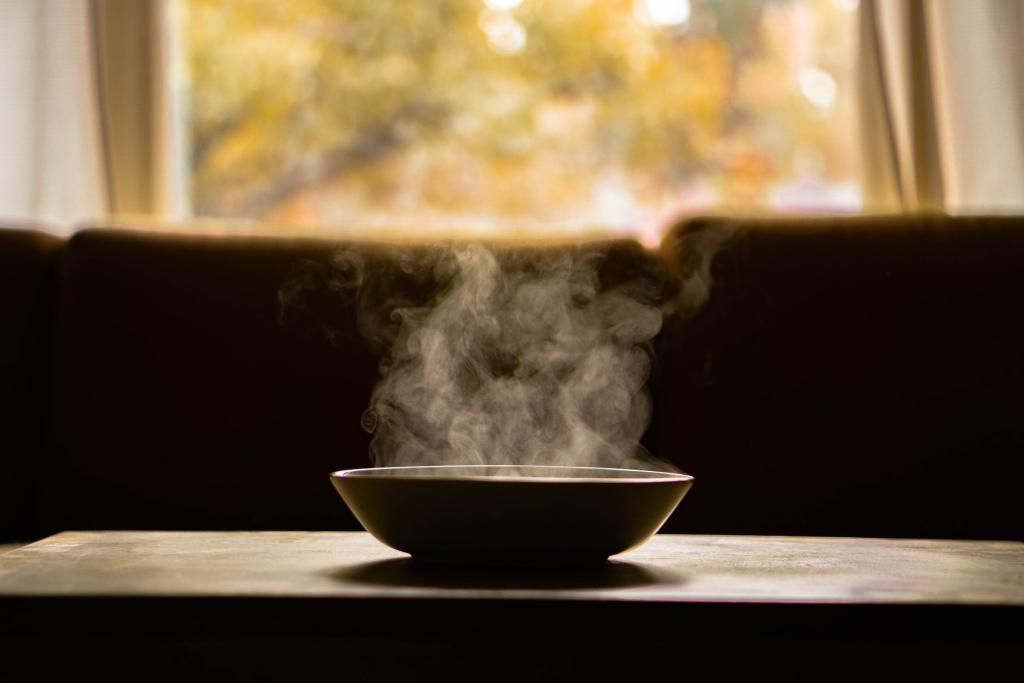
"Piping-Hot Drinks Linked to Higher Cancer Risk" is not the headline your morning routine ordered. But researchers who tracked almost a million adults in the United Kingdom found that people who preferred their tea and coffee "very hot" faced about three times the risk of developing squamous cell carcinoma (SCC) of the esophagus — cancer of the muscular tube that carries food from the throat to the stomach — compared with people who took their drinks warm.
The reassuring part is that piping-hot drinks are linked to higher cancer risk because of temperature, not the drink itself. The elevated risk showed up for tea and coffee alike, and stirring in milk made no meaningful difference, pointing the finger at repeated thermal injury rather than caffeine or anything in the cup.
A million-person look at your morning cup
The Oxford team of Papier, Gaitskell, Floud and Reeves drew on two of Britain's biggest health datasets — the Million Women Study, with 510,112 participants, and the UK Biobank, with 467,170 — following volunteers for 11 to 14 years. The findings were published on September 8, 2026 in the International Journal of Cancer, according to ZME Science's breakdown of the paper, which lists the study DOI as 10.1002/ijc.70654.
Over the follow-up, 1,045 participants developed SCC and 1,303 developed adenocarcinoma, the other major type of esophageal cancer. Compared with warm-drink drinkers, those who liked their drinks merely "hot" carried a 69% higher SCC risk, while the "very hot" group carried a relative risk of 3.17. It is the clearest evidence yet that piping-hot drinks are linked to higher cancer risk in a Western population. Temperature showed no meaningful pattern for adenocarcinoma.
Frequency mattered on its own. After accounting for preferred temperature, people who drank six or more hot drinks a day faced a 71% higher SCC risk than those who drank fewer, according to News-Medical. The two effects did not appear to multiply each other, and the pattern held among never-smokers and light drinkers as well.
Why heat is the culprit, not the coffee
The biology is straightforward: repeated swallows of scalding liquid irritate and injure the esophageal lining, and over years that chronic damage can nudge cells toward cancer. "The concern is primarily thermal injury," said Dr Tushar Tayal, associate director of internal medicine at CK Birla Hospital in Gurgaon, in comments to OnlyMyHealth. "When someone repeatedly swallows very hot liquids, the lining of the oesophagus can be exposed to repeated heat-related irritation and injury."
The idea is not new. Back in 2016, the World Health Organization's cancer research arm — the International Agency for Research on Cancer — listed beverages drunk above 65°C as "probably carcinogenic to humans." Much of the earlier evidence came from South America, where a pooled analysis of 1,400 SCC cases across Argentina, Brazil, Paraguay and Uruguay tied risk to how hot people drank their mate, according to the outlet's summary of earlier research. The finding adds weight to the idea that piping-hot drinks are linked to higher cancer risk through heat alone.
There are caveats. Volunteers described their own preferences as warm, hot or very hot rather than having their drinks measured with a thermometer, so the research cannot draw a precise danger line in degrees. Healthline's coverage of the findings noted that avoiding established risk factors such as smoking and heavy drinking likely matters more for overall risk — a familiar pattern in environmental risk research, as seen in reporting on a major US study tracing brain cancer risk to radon in homes. SCC also remains a relatively rare cancer, which keeps any one person's absolute risk small.
How to protect yourself without quitting caffeine
For readers rattled by the "piping-hot drinks linked to higher cancer risk" headline, the fix is almost comically simple: wait. Public-health modeling attached to the study estimated that if very-hot drinkers switched down to merely hot, about 14% of the country's yearly cases of this cancer — roughly 440 cases a year — could be avoided. Fiona Osgun, health information head at Cancer Research UK, advised simply waiting until a drink is comfortable to consume rather than drinking it while very hot.
Practical moves cost nothing: give a fresh pour a few minutes, take smaller sips, and do not assume that adding milk buys safety — the study found it did not change the link. If your mug needs a cozy sleeve just to hold it, that is your cue to let it cool first.
Headlines like "Piping-Hot Drinks Linked to Higher Cancer Risk" sound scary, but the takeaway is refreshingly low-drama. Nobody is asking you to give up coffee. Your drink is not the enemy; the scald is. Let it cool, sip easy, and your morning ritual stays exactly as comforting as ever. For more health reporting, browse the Health topic page.
Comments 0
No comments yet. Be the first to share your thoughts!
Leave a comment
Share your thoughts. Your email will not be published.