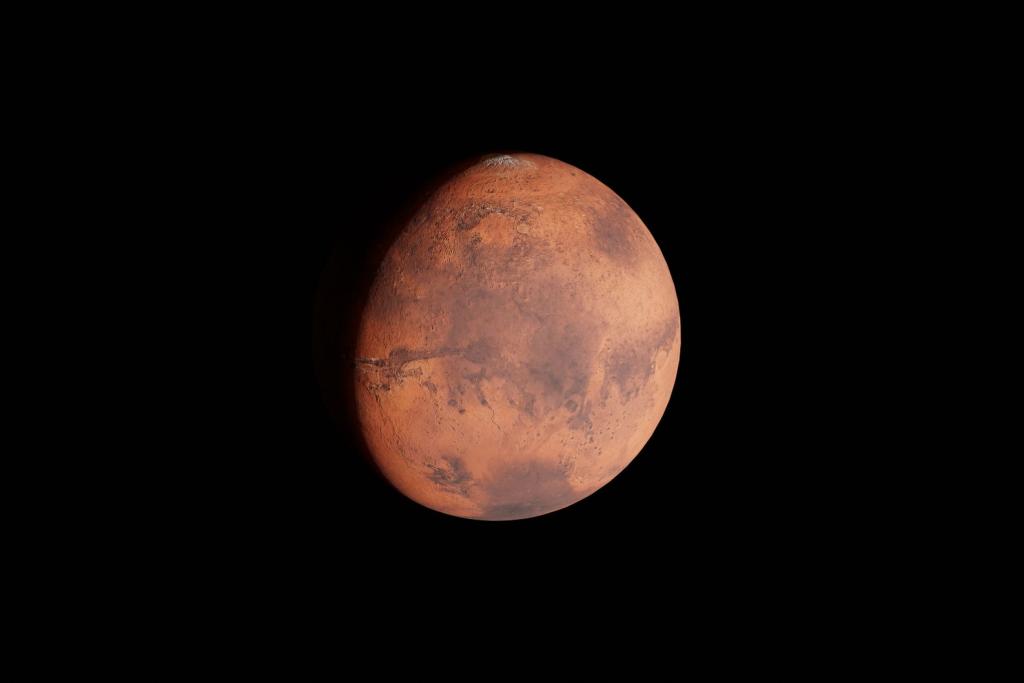
The Perseverance driving record just fell, and it happened on another planet. NASA's six-wheeled Mars rover has now rolled farther than any vehicle has ever traveled on a world beyond Earth, according to NASA's Jet Propulsion Laboratory. The odometer tipped past the old mark on October eleventh, and the whole thing took about five and a half years.
The old champion was Opportunity, the plucky rover that explored Mars from two thousand four to two thousand eighteen. Its final total was twenty-eight point oh six miles, or forty-five point one six kilometers. Perseverance hit twenty-eight point one zero miles, or forty-five point two two kilometers, on the two thousand and sixth Martian day of its mission. Opportunity needed almost fifteen years to cover that same ground.
The drive that made history
The record-breaking moment was not a dramatic sprint. It was a routine drive of just under three hundred feet, or about ninety-one meters, according to NASA. One of the rover's navigation cameras snapped a shot of its own tracks pressing into rocky, sloping sand that day, and it already looks like the ultimate road trip photo.
At the time, Perseverance was heading toward an area called Idubi, in a region off the western rim of Jezero Crater nicknamed Lac de Charmes. Scientists think the rocks there may be some of the oldest terrain ever explored in the solar system. They are so ancient that their Earthly equivalents were wiped out long ago by erosion and plate tectonics.
Why this rover moves so fast
Much of the credit goes to self-driving software. A system called AutoNav lets the rover image the ground while rolling, build a three-dimensional map of hazards, and plot its own course between waypoints picked by humans back on Earth. The team calls it "thinking while driving," and it means Perseverance doesn't have to stop and wait for instructions every few feet.
The numbers are wild. According to the Jet Propulsion Laboratory, Perseverance has used AutoNav for more than ninety percent of its total distance, compared with about five percent for the first Martian version on Opportunity and its twin Spirit. It can cover as much as thirteen hundred and fifty-one feet in a single Martian day. Where the tiny Sojourner rover judged its path with twenty measurement points back in nineteen ninety-seven, Perseverance processes six hundred thousand with every look.
Mark Maimone, the deputy team chief for robotic operations on Perseverance, put it bluntly: "The rover that broke this record did so by making its own decisions about the path." He added that the next frontier is sunlight itself, since glare in the navigation cameras is why the team parks by mid-afternoon when driving toward the Sun.
Beating the Moon too
Mars isn't the only place Perseverance is flexing. Along the way, it also rolled past the distance covered by Apollo seventeen astronauts Gene Cernan and Harrison Schmitt in their lunar buggy, plus the Soviet Union's Lunokhod two rover from nineteen seventy-three. Curiosity, the other active NASA rover on Mars, has logged more than twenty-three point six five miles and is still going, so there is some friendly sibling rivalry on the Red Planet.
For the engineers, though, the number is only a bonus. "The original mission called for no more than twelve point four miles of driving," said Steven Lee, the project manager of the Curiosity and Perseverance rovers at the Jet Propulsion Laboratory. "We've blown well past that," he said, adding that with all mobility systems fully operational, NASA expects Perseverance to keep adding to the record for many years.
What the miles are actually for
Driving far matters because it puts more rock within reach. Perseverance has gone from an ancient lakebed up a fossilized river system, where it found a potential biosignature at a rock called Cheyava Falls, and onward to the crater rim. It has collected twenty-nine rock and regolith samples so far, including impact rocks roughly four billion years old, from a chapter of planetary history almost entirely erased on Earth.
The science team hopes Idubi will reveal traces of ancient hydrothermal systems, the kind of hot, watery habitat that could have supported microbial life. After that, the rover will keep following the crater rim and head south toward Rainbow Falls, a block of ancient crust about a hundred meters wide that was shoved upward by the impact that carved Jezero.
The road ahead
Perseverance isn't parking anytime soon. NASA recently approved the mission's first extension, which began this month and carries the rover's crater rim exploration through roughly the end of two thousand twenty-eight. That is plenty of time to stretch the Perseverance driving record even further, and every extra mile adds another chapter to what Mars used to be.
It also hints at what comes next. Self-driving tech built and battle-tested on Mars is the same kind of autonomy future missions will need on the Moon and beyond, when signals take too long to micromanage a rover from home. Want to follow the rover's journey? Check the latest on our science coverage, and read the full announcement from NASA's Jet Propulsion Laboratory.
Independent outlets confirmed the milestone as well, with CBS News reporting that the rover has been exploring Mars since twenty twenty-one and passed Opportunity's mark in less than half the time. Not bad for a car-sized science lab running on its own judgment, millions of miles from the nearest mechanic.
Comments 0
No comments yet. Be the first to share your thoughts!
Leave a comment
Share your thoughts. Your email will not be published.