A fossil braincase that sat forgotten in a London museum drawer for roughly a century has just become science's newest fierce girl. Meet Invictibellatrix amberina — a new dinosaur species whose name roughly translates to "unconquered female warrior," and the first of her kind ever found in Europe.
The chunk of skull belonged to a megaraptoran, an agile group of two-legged carnivores that count as close kin of the tyrannosaurs. That makes this long-clawed predator the first megaraptoran ever discovered on the European continent, according to the University College London-led team behind the new research. She prowled what is now southern England around 120 million years ago, in the Early Cretaceous — a human-sized hunter that likely wore feathers and struck with sickle-like claws.
A century in a drawer
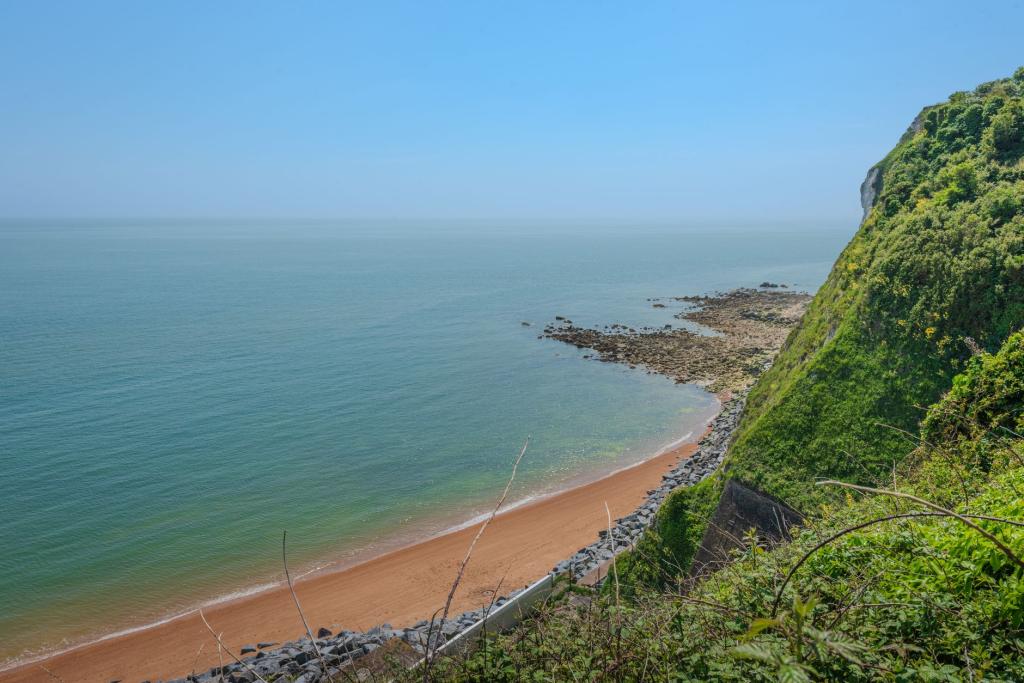
This new dinosaur species was found the old-fashioned way: by picking it up off the ground. The braincase was collected at the foot of a cliff at Sudmoor Point, near Brook on the southwest coast of the Isle of Wight, by amateur fossil hunter Reginald Walter Hooley. The Natural History Museum bought it from his widow in 1924, along with more than a thousand of his specimens — and then nothing happened for decades, as reported by Gold Radio.
That changed when UCL researcher Cassius Morrison and colleagues ran the fragment through CT scans, building three-dimensional models of the skull piece and the surfaces inside it. Their computer analyses, which compared its shapes against tyrannosaurs, spinosaurs and raptors, kept landing on the same answer: a megaraptoran. The results are published this week in the journal Royal Society Open Science, with the fossil catalogued as specimen NHMUK PV R6775. "It is a real mystery that this fossil was overlooked for so long," Morrison said of the bone's long, quiet century in storage.
Why this rewrites the dinosaur map
Here is the plot twist that has palaeontologists buzzing: until now, megaraptorans were treated as a Southern Hemisphere crowd, known mainly from South America and Australia. This animal is the first confirmed member of the group on the European side of the globe. Study co-author and PhD student Charlie Scherer said it proves the lineage reached Europe — and that megaraptorans had already spread from Asia into the southern landmass of Gondwana by around 130 million years ago.
The closest known relative is Murusraptor, an Argentinian megaraptoran that lived roughly 80 million years ago. According to reporting by Sci.News, the new animal would have weighed just 200 to 300 kilograms, making it one of the smallest members of its group ever found — a striking contrast with later megaraptorans, which ballooned into giants more than twice the length of a bus and over two tonnes. That supports the idea that the group evolved its monster size relatively late. A similar-looking hunter, the five-metre Eotyrannus, once stalked the very same Wessex Formation rocks, but the preserved bones of the two do not overlap, so scientists cannot directly compare them. And if you read about the feathered Norellraptor barsboldi earlier this month, note this is a different story: that one was about fossil plumage, while this one is a single braincase rewriting where an entire predatory lineage lived.
Smaller than T. rex — and more dangerous to you
She was not the apex predator of her world. Morrison estimates the animal at three to four metres long and just over a metre and a half tall — roughly tiger-sized, about as high as a person — probably feathered, with claws possibly 10 to 20 centimetres long. Dinner would have been small dinosaurs, lizards and mammals, a niche he compares to today's hyena. But here is the kicker, in Morrison's own words: "We would have been perfectly sized prey... they definitely would have chased us." A full-grown Tyrannosaurus rex, he notes, would not have bothered with something our size. This smaller, faster hunter absolutely would have.
Why it matters
The bigger takeaway is not one dinosaur but a thousand forgotten drawers. Senior study author Paul Barrett told reporters this week that "the Isle of Wight continues to surprise us with new dinosaur species" despite more than two centuries of collecting, and that work on historic collections keeps paying off. Every museum basement on Earth holds specimens no living scientist has examined — and each one could be the next unconquered warrior, one CT scan away from her debut.
Comments 0
No comments yet. Be the first to share your thoughts!
Leave a comment
Share your thoughts. Your email will not be published.