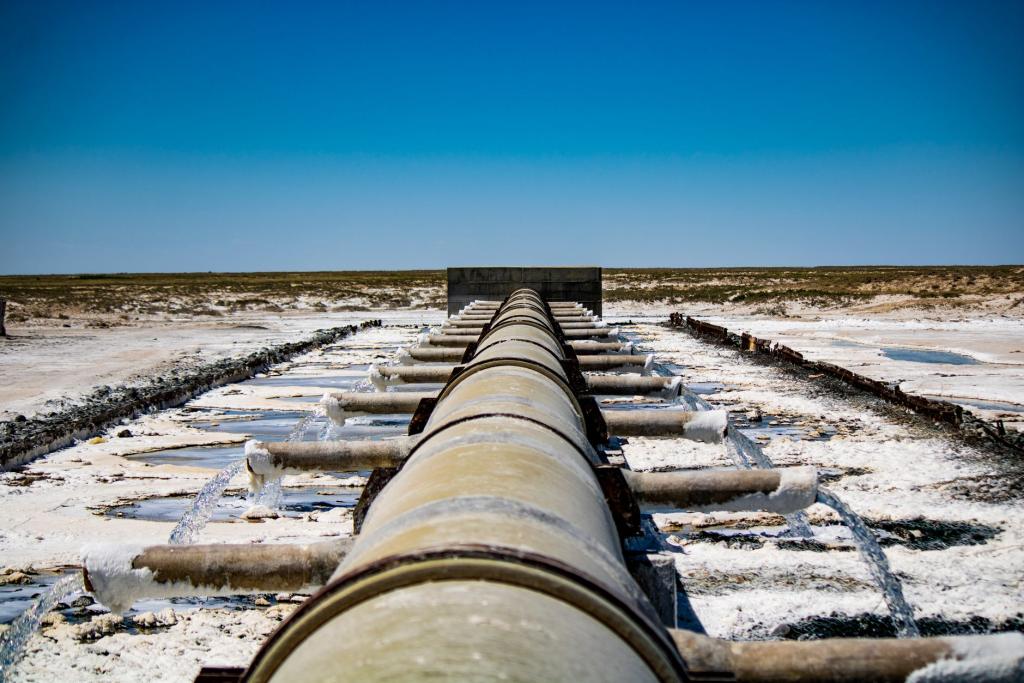
Canada has a new national priority, and it runs on oil. On the first day of October 2026, Prime Minister Mark Carney stood alongside Alberta Premier Danielle Smith in Fort McMurray to announce that the proposed West Coast Oil Pipeline — now officially renamed the Pacific Link Pipeline — has been listed as the first-ever "project of national interest" under the Building Canada Act. The designation unlocks a fast-tracked federal review with a hard deadline: regulators must finalize the conditions for construction by the first of September 2027, in what Carney framed as a once-in-a-generation bid to make Canada a global energy superpower, according to a news release from the Prime Minister's Office.
The project would move crude from the Edmonton area to a marine terminal at Roberts Bank, near Delta in British Columbia, opening a direct route to buyers in Asia. For a country whose oil exports flow almost entirely south of the border, the pitch is about leverage as much as energy: less dependence on the United States, more options for who buys Canadian crude and at what price.
The Pacific Link Pipeline numbers, and who is paying
The Prime Minister's Office is selling the project with big figures. The release promises one hundred forty thousand jobs across the country, more than twenty billion dollars in additional GDP every year, and one hundred billion dollars in government revenue by 2060. The pipeline itself would ship an additional one million barrels of crude a day to Asian markets — volume that does not currently have a westbound outlet at anything like that scale.
On ownership, Ottawa and Alberta would each hold an equal stake, while Indigenous communities would be offered a minimum ten percent ownership interest, financed through federal and provincial Indigenous loan guarantee programs. Pembina Pipeline Corporation is the private-sector investor attached to the project, and the Trans Mountain Corporation — the federal Crown corporation that built the controversial Trans Mountain Expansion — would lead development, according to the Prime Minister's release.
The question Carney tried to answer in advance is the one critics keep asking: who actually foots the bill. The prime minister said taxpayers would not be on the hook, but no private proponent has stepped forward to pay the full cost of construction, as reported by the Canadian Press. That matters because the predecessor project is a cautionary tale: the Trans Mountain Expansion was purchased for seven point four billion dollars in 2018 and ultimately cost more than thirty-four billion by the time it was completed in 2024, according to reporting by the Globe and Mail and the Canadian Press.
How we got here: the Pacific Link Pipeline timeline
The announcement caps nearly a year of choreography between Ottawa and Edmonton. In November 2025 the two governments signed an energy pact; in May 2026 they struck an implementation agreement that set October 1, 2026 as the deadline for the listing decision. That same agreement tied the pipeline's fate to the Pathways carbon capture project, making construction of the two "mutually dependent," according to the Canadian Press. In August 2026 the federal government published its formal notice of intent in the Canada Gazette, starting the thirty-day clock that expired with Thursday's announcement.
Consultation has been the other parallel track. Over the past three months the federal Major Projects Office says it consulted more than one hundred thirty Indigenous communities along potential routes in Alberta and British Columbia, along with the B.C. government. From here, the Major Projects Office — working with the Canada Energy Regulator — leads a single federal review aimed at clearing the way for shovels in the ground as early as September 2027.
One notable routing choice is designed to defuse the fiercest opposition: the pipeline would follow roughly the existing Trans Mountain path to Roberts Bank, south of Vancouver, avoiding British Columbia's North Coast and the Great Bear Sea, where tanker traffic has long been the red line for coastal First Nations.
The pushback: climate, cost and coastal opposition
The counterpoint arrived quickly. British Columbia Premier David Eby has been openly skeptical of the project, and the Heiltsuk Tribal Council's chief, Marilyn Slett, has said no pipeline and tanker project is acceptable on the North Coast, according to Bloomberg. Environmental groups argue the national-interest designation is a way to bulldoze through scrutiny of a project that would lock in decades of oil sands expansion, with the climate cost falling on younger generations.
The route choice blunts but does not end that argument. Southern routing avoids the North Coast fight, but critics note the oil would still come from the oil sands, and the emissions arithmetic does not change with geography. Analysts also question the economic modeling, pointing to the Trans Mountain precedent: if a project can quadruple in cost under federal ownership, they argue, the revenue projections deserve the same skepticism as the construction estimates.
Why it matters if you are young and Canadian
Strip away the politics and the announcement is a bet about what the Canadian economy looks like in 2040 and beyond. The Prime Minister's Office explicitly tied the projected revenue to health care, dental care and child care — services young Canadians use and will rely on. The jobs pitch is aimed squarely at a generation entering a labor market where the energy sector still pays some of the best wages available without a graduate degree.
The other framing is geopolitical. With trade tensions with the United States escalating — including the import ban that took effect as the trade war heated up, covered in our Canada coverage — the argument for a Pacific outlet is that Canada should not sell nearly all of its oil to one customer. Whether you read that as diversification or desperation depends on where you stand on the pipeline itself, and the debate over projects like the LNG expansion on the coast shows how sharply the country divides on it.
The deadline is real and the clock is now running. By the first of September 2027, regulators must set the conditions that decide whether construction begins — and whether the first project to carry Canada's national-interest label becomes a template or a warning.
Comments 0
No comments yet. Be the first to share your thoughts!
Leave a comment
Share your thoughts. Your email will not be published.