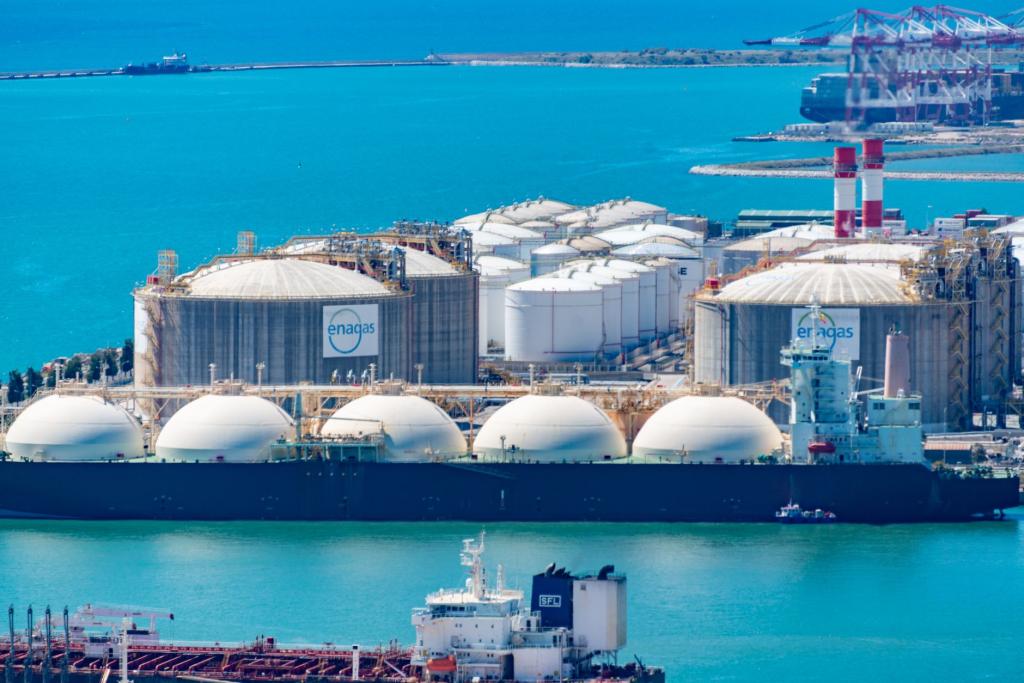
Canada just placed the biggest private-sector bet in its history on liquefied natural gas. On September 29, 2026, Prime Minister Mark Carney announced in Vancouver that LNG Canada had reached a final investment decision on the second phase of its Kitimat, British Columbia terminal — a 33-billion-dollar commitment that doubles the facility's export capacity and makes the Canada LNG expansion the second-largest project of its kind anywhere in the world. The government framed it as an energy-independence play for an era of trade wars; climate advocates called it a fossil-fuel buildout the planet cannot afford. Both claims deserve a closer look.
The headline numbers are striking. The Prime Minister's Office said the commitment is the second-largest single private investment in Canadian history, creating more than 4,000 direct construction jobs and nearly five billion dollars in contracts and procurement for First Nations and local businesses, according to the official news release. Doubling the terminal means it will ship 28 million tonnes of liquefied gas a year once fully built. At the same time, TC Energy confirmed it will double the capacity of Coastal GasLink, the pipeline feeding the terminal, with construction set to begin next year and more than 2,000 additional jobs attached.
What the Kitimat expansion actually builds
The project is owned by a joint venture led by Shell Canada with PETRONAS, PetroChina, Mitsubishi Corporation and KOGAS as partners. Phase 1 began shipping gas in June 2025 — the first time liquefied natural gas was ever exported directly from Canada — and the new phase adds a second wave of processing trains plus a storage tank big enough to hold 225,000 cubic metres of LNG. Perhaps most consequential for nearby communities, five First Nations — the Gitga'at, Gitxaała, Haisla, Kitselas and Kitsumkalum — hold an option, through MNT Investments LP, to take a majority ownership stake in that new tank with an investment of up to one billion dollars. That is ownership, not just jobs, and it marks a genuine shift in how Canadian megaprojects share revenue.
Carney pitched the decision as a response to a hostile trade moment. "Today's investment will make LNG Canada the second-largest facility of its kind in the world," he said, arguing it would connect Canadian energy to markets in Asia and Europe "providing the secure supply our partners need," as Global News and The Canadian Press reported. The timing was no accident: the announcement landed the same week the United States imposed fresh import bans on certain Canadian goods, part of a tariff fight that began with 50 percent duties on a broad range of products in August 2026. Selling gas across the Pacific is Ottawa's answer to a southern neighbor that keeps closing its doors.
Why this matters now: the timeline
The speed of this decision is the real story. Phase 1 only started exporting fifteen months ago. In September 2025, the federal government routed the second phase through its new Major Projects Office, a fast-track body designed to compress approvals. One year later, the investment is locked in. For context, large Canadian energy projects have historically taken a decade or more from proposal to construction — the fast-track model is now the template Ottawa wants for everything from ports to power lines.
There is also a global-race angle. Commercial operations for the new phase are not expected until the early 2030s, which means this project does nothing for today's trade fight and everything for the 2030s market. By then, Canada's gas will be competing with Qatari and American terminals that are also racing to sign long-term Asian contracts. The upside case: displaced coal in Asia cuts global emissions, since burning gas produces roughly half the carbon dioxide of coal per unit of energy. The downside case: every contract signed now locks in fossil infrastructure for thirty or forty years — well past the point climate targets say emissions must be near zero.
The climate counterpoint
That downside case arrived the same day as the announcement. In a statement issued that afternoon, Amnesty International Canada called the decision "a major setback for climate action," arguing the science leaves no room for new fossil-fuel projects if the planet is to stay livable. The group attacked the "low-carbon LNG" label as misleading, pointing to reports that the Kitimat facility has been flaring excess gas at rates above what the provincial regulator agreed to, with plumes of partially burned hydrocarbons detected. "We cannot build more fossil-fuel projects if we want to have a livable planet," the group's secretary general Ketty Nivyabandi said, according to the statement reproduced by europesays.com. The statement also argued foreign-owned multinationals would capture most of the profits while Indigenous and rural communities absorb the worst impacts.
The government has answers for some of this. Its position is that Canadian LNG displaces coal abroad and carries a smaller production footprint than many competitors, and the Indigenous ownership stake answers the charge that benefits flow only outward. What Ottawa cannot answer is the timeline problem: even the most efficient gas project is a decades-long commitment built in the decade emissions were supposed to fall.
What it means for you
If you are in your twenties and eyeing the trades, this is a real pipeline of work: thousands of construction jobs in northern British Columbia over the next several years, on top of the broader surge of young workers moving into skilled trades rather than college degrees. Once those earners are paid, they face a housing market covered in GenZ NewZ's look at how young buyers are coping. For everyone else, the stakes are indirect but large. The project is a test of whether Canada can be both an energy exporter and a credible climate actor — and whether the fast-track approval model built for this terminal becomes the standard for the next dozen megaprojects. Watch construction starts next year, the Indigenous equity decision, and whether Ottawa applies the same playbook to clean-energy infrastructure. This story is far from over; it is barely past the starting line.
Comments 0
No comments yet. Be the first to share your thoughts!
Leave a comment
Share your thoughts. Your email will not be published.