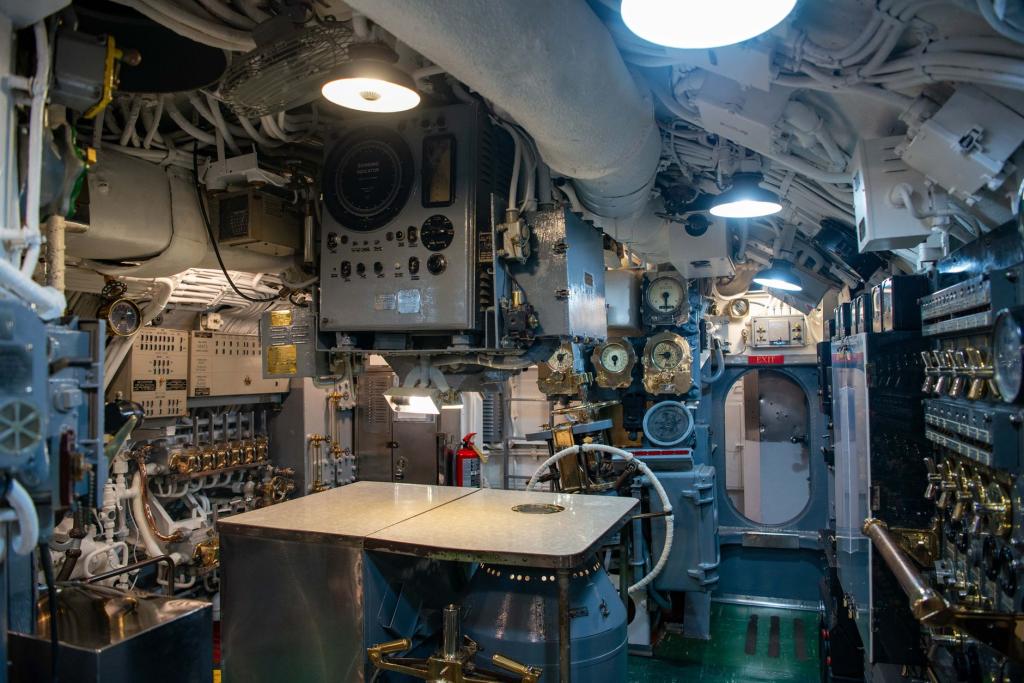
The North Korea AI torpedo is the newest weapon Pyongyang is bragging about, and the claim landed Saturday morning. State media says the country tested an underwater system called Zam-2.0 that uses artificial intelligence to find and track targets, according to the Associated Press.
Here is the thing, though. Nobody outside North Korea has verified any of it, and the details are thin. Still, the timing says a lot about where Kim Jong Un wants his military to go next.
What North Korea says it tested
The Korean Central News Agency said the weapon was fired on Thursday and described it as a "super-speed, precisely guided" torpedo system. Officials called the test a great success that foresees a significant change in the actual development of the navy, according to Yonhap News Agency.
The report said artificial intelligence was applied to target detection and to the guidance function. It did not explain what that actually means. Is the torpedo choosing its own targets, or is it just running smarter navigation software? State media did not say.
KCNA also said the test proved core technology for raising propulsion efficiency and boosting the performance of rocket propulsion devices. The agency added that more than one hundred eighty related tests had been carried out over the past five years. That number suggests a long development program rather than a sudden leap.
No photos or video of the weapon were released with the announcement, according to NK News, which makes independent analysis even harder. South Korea's military, which often accuses the North of exaggerating its technology, did not immediately comment.
A navy push, not a one-off
This torpedo test does not stand alone. North Korea has been ramping up weapons demonstrations in recent weeks, including its first underwater-launched missile tests in nearly three years, per the AP. Experts say those launches likely involved a submarine that has not been deployed yet and that Pyongyang says is built to fire nuclear weapons.
Before that, the country tested hypersonic missile systems of various ranges on September twentieth and October third. Those are designed to overwhelm missile defenses in South Korea and Japan. Kim Yo Jong, the powerful sister of the leader, claimed the missiles from the October third test also used AI.
The pattern is pretty clear. After years of focusing on ballistic missiles, Kim is shifting attention toward naval power, and he has said the level of AI in weapons needs to rise. For a country that has frozen all diplomacy with Seoul and calls it a permanent enemy, a stronger navy is also a message.
How much of the AI claim is real?
Experts are skeptical. The AP reports that while North Korea is likely improving its guidance software, it is doubtful that its weapons really have advanced digital capabilities such as autonomous target designation. In plain terms, "AI" may be a buzzword doing a lot of work here.
There is a reason to use it anyway. Calling a weapon AI-powered grabs headlines, signals technical progress to rivals, and fits the global conversation about militaries racing to add machine learning to their arsenals. Even a modest software upgrade can be sold as a breakthrough when nobody can check.
That does not mean the threat is zero. Torpedoes are hard to detect, and any improvement in speed or tracking makes life harder for ships and submarines. The Aju Press report noted that the claims raise concerns that such technology could make underwater threats harder to detect and track.
What to watch next
Watch for any reaction from Seoul and Tokyo, and for satellite or imagery analysis that could confirm what was actually launched. If North Korea shows footage in the coming days, analysts will look closely at the shape, size and launch platform. Until then, treat the claims as claims.
For Gen Z, this is a good reminder of how fast AI language is spreading into every corner of the news, from chatbots to warships. The label sounds futuristic, but the proof is what matters. For more on global security stories, check our war coverage and keep an eye on the world desk.
The bottom line is simple. The North Korea AI torpedo may be real hardware with a software upgrade, or it may be mostly messaging. Either way, Pyongyang is clearly betting that the underwater race is where it can make the most noise next.
Comments 0
No comments yet. Be the first to share your thoughts!
Leave a comment
Share your thoughts. Your email will not be published.