Humanity may be on the verge of answering one of its biggest questions: is life unique to Earth? According to NASA Administrator Jared Isaacman, the odds are looking incredibly good. In a stunning claim that has the scientific community buzzing, Isaacman estimated there is a 90 percent chance of proving ancient life on Mars once rock and soil samples finally return to Earth.
The Science Behind the Bold Prediction
Isaacman's confidence comes from groundbreaking new research about how organic materials survive on the Red Planet. Scientists from NASA Goddard Space Flight Center and Penn State University discovered that amino acids, the building blocks of life, can survive trapped in pure water ice for up to 50 million years even under constant cosmic radiation. This discovery changes everything scientists thought they knew about finding life on Mars.
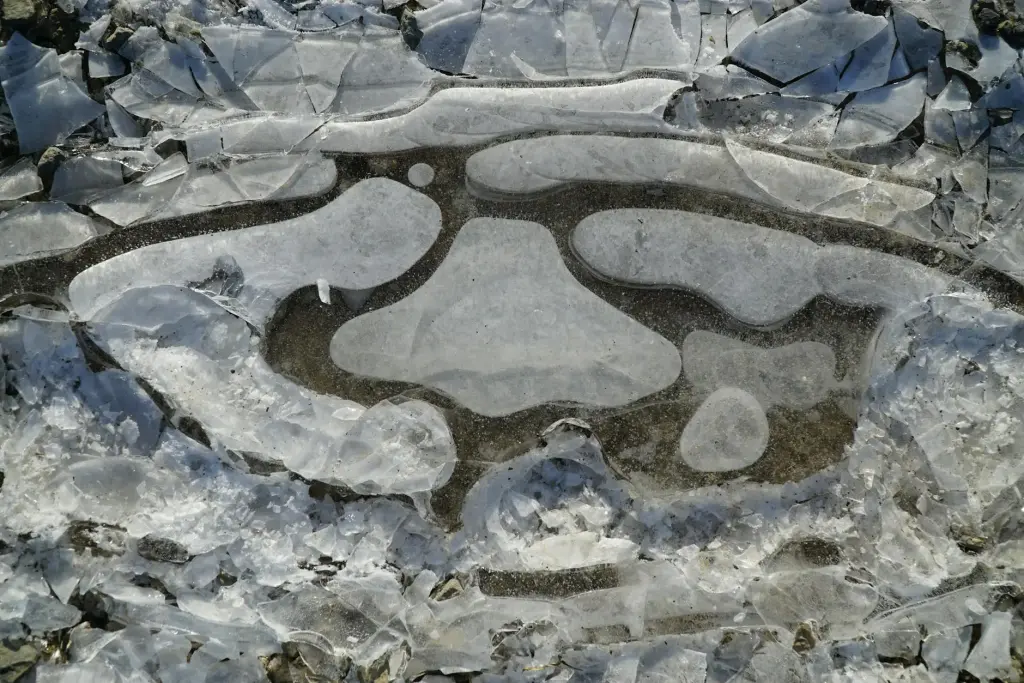
The study, published in a leading scientific journal, found that Mars' frozen ice caps may actually be time capsules for ancient life. According to the research, amino acids trapped in Martian ice can survive exposure to harsh radiation that would normally break them down on the surface. This means that if ancient Martian microbes existed billions of years ago, their chemical signatures could still be locked away in ice deposits, waiting to be discovered.
According to Christopher House, a researcher involved in the study, this represents a game-changer for Mars exploration. Future missions will need powerful drills to access subsurface ice where these ancient biological materials may be preserved. The findings suggest that Mars sample return missions should prioritize ice-rich deposits to maximize the chances of detecting biological material. More coverage of science breakthroughs is available.
Why Mars Sample Return Mission Is Critical
NASA's Perseverance rover has already been collecting rock and soil samples from Jezero Crater, an ancient lakebed that scientists believe was once teeming with water. These samples are being stored in titanium tubes on the Martian surface, awaiting a future sample return mission that will bring them back to Earth for detailed analysis in advanced laboratories.
The Perseverance rover has also found compelling evidence that rain fell on Mars for thousands of years. Clay minerals analyzed by the rover suggest that Mars once had a stable, rain-driven climate with liquid water on the surface, not just brief melting events. This discovery makes the case for ancient life on Mars even stronger, as persistent water is one of the key requirements for life as we know it.
NASA's long-term plan involves sending a sample retrieval lander to Mars that will collect the cached samples and launch them into orbit. A European Space Agency orbiter will then capture the sample container and return it to Earth, potentially by the early 2030s. When those samples finally arrive in laboratories on Earth, scientists will be able to search for chemical signatures of ancient life on Mars with instruments far more sophisticated than anything that can be sent to Mars.
The discovery of abundant nickel in a once waterlogged region of Mars offers yet another hint that the Red Planet may once have offered suitable conditions for life. Combined with the new findings about amino acid survival in ice, the evidence is stacking up that Mars was once habitable. According to Isaacman's bold prediction, scientists have a 90 percent chance of proving it once those samples are returned.
This represents one of the most exciting moments in space exploration history. For decades, scientists have debated whether Mars ever supported life. Now, with multiple lines of evidence converging and the samples already collected, researchers may be just a few years away from knowing the answer for certain. If ancient life on Mars is confirmed, it would fundamentally change our understanding of life's place in the universe and prove that Earth is not unique. The implications would be profound for everything from biology to philosophy to humanity's place in the cosmos.
More science discoveries and space exploration news can be found in ongoing coverage. The Mars sample return mission represents humanity's best shot yet at answering the age-old question: are we alone?
Comments 0
No comments yet. Be the first to share your thoughts!
Leave a comment
Share your thoughts. Your email will not be published.