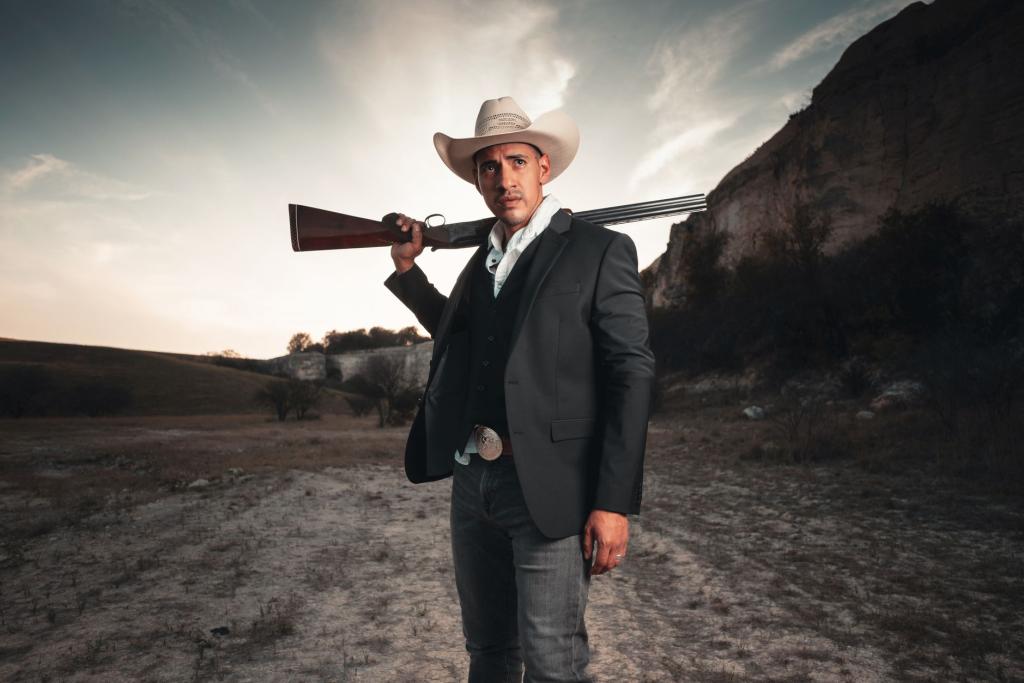
On the October 13 episode of Build or Break, the podcast hosted by Kind founder Daniel Lubetzky, Matthew McConaughey described an exercise that sounds like a dare and works like an audit. The actor, fifty-six, said he once gathered twenty years of his negative reviews into a single thick book, drove out to the West Texas desert, and read every one of them. He spent two days with the material, he told Lubetzky, and it was hard. The McConaughey reviews project was a sorting system, built by a man at the peak of his career, for the feedback nobody asks for and everybody gets.
His team placed the trip around 2018 or 2019, while McConaughey was writing his memoir Greenlights, according to Fortune's reporting on the episode, as relayed by Ghanamma. By then he had already won the Academy Award for Dallas Buyers Club and built the kind of career most actors spend a lifetime chasing, with Fortune estimating his net worth at two hundred million dollars. This was not a young actor spiraling after a flop. The McConaughey reviews ritual came from success, from the strange problem of having praise and scorn arrive in the same week with no reliable way to weigh either.
Two kinds of critics
McConaughey told Lubetzky that the desert read divided his reviewers into two groups, and only one of them was worth his time. Some critics, he said, had decided in the very first sentence. It did not matter whether the writer had even watched the film; the pan was decided in advance, aimed at the man more than the work. The other group surprised him. Those critics were often fans, and their complaints were specific: they had not gotten from his performance what he had hoped to give them, and the gap between intention and result asked an uncomfortable question. He kept returning to one question, he said: what could the miss teach him? He turned the pan into craft notes. The McConaughey reviews split was not really about the reviewers. It was about which feedback survives contact with honesty.
Then he made the McConaughey reviews exercise useful instead of only painful. Where a critic had been fair, McConaughey asked what the review revealed about his own choices, and where he had failed to land what he was aiming at. The question turns a bad review into a draft note, which is a better use for it than rage. It also explains why the desert mattered. Reading the pans in one bounded sitting, far from the daily churn of opinion, let him compare them against each other instead of reacting to each one alone. Scrolling comments forever is the opposite of the McConaughey reviews method: open-ended, ambient, and never finished. He made his criticism finite.
Why the triage is the take
The opinion here runs against how most people handle being judged. Most people pick all or nothing: read everything and believe all of it, or read nothing and learn nothing. McConaughey picked a third option, and the McConaughey reviews method is worth naming plainly. Two days, one book, then done. The skill that made the desert trip work was triage, the willingness to read the criticism, throw out most of it, and keep the rest. That discipline is harder than ignoring criticism, because it requires reading the criticism first.
There is a second edge to the story. McConaughey told Lubetzky that before fame, praise and criticism both came from how well he did the job. Then one successful weekend brought a flood of strangers telling him they loved him, and the signal broke. The uncritical praise distorted his feedback loop as thoroughly as the hostile pans did. Anyone who has watched a comment section flip from adoration to a pile-on recognizes the pattern. Gen Z lives inside a permanent review system, and recent CDC teen mental health data, covered by GenZNewZ, suggests the generation is turning a corner on handling the pressure. Sitting with uncomfortable material in a structured way has evidence behind it, and a recent GenZNewZ report on virtual therapy for college students found that short, scheduled sessions moved the needle fast. The McConaughey reviews method applies the same logic to criticism: schedule the hard look, keep it contained, and use what survives.
The question he kept
The desert trip ended without a verdict on any single review. What McConaughey kept was a question for the next time a pan lands: what can be learned from it? If the answer is nothing, the review joins the noise pile. If the answer is something, the work changes. He also joked that the critics who had praised him over the years were simply "the smart ones," a line that gets a laugh because it admits the bias everyone carries: praise feels true when it agrees with you. The McConaughey reviews experiment was a two-decade audit of that bias, conducted deliberately, far from an audience. Nile1's account of the episode puts the trip near Marfa, alone with the book and nothing else. The method travels fine without the desert. Pick a bounded time, read the worst of it once, and keep only what teaches something.
Comments 0
No comments yet. Be the first to share your thoughts!
Leave a comment
Share your thoughts. Your email will not be published.