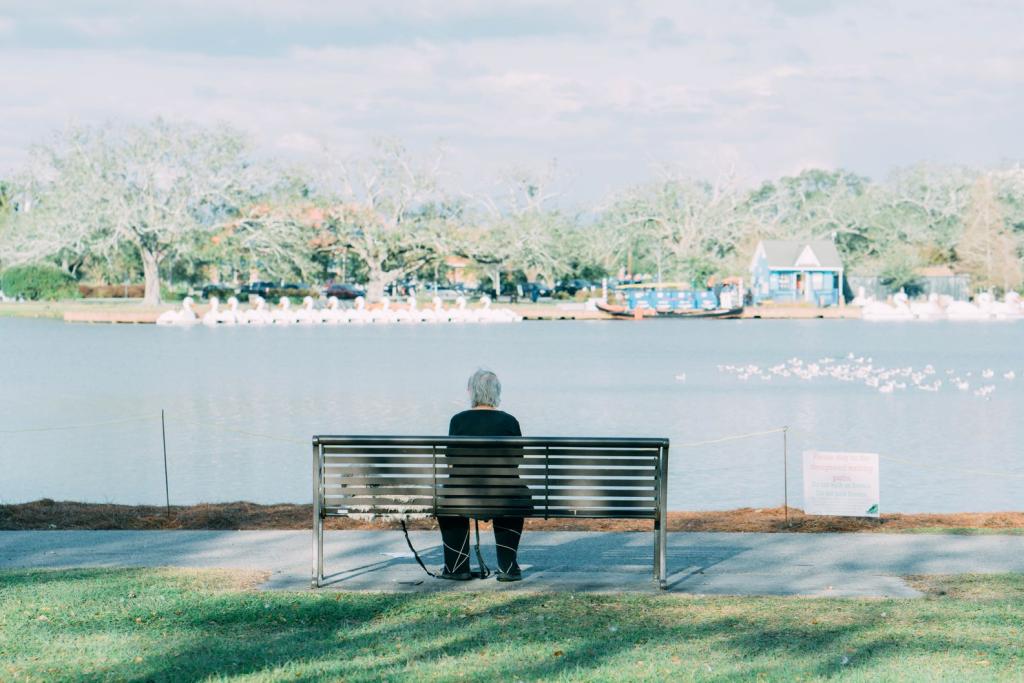
Loneliness is usually treated as an older person's problem. New research out of Monash University says that picture is backwards: when it comes to how much life quality is actually lost, young Australians are paying the heaviest price. The study, published in the journal Value in Health and selected as one of the journal's 2026 Editor's Choice papers, finds that loneliness is linked to the biggest drop in health-related quality of life among people aged 15 to 24 — larger than the toll it takes on any other age group, according to the Monash University announcement.
The scale of the analysis is what sets it apart. Researchers drew on more than fifty-three thousand observations from almost twenty-two thousand Australians aged 15 and over, collected across four waves of the nationally representative Household, Income and Labour Dynamics in Australia survey. Rather than taking a single snapshot, the team followed the same people over time, tracking how changes in loneliness and social isolation lined up with changes in their health-related quality of life. The analysis also accounted for shifting circumstances along the way, including employment, income, physical and mental health conditions, and major life events.
Health-related quality of life was measured with standardized health utility values, a single score that folds different aspects of health and wellbeing into one number, ranging from full health at the top down to zero. Among young Australians, loneliness was associated with the largest utility reduction of any age group — a finding that held up after the researchers adjusted for everything else, as reported by the journal. Loneliness, the study shows, was linked to bigger utility drops than social isolation, and the two combined appear to interact, producing an even steeper decline when they occur together.
Young Australians are lonelier — and it costs them more
The prevalence numbers are striking on their own. Loneliness alone was reported by eighteen per cent of people aged 15 to 24, and the share declined steadily with age, dropping to twelve per cent among those aged 65 and over. Social isolation, by contrast, was more common among older Australians. But prevalence and impact turned out to be different stories: for young Australians, each unit of loneliness was associated with a deeper dent in how healthy, happy, and able to enjoy daily activities they felt.
The researchers also found that the burden does not fall evenly. While loneliness hit young Australians hardest overall, social isolation showed its strongest association with poorer quality of life among women aged 25 to 44, as reported in the study. The pattern suggests that the two experiences — feeling lonely versus being objectively isolated — operate through different channels at different life stages, which matters for how support services are designed. A program that works by expanding someone's social calendar may miss a young person who is surrounded by people and still lonely.
Methodologically, the study used individual fixed-effects panel regressions, meaning it compared each person against themselves over time rather than comparing lonely people to different people who were not lonely. That approach filters out stable personal traits — everything from temperament to long-standing health conditions — that could distort the picture, addressing a key weakness of earlier one-off surveys. It also explains why the authors could say something stronger than "lonely people are worse off": they could watch wellbeing fall within the same individual as loneliness arrived. The result is a cleaner read on what loneliness itself does to a person's wellbeing, year by year, and it is why the paper earned its Editor's Choice selection.
Why the findings matter beyond the clinic
The age reversal is the headline because it contradicts how loneliness is usually discussed. Public conversation and most prevention campaigns still frame isolation as a late-life risk, but this analysis shows that young Australians are absorbing the steepest quality-of-life penalty. For anyone working in youth mental health, education, or employment policy, that finding reframes loneliness from a comfort problem into a measurable health and economic one — utility scores like these are exactly the inputs governments use to weigh the cost of problems against the cost of fixing them.
There is a counterpoint worth keeping in view. Social isolation — the objective lack of contact — remains more common among older Australians, and the study confirms that it matters most in its own demographic pockets. The research does not argue that older adults are fine; it argues that the system for measuring harm has been missing where young Australians carry theirs. Read alongside our reporting on why teen belonging shields against loneliness, the picture sharpens: connection is not a soft extra in young lives, it is load-bearing infrastructure.
For young Australians themselves, the takeaway is less abstract. The study's own controls suggest that employment, income, and health shifts all shape the loneliness equation — which means the feeling is tangled up with real material conditions, not just mindset. Expect this research to surface in policy conversations about youth services and in the next round of economic evaluations of mental health programs. For more on the science of wellbeing, browse our Mind & Body coverage.
Comments 0
No comments yet. Be the first to share your thoughts!
Leave a comment
Share your thoughts. Your email will not be published.