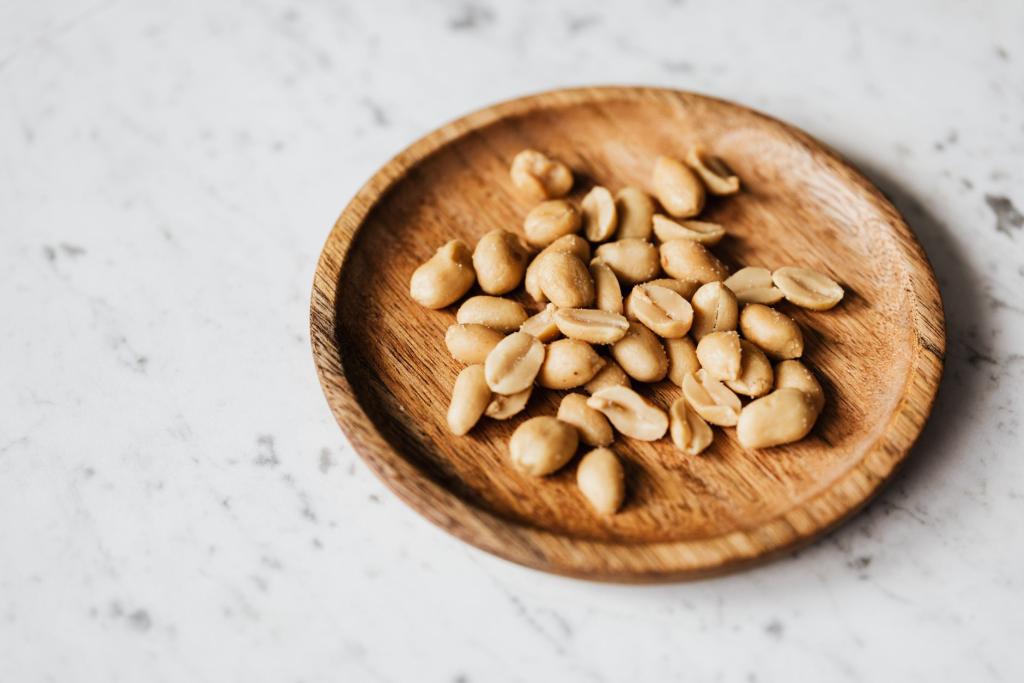
Eating a daily handful of unsalted, skin-roasted peanuts improved how older adults' brains respond to insulin, according to a new randomized trial — and the change appeared in exactly the regions tied to memory. As reported by MedicalXpress, thirty-one healthy adults between the ages of sixty and seventy-five ate sixty grams of peanuts every day for sixteen weeks, after which imaging showed stronger brain insulin responsiveness in a cluster of right-hemisphere memory regions.
Insulin is far more than a blood-sugar hormone. In the brain it acts as a signaling molecule that supports the growth and survival of nerve cells and the communication between them — processes that underpin memory and learning. As people age, brain insulin responsiveness tends to decline, a shift researchers have linked to age-related cognitive decline. The hormone "plays an important role in the brain," says Dr. Peter Joris, the study's senior author and an associate professor in the nutrition and movement sciences department at the NUTRIM institute of Maastricht University Medical Center in the Netherlands, because it "supports memory and other cognitive processes."
The brain insulin effect was not spread across the whole organ. Whole-brain imaging revealed a single cluster in the right hemisphere where the response to insulin improved, encompassing parts of the lingual gyrus, the hippocampus, and the parahippocampal and posterior cingulate regions — areas deeply involved in forming and retrieving memories. The researchers describe the result as evidence that a simple daily habit can reach the brain's memory circuitry in a measurable way.
How the trial was run
The design was unusually rigorous for nutrition research: a randomized, controlled crossover trial. Volunteers received premeasured packets of skin-roasted peanuts — roughly two servings a day — and were told to eat them in the morning or afternoon, all at once, spread through the day, or mixed into meals. During the control period they ate no peanuts at all, and afterward everyone switched sides, so each person served as their own comparison. That crossover structure makes it far harder for lifestyle differences between volunteers to masquerade as a peanut effect.
To assess brain insulin responsiveness, the team tracked changes in regional blood flow after administering insulin through the nose — a route that delivers the hormone toward the brain — using an advanced imaging technique called arterial spin labeling magnetic resonance imaging. Cognitive performance was tested with a standardized computerized battery, and abdominal scans measured liver fat. The study was led by its senior author and carried out day to day by doctoral candidate Lucia Kerkhof in the university's nutrition and movement sciences department.
Why peanuts might pull this off
Peanuts pack a mix of unsaturated fats, dietary fiber, vitamins, minerals, and bioactive plant compounds that "could potentially contribute to the observed brain benefits," according to the senior author. They are also a solid source of plant-based protein and are especially rich in L-arginine, a building block of nitric oxide — a molecule the team notes has been "reported to facilitate learning and memory performance." Together, that nutrient mix may help explain why the snack moved the needle on brain insulin signaling instead of simply adding calories: ordinary, affordable foods can carry combinations of nutrients that matter for the brain.
A brain insulin finding with a backstory
This result is the second act of an ongoing research program. In 2025, the same group reported that the identical daily peanut regimen increased global brain blood flow by three point six percent and improved verbal memory by five point eight percent, in work published in the journal Clinical Nutrition. Blood flow delivers oxygen and nutrients throughout the brain, so last year's vascular finding and this year's hormonal one point in the same direction from two different angles: peanuts appear to support both the brain's supply lines and its internal signaling at the same time.
Why this brain insulin result matters even if sixty feels far away
Nobody in the trial was in their twenties — but brain insulin responsiveness does not fall off a cliff at sixty; it erodes gradually across adulthood. The habits that keep the brain's insulin signaling strong are built decades before problems show up, which is exactly why a finding like this lands differently for younger readers. Swapping an ultra-processed snack for a handful of unsalted peanuts is the kind of low-effort, low-cost change that compounds over a lifetime — and steady brain insulin function may be one of its quietest payoffs.
The fine print
Context matters. The trial was funded by The Peanut Institute Foundation, although the funder had no role in the study's design, analysis, interpretation, or writing — a standard but important disclosure. The sample was a small group of healthy older volunteers, so the results cannot be stretched into dietary advice for everyone. And the researchers make no claim that peanuts prevent Alzheimer's disease; improved brain insulin responsiveness in memory regions is one promising piece of a much larger puzzle, not a verdict.
The findings were announced on October 5, 2026, and the full study is published in the journal Food & Function. The result has also drawn wider media attention, as reported by Men's Journal.
Bottom line: a daily peanut habit sustained across the trial period measurably improved brain insulin responsiveness in the memory centers of older adults — the second trial in a row to find that this humble legume does something real for the aging brain. It is not proof of prevention and not a prescription, but it is a reminder that the foods we reach for every day are quietly shaping the organ we think with.
Comments 0
No comments yet. Be the first to share your thoughts!
Leave a comment
Share your thoughts. Your email will not be published.