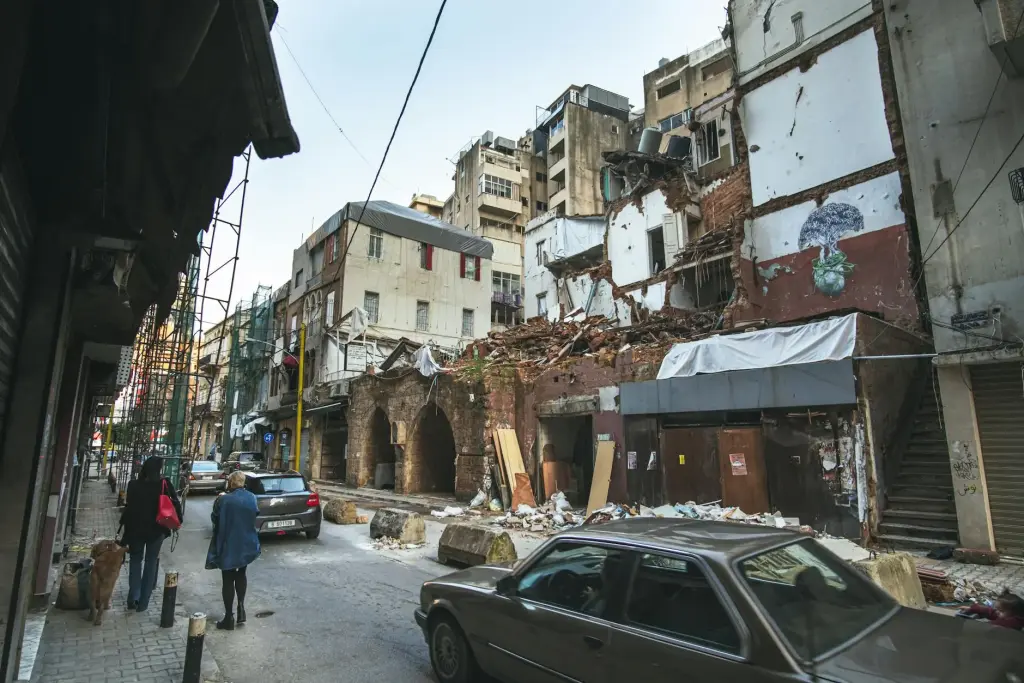
The Lebanon war escalated dramatically on Saturday when Israeli airstrikes killed at least seven people in southern Lebanon and demolished parts of a historic Catholic convent in a border village — an attack that religious and humanitarian groups said crossed a line that international law has long treated as inviolable. The strikes were among the most intense in weeks of escalating hostilities along the Lebanon-Israel frontier, part of a broader pattern of operations that have deepened a conflict that began as a border skirmish following the October 2023 Gaza war.
The Israeli military said its forces had targeted Hezbollah infrastructure near the convent, claiming the building had been used to store weapons and to provide logistical support for the group's operations. The statement from the Israel Defense Forces said soldiers had issued evacuation warnings to civilians in the area before the strikes. According to AP News, the Lebanese Red Cross confirmed seven deaths and said rescue teams were still searching collapsed structures late Saturday. The Lebanon war has drawn increasing international attention as civilian casualty counts rise.
The Convent Attack
The targeted structure was the Convent of the Sisters of the Holy Family, a Catholic institution that had operated in the village for more than a century, providing school services and medical care to both Christian and Muslim residents of the surrounding area. Footage from the scene, verified by AP News, showed part of the main building reduced to rubble, with broken statuary and debris scattered across a courtyard. The nuns who lived there had refused to evacuate in the days before the strike, telling local media they believed the building's religious status would protect it from direct targeting. The Lebanon war has increasingly affected civilian infrastructure that international law designates as protected.
The Vatican's foreign minister, Archbishop Paul Gallagher, issued a statement calling the attack "deeply troubling" and calling for an independent investigation under international humanitarian law. The AP reported that places of worship have historically been recognized as protected sites under the Geneva Conventions, and that their destruction, even in wartime, constitutes a violation of customary international law. Catholic charities operating in Lebanon said the convent had served as a refuge for displaced families in the months since hostilities intensified. You can follow the broader Middle East conflict coverage for context on how the Lebanon war fits into regional dynamics.
Civilian Casualties and Evacuation Orders
Beyond the convent, Israeli strikes across southern Lebanon on Saturday killed at least seven people and wounded more than 20 others, according to figures from Lebanon's Ministry of Public Health cited by AP News. Among the dead were two paramedics who had been responding to an earlier strike in the town of Bint Jbeil, a historically significant town in southern Lebanon that has seen heavy fighting throughout the current cycle of hostilities. The IDF confirmed it had conducted strikes in the Bint Jbeil area but said its targets were launch sites and weapons caches, not medical personnel.
Human rights organizations have increasingly documented what they describe as a pattern of Israeli military operations in the Lebanon war that issue evacuation warnings through phone calls, text messages, and sometimes airstrike sirens — warnings that critics say give civilians insufficient time to relocate. According to a recent report by AP News, the United Nations Office for the Coordination of Humanitarian Affairs documented 23 incidents in April in which entire villages in southern Lebanon received multi-wave evacuation orders, in some cases covering populations of several hundred people within a window of less than two hours.
International Response
The attack on the convent drew condemnation from the French Foreign Ministry, which called for an immediate ceasefire in Lebanon, and from the European Union's foreign policy chief, who said the targeting of religious sites was a "red line" under any interpretation of international humanitarian law. The United States did not directly address the convent strike but reiterated its call for all parties to distinguish between military targets and civilian infrastructure.
Hezbollah said the attack on the convent proved that Israel's campaign in the Lebanon war was indiscriminate in its targeting. The group has been engaged in low-intensity exchanges with Israeli forces along the border since October 2023, initially as a show of solidarity with Hamas in Gaza and increasingly as a direct confrontation in its own right, according to AP News. The Lebanon war dynamics have now become intertwined with the broader Middle East conflict, making diplomatic solutions more difficult to envision and more urgent to pursue, analysts say. Read more about ongoing global conflicts at GenZ NewZ.
Comments 0
No comments yet. Be the first to share your thoughts!
Leave a comment
Share your thoughts. Your email will not be published.