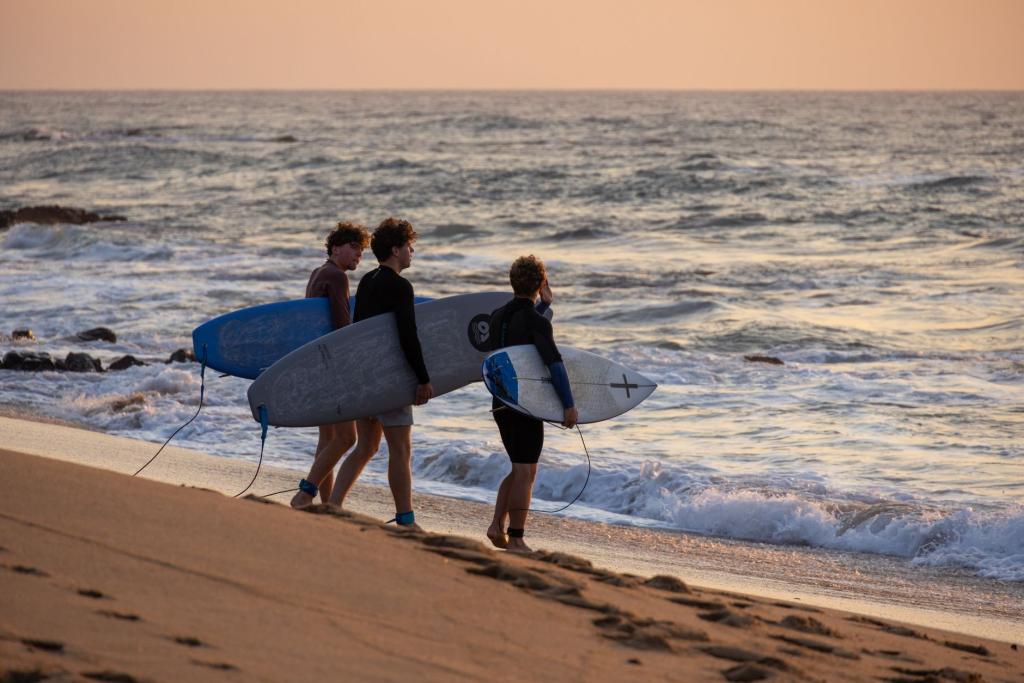
The Murdered Surfers case finally reached its legal end on Friday, when a Mexican judge sentenced each of three men to more than a century and a half behind bars for the 2024 killings of two Australian brothers and their American friend. The verdict closes a case that drew international attention to the risks facing travelers on Baja California's Pacific coast.
The three men were convicted last week of homicide, aggravated robbery, robbery with violence and vehicle theft with violence for the deaths of Jake Robinson, thirty-three, his brother Callum, thirty, and their friend Carter Rhoad, thirty. Each received a term of one hundred fifty-eight years and nine months, and the court ordered them to compensate the victims' families, according to Reuters reporting from Mexico City.
What the Court Decided
The guilty verdicts were delivered October 9 by Judge Raul Hernandez after a month-long trial in the coastal city of Ensenada. The convicted men, named by authorities as Jesus Gerardo, known as El Kekas, Irineo Francisco and Angel Jesus, had been in custody for more than two years while the case moved slowly through the system.
Prosecutors argued the three confronted the surfers at their campsite and shot them after they resisted an attempt to steal their pickup truck. A key witness, the former partner of the convicted gunman, testified that he arrived at the foreigners' tent carrying a nine-millimeter pistol. When the surfers began throwing their belongings at him to ward off the attack, one of them begged for his life, a plea the assailant ignored, she told the court, as reported by the surf outlet Stab.
A Timeline of the Tragedy
The three friends crossed into Mexico from the United States in late April 2024 for a surfing and camping trip, chasing waves at Punta San Jose, a remote Pacific stretch about eighty kilometers south of Ensenada. They were reported missing shortly after arrival. After a days-long search aided by the FBI, their bodies were recovered on May 3, 2024, from the bottom of a water well, each bearing gunshot wounds to the head. Their Chevrolet Colorado pickup was found burned several kilometers away.
The case moved in fits and starts. A fourth person, Gisell Silva, received a twenty-year sentence in November 2025 after pleading guilty to aggravated robbery with violence and vehicle theft with violence in a fast-track proceeding. She had been arrested days after the bodies were found. Her sentence now stands in stark contrast to the century-plus terms handed down this week, a gap that reflects her guilty plea and the court's view of who bore direct responsibility for the killings.
The Families' Words
For the victims' families, the sentence was a measure of justice that could never fully balance the loss. Page Rhoad, the slain American's mother, spoke via video link after the ruling: "There will never be justice for the loss of a child, but these men will never hurt anyone else again."
Martin Robinson, father of the two Australian brothers, had called the earlier guilty verdict a significant moment in a long and painful journey to seek justice for his sons and their friend Carter Rhoad, whose lives he said were cruelly taken in Mexico. The families sat through a month of testimony before the verdict, and Carter Rhoad's fiancee told the court she had lived with paranoia and isolation since his death.
The Safety Question Every Traveler Is Asking
As the Murdered Surfers story dominated headlines again this week, it revived hard questions about safety in Baja California, a state that leans heavily on tourism yet has seen high-profile attacks on foreign visitors. United States authorities have warned travelers about crime and kidnapping risks in the region, even though the Ensenada area was long considered relatively safe, and the botched robbery that ended three lives underscores how quickly ordinary travel can turn dangerous where cartels and armed gangs operate.
Local officials push back on that framing. Baja California's governor has sought to reassure tourists that the state remains safe for visitors, arguing that isolated crimes should not define an entire destination. But for young travelers planning surf trips and road adventures across the border, the takeaways are practical and urgent: check government travel advisories before going, stick to well-traveled routes and populated areas, avoid camping in remote spots after dark, and never resist an armed robbery. A truck can be replaced. Three friends cannot.
The case also carries a wider echo: like the political battles dividing North America and the ceasefire diplomacy in Ukraine, it has become a proxy fight over what it means to keep people safe, and who is responsible when systems fail. For the Robinson and Rhoad families, those sentences are final. The grief, they made clear, is not.
Comments 0
No comments yet. Be the first to share your thoughts!
Leave a comment
Share your thoughts. Your email will not be published.