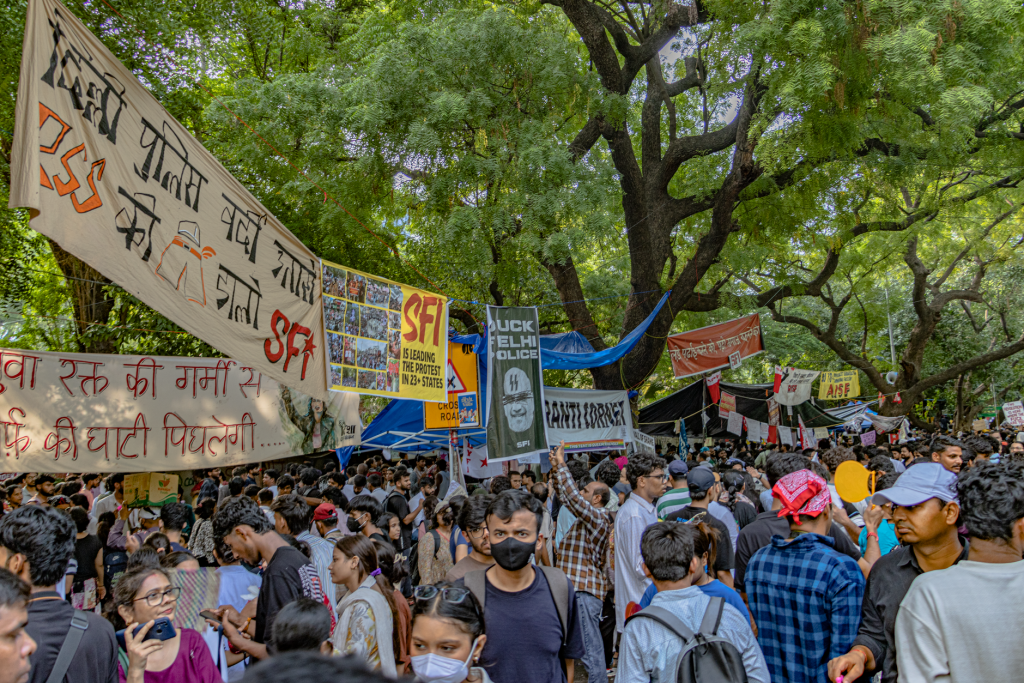
A coalition of student leaders and civil society activists has called for a Jantar Mantar protest in New Delhi on October 2, demanding the 'impeachment' of Chief Election Commissioner Gyanesh Kumar and greater accountability from India's election machinery. The gathering is planned for 11 am on Gandhi Jayanti at Jantar Mantar, the capital's historic protest square, where organisers say citizens will rally against the functioning of the Election Commission and its handling of electoral rolls. News agency PTI, as carried by The Indian Witness, reported that the organisers addressed a press conference on Wednesday to announce the demonstration, setting the stage for one of the most confrontational student-led mobilisations India has seen this year.
The call is being led by the All India Students' Association (AISA), whose president Neha Bora is among the principal organisers, alongside advocate Prashant Bhushan and Rashtriya Janata Dal parliamentarian Manoj Jha. Speaking at the press conference, Bora said the organisers had informed Parliament Street police about the proposed gathering, including details of the expected turnout and timing, and that they had received no rejection from the police so far. She also alleged that protesters had previously faced restrictions and detention while attempting to raise concerns about electoral issues, a claim she said made Thursday's turnout a test of democratic space in the capital.
What the protesters are demanding
The central demand of the Jantar Mantar protest is the removal of the chief election commissioner, with organisers using the word 'impeachment' to describe the outcome they want. Bhushan alleged there had been several procedural irregularities during the Special Intensive Revision (SIR) of electoral rolls and claimed that decisions about the addition and deletion of voters had become centralised in the hands of a few officials. Jha said the issue should not be treated as a confrontation between the ruling party and the opposition, arguing that it concerned the voting rights of citizens. The organisers also reiterated a demand for Kumar's resignation, and Mint reported that opposition parties were already preparing a formal impeachment notice, signalling that the street pressure will continue regardless of what plays out in court.
What the protesters call 'impeachment' is a specific constitutional process: removing India's chief election commissioner requires a motion passed by both houses of Parliament on grounds of proved misbehaviour or incapacity, the same bar set for a Supreme Court judge. Opposition leaders have argued that the reported dissent notes provide grounds to move such a motion, while the government has shown no sign of supporting it. That legal uphill climb is precisely why the organisers are betting on street pressure — a tactic that has worked before for India's student movements, from last week's Jantar Mantar march to earlier this year, when young renters camped out in Madrid's Puerta del Sol over a housing crisis that priced out an entire generation.
Why the Election Commission is under fire
The protest call follows an investigation by The Indian Express, published last week and documented in detail,, which reported that Election Commissioners Sukhbir Singh Sandhu and Vivek Joshi had recorded objections 14 times over roughly ten months to decisions and orders they said were taken without their knowledge. According to the newspaper's investigation, the objections covered voter registration, the deletion and restoration of names, changes to the statutory registration form used by new voters, and access to the digital systems used to maintain electoral data. The report has become the single biggest credibility crisis the poll panel has faced in recent years.
The fallout has been swift. Opposition leaders cited the report to demand Kumar's resignation, with some calling for his removal outright, and a plea has been filed in the Supreme Court seeking the prosecution of the chief election commissioner over alleged unilateral decision-making. In a statement issued the same day as the report, the Election Commission said all final decisions had been taken unanimously and described the internal notes as normal deliberations that take place before any decision is made. The commission's response has done little to quiet the criticism, and student groups now appear determined to keep the pressure on in the streets.
This will not be the first Jantar Mantar protest over the issue. A citizens' march near the square last week, organised by AISA and civil society members, saw several protesters detained after police said the march lacked formal permission. Activists including Yogendra Yadav and Prashant Bhushan addressed that gathering, while Trinamool Congress MP Mahua Moitra joined the demonstration. The detained protesters were released later in the evening, but the detentions only hardened the resolve of the organisers, who say the coming demonstration will be larger.
As The Daily Jagran reported, activist Abhijeet Dipke of the Citizens for Justice and Peace warned that the group would launch a nationwide protest from Mumbai on Thursday if Kumar did not resign, describing the Gandhi Jayanti agitation as a pledge to save democracy. With opposition parties planning a formal impeachment notice and the Supreme Court seized of the matter, the Jantar Mantar protest could become the street-level expression of a crisis that is now playing out on every front. Whether Thursday's demonstration draws the numbers organisers hope for will shape how far this student-led pressure campaign goes.
Comments 0
No comments yet. Be the first to share your thoughts!
Leave a comment
Share your thoughts. Your email will not be published.