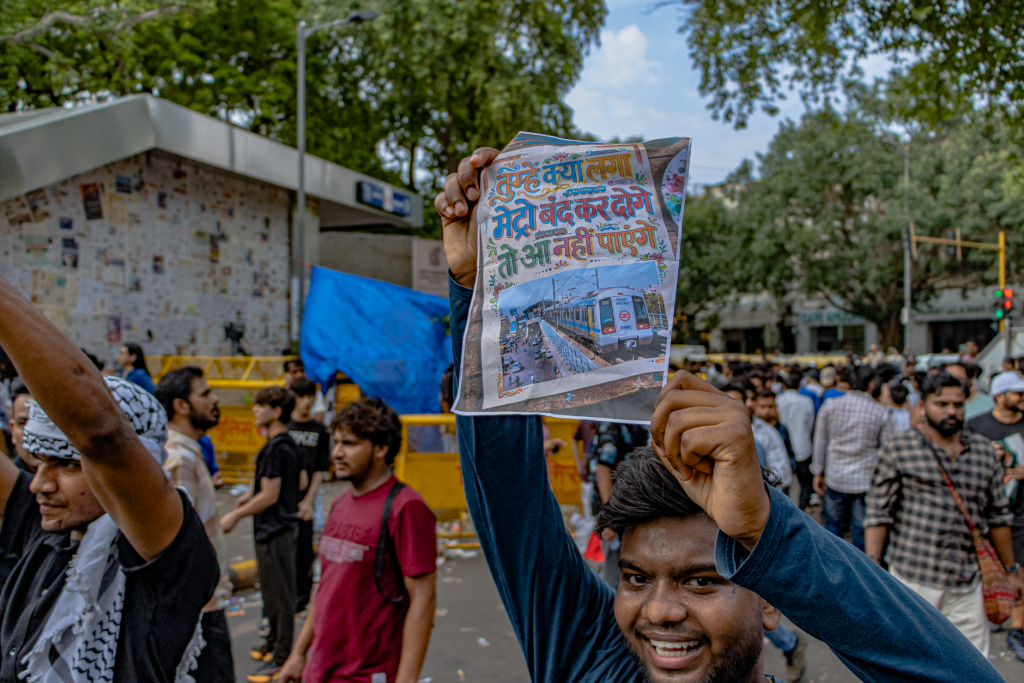
It started as a joke on Instagram. It is now one of the largest youth protest movements India has seen this decade. The Cockroach Janata Party, a satirical name born from a courtroom insult, has grown from a meme into a nationwide campaign over unemployment, political accountability, and the dignity of a generation.
The spark came on May 15, 2026, when the Chief Justice of India, Surya Kant, made a controversial remark about young people during a court hearing. "There are youngsters like cockroaches, who don't get any employment and don't have any place in the profession," he said, according to The Hindu BusinessLine. The remarks were aimed at scammers using fake degrees, the Chief Justice later clarified, but the damage in the court of public opinion was already done.
For a generation already raw with anger, the word landed like a slap. Earlier that month, on May 3, the NEET-UG 2026 medical entrance exam had been cancelled after an alleged paper leak, and students were told to retake it on June 21. According to The Hindu BusinessLine, twelve students died by suicide amid the stress and trauma of the cancellation and retest. Millions of young Indians, many of them staring down unemployment and a compromised examination system, heard themselves being called parasites by the country's top judge.
Within days, political consultant Abhijeet Dipke turned the insult into a rallying call. His viral social media post asked a simple question: what if all the cockroaches came together? The page he founded, the Cockroach Janata Party, deliberately echoed the ruling Bharatiya Janata Party's name, showing how quickly an internet meme could become a vehicle for political organization, reported Global Voices. What began as a satirical expression of angst quickly evolved into a highly coordinated physical protest.
From feed to street
The movement hit the streets on June 6, with demonstrations in various parts of the country demanding accountability and the resignation of Union Education Minister Dharmendra Pradhan. On June 20, the Cockroach Janata Party regrouped and started an indefinite sit-in protest at Jantar Mantar, New Delhi, the capital's most prominent protest site near Parliament.
The protest gained critical legitimacy and momentum on June 28, when prominent climate activist and education reformer Sonam Wangchuk joined the site and launched an indefinite hunger strike. Wangchuk's presence bridged the gap between Gen Z irreverence and traditional, Gandhian civil disobedience. On July 18, police removed him from the protest site and moved him to Safdarjung Hospital as he had falling vital signs and had lost a significant amount of weight, according to The Hindu BusinessLine. He was later moved to Medanta Hospital on July 21, after the Delhi High Court's order following an appeal from his wife.
Two days after Wangchuk's removal, more than 10,000 people marched on Parliament under the banner "Chalo Sansad" (Let's go to Parliament). They were met with what organizers described as extreme state violence, and the government shut down mobile internet services in the area. Rather than crushing the movement, the crackdown ignited further nationwide protests.
The flowers-and-books phase
This week, the movement showed its other face. At a fresh gathering at Jantar Mantar, young people assembled under the Cockroach Janata Party banner carrying books, flowers, and Indian Tricolours. Cockroach masks and pamphlets lay scattered across the pavement as students moved through the gathering, handing out flowers to police as a gesture of compassion, according to Times of India reporting.
The organisers framed the protest as a peaceful act of participation. One organizer told the Times of India that the gathering had to be led with love. A second-year student attending alone said the flower symbolized a peaceful protest: "We come bearing flowers with our demands, nothing else."
The tone is deliberate. The movement remains rooted in the internet-first satire that helped it resonate with Gen Z, but the strategy has matured. Even as it moves offline, the movement's leadership is leaning into imagery of peace to contrast with the force it has faced.
Why it matters beyond India
Global Voices, in a September 15 analysis, called the movement one of the most significant challenges to Indian President Narendra Modi's government since his third term began in June 2024. For more than three months, what started as anger over educational corruption, such as the leaking of the NEET medical entrance exam questions and recruitment scandals, has grown into a nationwide campaign over unemployment, political accountability, and the dignity of a generation.
The pattern should look familiar far beyond India. Everywhere young people face the same combination of precarious work, compromised institutions, and leaders who dismiss them, the same playbook is available: take the insult, make it a joke, turn the joke into an organization. The Cockroach Janata Party did not invent youth protest, as civil rights legends have told young activists. It invented a shortcut between the meme and the march.
Whether the party's concrete demands, including the education minister's resignation, are ever met is still an open question. But the movement has already done something harder than toppling a minister. It turned a generation's humiliation into a shared identity, and shared identities are much harder to disperse than crowds. Full explainers were published by The Hindu BusinessLine and analyzed by Global Voices.
Comments 0
No comments yet. Be the first to share your thoughts!
Leave a comment
Share your thoughts. Your email will not be published.