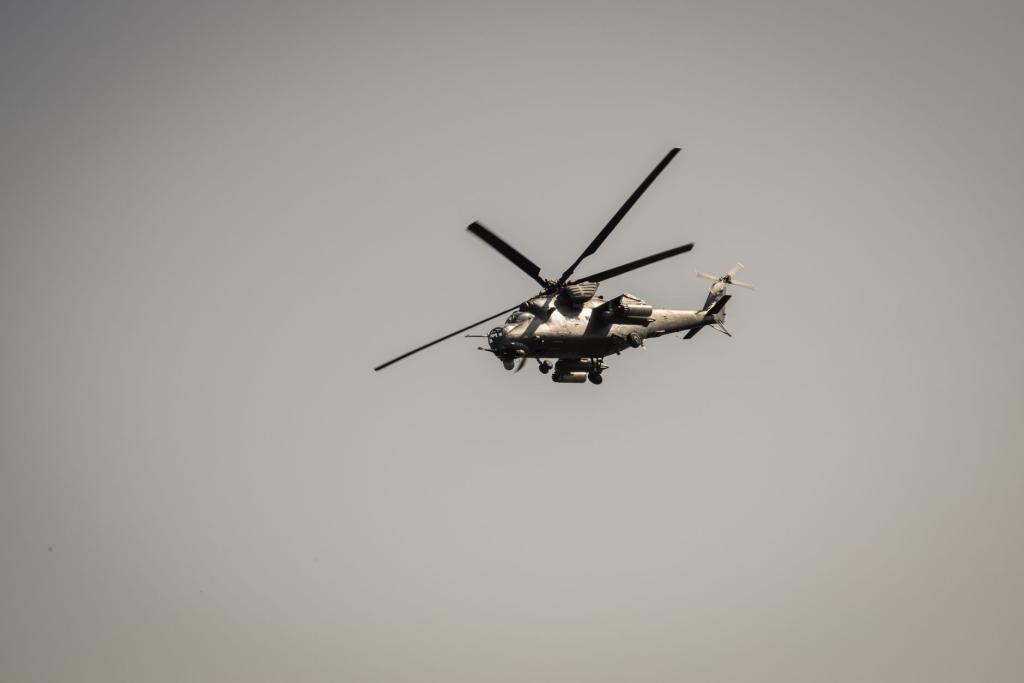
The United States has cleared the way for a potential $2.68 billion arms sale to Ukraine aimed at rebuilding the country's air defenses, approving a congressional notification late Friday, September 18, according to Reuters. The package, described by the Defense Security Cooperation Agency as an "Air Defense Development Upgrade," bundles interceptor missiles, launcher modifications, counter-drone radars and logistics support into one of the largest single defense deals for Kyiv of the year.
The notification does not finalize the sale. Like all proposed Foreign Military Sales, the deal must survive the standard congressional review period before contracts can be signed and deliveries scheduled. But the approval signals that Washington intends to keep advanced air defense hardware flowing to Ukraine as the war stretches into its fifth year.
What's actually in the package
Ukraine's shopping list reads like a full rebuild kit for a layered air defense network. It includes missiles labeled "S-300 Clone," GAM-67 missiles, range-extended air defense laser-guided rocket systems, launcher and mobile launching system modification kits, an improvised transporter erector launcher platform designated ITEL 1.5, RPS 202 counter-drone radars, mast trailers, spare parts, software and training publications, according to Defence Blog, which analyzed the official notification.
Two of the designations on the list have raised eyebrows among weapons watchers because they do not match any publicly known current system. GAM-67 was once the Air Force label for the Crossbow, a 1950s anti-radar missile that was canceled in 1957 after only 14 were built, and no Pentagon or industry document defines an "S-300 Clone." Analysts told the trade press the names were most likely reused as formal placeholders for new or modernized programs rather than descriptions of Cold War leftovers.
Robert Hamilton, a retired Army colonel who leads the Delphi Global Research Center, told PBS NewsHour that the United States and Ukraine have been working together to modernize Kyiv's aging stock of S-300 interceptor missiles or develop an improved successor, with the upgraded system possibly entering service near the end of 2026. Neither Washington nor Kyiv has confirmed that effort is the same program listed as "S-300 Clone," but the subject matter and timing line up.
The stakes for those missiles are practical. The S-300 is a Soviet-designed long-range surface-to-air system that Ukraine inherited in large numbers and has relied on throughout the conflict alongside Western systems such as the Patriot. Kyiv has run short of S-300 interceptors because Russia remains the only producer of the original missile, so an American-backed clone or modernized variant would let Ukraine keep existing launchers in action without depending on Moscow-made supply lines.
How Ukraine would pay for the Ukraine air defense sale
The proposed financing reflects a shift in how Washington structures support for Kyiv. According to the State Department notification, Ukraine would fund the purchase through a combination of European contributions and U.S. Foreign Military Financing appropriated during the previous administration. The American portion would be counted as a one-to-one U.S. capital contribution to the Ukraine Reconstruction Investment Fund, the vehicle created under the U.S.-Ukraine minerals deal signed last year.
That arrangement fits a pattern. Earlier this month, President Donald Trump said he would ask European nations to repay the United States for military aid and munitions delivered to Ukraine under his predecessor, and administration officials have pressed allies to carry more of the cost of Western support for Kyiv.
A war of drones, and the defenses meant to stop them
The sale lands as Ukraine faces one of the heaviest aerial bombardment campaigns of the conflict. Monitoring reports cited by the trade press indicate Russia launched a record 6,722 drones and missiles at Ukrainian territory in April 2026, and Kyiv intercepted more than 4,600 projectiles in August. Ukrainian officials have warned of a growing interceptor shortage heading into winter and called for hundreds more units to maintain roughly a two-to-one ratio of interceptors to incoming projectiles.
The same Friday brought another signal from Washington. Trump signed a sweeping Russia sanctions bill into law earlier in the day, opening the door to tougher economic pressure on Moscow's energy and defense sectors. The twin moves, sanctions plus the Ukraine air defense sale approval, suggest the administration is pairing economic leverage with military backing even as negotiations to end the war remain stalled. Trump promised before taking office that he would end the conflict quickly, a goal that remains out of reach 20 months into his presidency.
What happens next
The deal's future now sits with Congress. Lawmakers must complete their review of the notification, and if it clears, the U.S. government would select contractors through a competitive procurement process. No American government or contractor personnel would need to deploy to Ukraine, the notification states, and the package would not affect U.S. military readiness or the basic military balance in the region, in the filing's standard language. No offset agreement has been proposed so far.
Open questions remain. Washington and Kyiv have not released specifications, quantities or a delivery timeline for the S-300 Clone and GAM-67 items, and analysts are still guessing at what the unfamiliar designations describe. For now, the notification is a framework, not a shipment. But if it survives review, it would give Ukraine a substantial new layer of protection against the drones and missiles that have defined the war's recent phase. More GenZ NewZ coverage of the conflict is collected on the war topic page.
Comments 0
No comments yet. Be the first to share your thoughts!
Leave a comment
Share your thoughts. Your email will not be published.