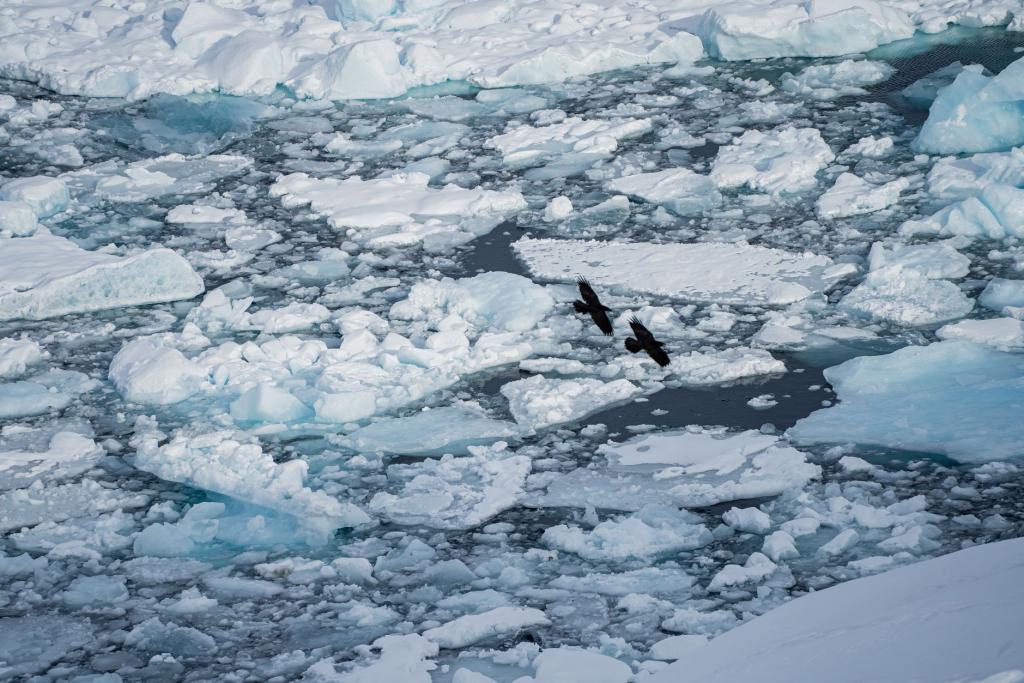
Denmark, Greenland and the United States will sign the Greenland security deal on Tuesday at the United Nations General Assembly in New York, closing out months of diplomatic friction over the future of the Arctic island. The agreement, which has not yet been made public, is expected to expand the American military role in the self-governed Danish territory while keeping sovereignty questions inside what Copenhagen calls its red lines.
A Tuesday signing, and a NATO compromise
The newest detail in the fast-moving dispute is who takes responsibility for Arctic security once the ink is dry. According to Reuters, Danish Foreign Minister Lars Lokke Rasmussen told national broadcaster TV2 on Sunday that responsibility for security in the Arctic would not rest with Denmark and the United States alone. To a large extent, he said, NATO would be the alliance looking after the region.
A NATO spokesperson said on Saturday that the alliance welcomed the agreement, adding that it would help advance security, stability and cooperation in a vital region. The framing matters because it lets Washington claim a bigger role without Copenhagen admitting that Greenland's defense was handed to a single foreign power.
Rasmussen, who traveled to New York overnight, declined to discuss the contents of the agreement itself. He told Danish news agency Ritzau on Monday that Denmark had said from the start that it was open to accommodating the legitimate security interests of the United States, a line that signals how far Copenhagen has moved to end the standoff.
Two very different versions of the same agreement
President Donald Trump announced the deal late on Friday on his Truth Social network, writing that the United States had entered into an agreement with Denmark and Greenland that gives Washington permanent control over security, and all other needs, in Greenland. He added that the United States would forever keep the complete ability to do what is necessary to secure and defend both Greenland and America, and that no US adversary would ever be permitted to have a base or military presence in Greenland, or to make sensitive investments there, without Washington's express written approval.
Denmark and Greenland told a different story on Saturday. According to Reuters, both governments said the arrangement would not compromise Greenland's sovereignty and would respect the island's right to self-determination. Rasmussen wrote on Facebook that a time of uncertainty would hopefully give way to a binding agreement that strengthens security in the Arctic and the North Atlantic while respecting what he called the Danish kingdom's red lines.
Danish Prime Minister Mette Frederiksen described the deal as one that recognizes the sovereignty and territorial integrity of the Kingdom of Denmark and the Greenlandic people's right to self-determination. Greenland's prime minister, Jens-Frederik Nielsen, said he was pleased on Greenland's behalf that the two sides were nearing the conclusion of an agreement that benefits both collective security and the continued development of the island.
Trump made the announcement after Reuters exclusively reported that Washington and Copenhagen were closing in on a deal, ending months of speculation about whether the president's threats would turn into action. The gap between Trump's description of permanent control and Denmark's insistence that sovereignty is untouched is the central tension the signing ceremony will have to paper over.
What stays secret, and what still has to happen
Key details have still not been made public. It is unclear how large the expanded American military presence would be, whether the deal amends the 1951 defense agreement that provides the legal basis for the US presence in Greenland, or whether Washington gains any formal say over foreign policy or natural resources. Denmark and Greenland have declined to comment on Trump's claim of permanent control, saying only that the agreement benefits the island and respects its sovereignty.
The agreement follows months of pressure from Trump, who has said since returning to the White House in January 2025 that the United States needed to control Greenland for strategic reasons and at times refused to rule out military or economic force to get it. The threats, which peaked in January, triggered a diplomatic crisis inside NATO and pushed Denmark and Greenland into negotiations aimed at defusing the standoff.
Copenhagen has acknowledged that it underinvested in Greenland's defense for decades and has pledged to expand its own military presence on the island, including more NATO troops. In Nuuk, the public reaction has been mixed: opposition lawmaker Erik Jensen wrote on Facebook that he felt reassured after reading a draft of the agreement and was not worried, according to Reuters, while other residents said they were uneasy about how much attention the island was getting.
Even after Tuesday's signing, the story is not over. The agreement will still need to be ratified by the Danish and Greenlandic parliaments, and the full text has yet to be released. Until lawmakers and the public can read what was actually agreed, both Trump's version and Denmark's version will keep circulating, and the truth will sit somewhere in the documents.
Comments 0
No comments yet. Be the first to share your thoughts!
Leave a comment
Share your thoughts. Your email will not be published.