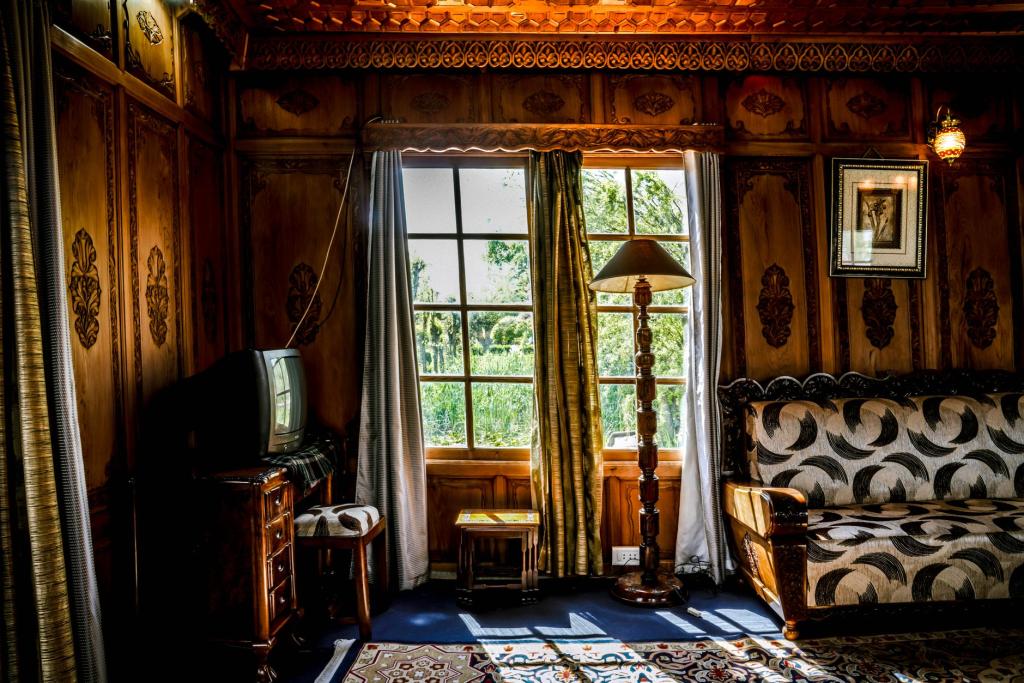
If your apartment suddenly looks like your grandmother's living room, congratulations: you are on trend. Across the United Kingdom and beyond, Gen Z is embracing dark wooden furniture, patterned fabrics, lace curtains, and rooms that look collected rather than curated — a shift that interior trend-watchers have dubbed Grandma Core. According to reporting by Internewscast, furniture once dismissed as unfashionable hand-me-downs is now the most sought-after style among Britain's youngest adults, with original 1970s pieces from charity shops commanding particular interest.
This is not a small aesthetic blip. Pinterest search data published this spring shows the phrase "my room, my rules" — the Grandma Core generation's decorating mantra — climbing 415 percent year over year, while searches for "grandma core kitchen" surged 545 percent, per Pinterest data analyzed by AlmCorp. As the platform's analysts describe it, the all-white-everything look that dominated interior design for nearly a decade is giving way to color, character, and low-cost personality. The message is clear: people are done waiting for the perfect house, the big renovation, or the budget they do not have, and they are making their current spaces feel like themselves right now.
The numbers behind the cozy takeover
The Grandma Core data tells a remarkably consistent story. Pinterest searches for "dark cottagecore kitchen" rose 915 percent, "village kitchen ideas" jumped 825 percent, and "aubergine kitchen" climbed 495 percent, per the AlmCorp analysis. Meanwhile, research firm Mintel reported that spending on home improvement and furnishings has increased 35 percent among Gen Z consumers over the last two years, according to analysis by Archyde. That is a meaningful reallocation of a generation's discretionary money — toward sofas, candles, and vintage mirrors instead of nights out.
The palette has shifted just as decisively. Design trend coverage by Accio this month describes earthy and warm color schemes — moody browns, reddish terracottas, warm whites — chosen specifically to create a sense of cocooning, making homes feel like sanctuaries. Chocolate brown, burgundy, earthy green, and butter yellow are among the preferred shades, often paired with warm neutrals, Internewscast reported, while dark timber is making a strong comeback alongside colored glass, ceramics, chrome, and brass.
Why this is happening now
Several forces converged to make cozy the aesthetic of 2026. First, the economics: although most Gen Z adults in the United Kingdom still live with their parents, a recent study found that 34 percent expect to purchase their first home in 2026, according to Internewscast — and those who rent are decorating rentals they do not own, which favors personality over permanence. That renter reality is part of a broader housing squeeze documented in recent reporting on how much of young people's pay goes to rent. Second, the cultural pull of nostalgia: Pinterest found that nearly one in four of its users globally say they are engaging in more nostalgic activities, from collecting vintage items to revisiting childhood hobbies, Marketing-Interactive reported.
Third, and perhaps most telling, is the rejection of performance. "Gen Z is quietly leading a cultural reset to find their own space amid the noise," Ayumi Nakajima, Pinterest's senior director of content partnerships for APAC, told Marketing-Interactive, describing a move away from doomscrolling toward intentional searching. Interior designer Rima Gharib echoed the sentiment in Dorm Therapy, explaining that elements like vintage rugs, tapestries, and lace do more than look romantic — they soften sound, hold warmth, and "make a room feel inhabited." The cocoon bedroom trend, with its upholstered headboards, padded walls, and layered bedding, is the logical endpoint: the bedroom as a place that does not ask anything of you.
How to try it without spending like a grown-up
The appeal of Grandma Core is partly financial. Rather than buying coordinated furniture sets, younger homeowners are mixing colors, patterns, and pieces from different periods — meaning a 40-pound vintage table can sit happily beside a far more expensive sofa with no attempt to disguise the difference, Internewscast reported. The same thrift-first instinct is showing up in fashion, where upcycled vintage drops are becoming high fashion. Maximalism, not matching, is the rule: rooms layered with decorative pieces, books, framed prints, candles, and ceramics put on display rather than hidden away.
For renters, the entry points are cheap and reversible. Swap harsh overhead lighting for warm-toned lamps, which Gharib says shift the mood from exposure to comfort. Layer two textures on the bed — linen plus velvet, cotton plus quilt. Hang one piece of art that means something. Pick up a plant stand or a rattan chair from a charity shop instead of ordering a lookalike from a fast-furniture retailer. Grandma Core rewards the hunt, not the haul.
The counterpoint is worth hearing. Designers caution that nostalgia can curdle into clutter, and that the line between "collected" and "messy" is a ruthless weekly dusting schedule. But the deeper insight stands: after years of being told their homes should photograph like showrooms, a generation is decorating for the person who actually lives there. The grandmother aesthetic was never about the furniture. It was about the feeling of being looked after — and in 2026, young people are building that feeling for themselves, one lace curtain at a time.
Comments 0
No comments yet. Be the first to share your thoughts!
Leave a comment
Share your thoughts. Your email will not be published.