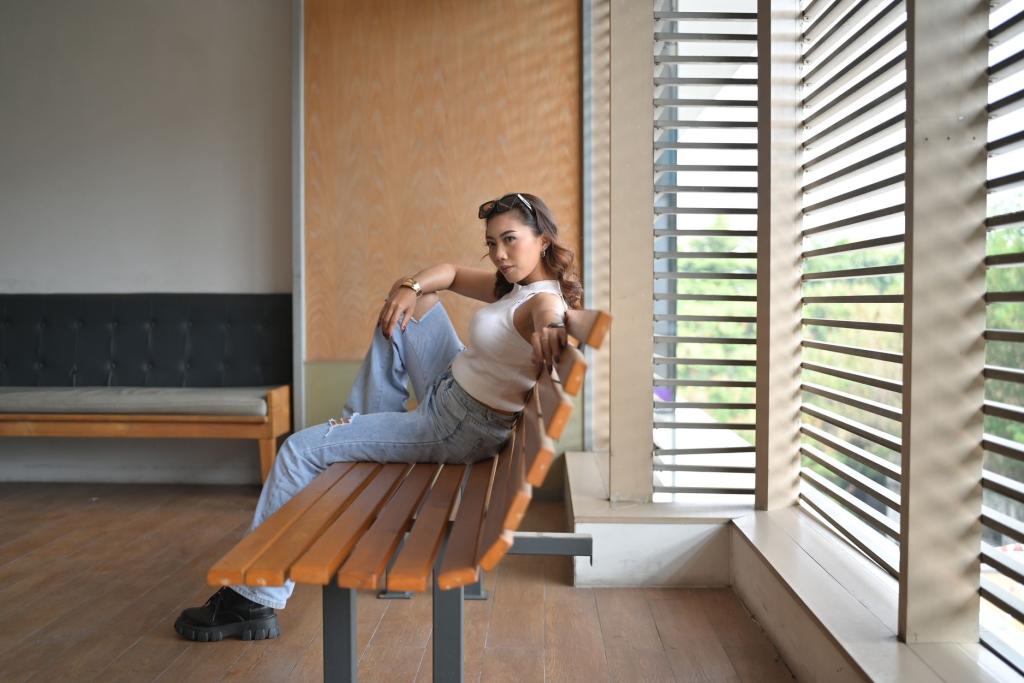
The most iconic outfit formula of the early 2000s is officially back. Jeans and a nice top — the uniform Britney Spears, Hilary Duff, and Victoria Beckham wore everywhere — has returned as a genuine shopping trend, according to new data from Fleek, a global AI-powered resale marketplace. The figures show demand for bootcut jeans surging 238% year over year, while printed blouses are up 146%, making the pairing the defining going-out look of the autumn and winter season.
The revival goes far beyond denim. Searches for the mall brands of the 2000s have exploded on resale platforms: American Eagle is up 1,588% year on year, followed by Hollister at 1,172%, Aéropostale at 1,150%, Bebe at 1,106%, and Abercrombie at 899%, per the report's findings. Nearly half of all resellers now specialize in Y2K and early-2000s fashion — and among 18-to-25-year-olds that share climbs to 60%. The generation that was in diapers when low-rise jeans first peaked is now the market's biggest buyer of the look.
The numbers come from Fleek's State of Resale Report, which was compiled from millions of the platform's real-time search and sales signals alongside responses from 339 resellers across 22 countries, as reported by TV2Club's coverage of the findings. That methodology matters: this is not a survey of what people say they like, but a measure of what they are actually hunting for and buying. Bootcut jeans even cracked the platform's top-ten most popular items list, sitting at number seven behind staples like sweaters, plain T-shirts, and fleece jackets.
Loungewear is out, going out is in
The shift is as much about what is dying as what is rising. Loungewear, the pandemic era's dominant category, is in freefall on the resale market. Hoodies are down 50% in demand, crewneck sweatshirts have dropped 41%, and track jackets have fallen 34%, according to the same report. Shoppers are not just buying jeans — they are abandoning the elastic-waist era.
That trade-off tells the story better than any single data point. For several years, comfort reigned as the post-pandemic default, and active leggings still sit at the bottom of Fleek's top-ten list. But the sharpest momentum now belongs to going-out clothes and denim, the categories built for nights out rather than nights in. The vibe shift is literal: wardrobes are moving from the couch back to the club, or at least back to dinner with friends.
None of this happened in isolation. Fashion's retro loop has been spinning for years — Vogue has highlighted the renewed interest in '90s denim, including straight-leg styles associated with Princess Diana and Julia Roberts, and rugby shirts and collegiate stripes were flagged as key 2026 trends, per NBC Palm Springs' roundup of the nostalgia wave. What makes the Fleek data notable is that it pins a specific uniform to the moment: not an aesthetic mood board, but jeans plus a nice top, bought secondhand, in the millions.
Why nostalgia is selling — and so are the wires
The denim revival is part of a wider Y2K renaissance that now stretches beyond the closet. Data from Circana's Retail Tracking Service revealed that revenue from wired headphones rose 20% in the first six weeks of 2026, ending five straight years of sales declines during which AirPods and other wireless earbuds dominated. Celebrities including Emma Watson, Harry Styles, Bella Hadid, and Charli XCX have all been spotted with wired earphones, per the TV2Club report — the tech equivalent of choosing the vintage tee over the new drop.
There is a real explanation behind the nostalgia, and it is not just aesthetics. Dr. Omar H. Fares, a lecturer in the Ted Rogers School of Retail Management at Toronto Metropolitan University, told The Conversation that wearers may be "yearning for an idealized version of the past." He pointed to a few drivers: nostalgia, a desire for a digital detox, and growing privacy concerns. Y2K fashion, he noted, has been steadily making a comeback over the past few years, and the use of vintage technology like disposable cameras is rising alongside it.
That framing helps explain why the resale angle matters as much as the style one. The Y2K fashion revival is, at its core, a resale story: buying the look secondhand is the affordable, lower-waste way to participate. the same nostalgia that makes a 2003 Abercrombie blouse desirable also makes the thrifted original the prize, not the reissue. For a generation juggling high rents and tight budgets, the resale rack is where the trend and the economics agree. If the current trajectory holds, expect the Y2K fashion cycle to keep pulling more staples from the early 2000s onto the resale charts — and expect your feed to keep looking like 2004. Explore more trend stories in our Fashion hub and our piece on the $393B resale boom.
Comments 0
No comments yet. Be the first to share your thoughts!
Leave a comment
Share your thoughts. Your email will not be published.