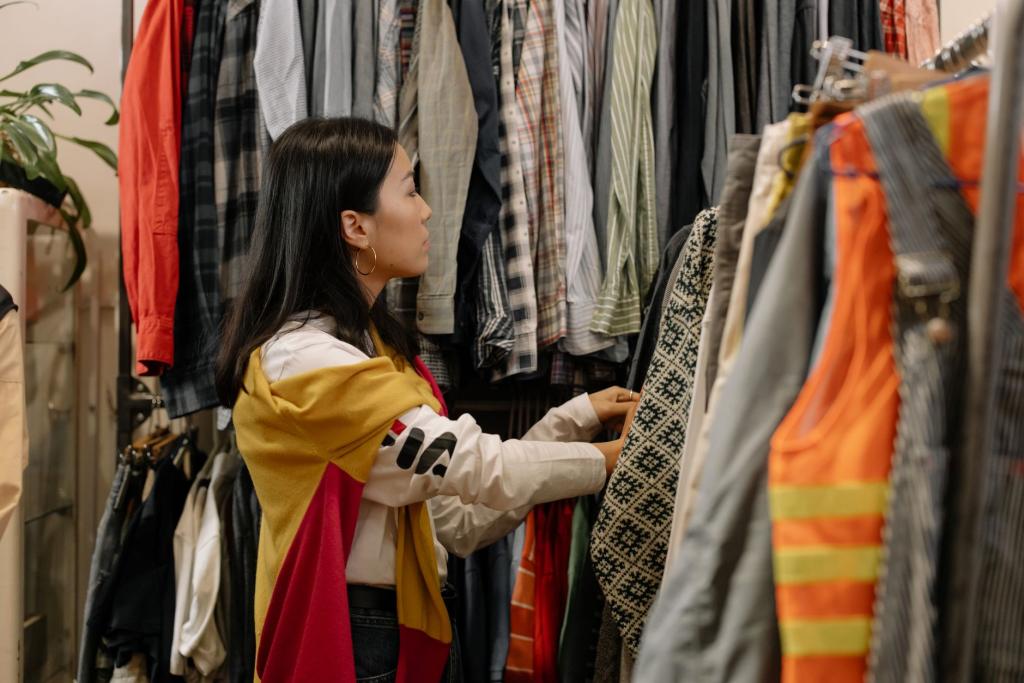
Secondhand is having a firsthand moment. According to ThredUp's 2026 resale report, the secondhand market has more than doubled in size since 2021 and is projected to reach $393 billion by 2030 — a figure that would rank pre-loved clothing among the largest "retailers" on the planet.
The engine of this resale boom is not nostalgia alone, though nostalgia is doing a lot of the driving. Fleek's inaugural State of Resale Report, published September 25 and covered by industry press, analyzed millions of search, sales and product-view signals alongside responses from 339 resellers across 22 countries to map the brands and behaviors shaping the market for autumn/winter 2026. Its conclusion: secondhand is rapidly moving from side hustle to serious business.
Y2K is back, and it is leading the resale charts
The strongest trend signal in the Fleek data is pure nostalgia. Year-over-year searches for American Eagle have jumped 1,588 percent, with Hollister up 1,172 percent, Aéropostale 1,150 percent, Bebe 1,106 percent and Abercrombie 899 percent. The early-2000s wave keeps rolling through Victoria's Secret, up 892 percent, PINK at 632 percent and Diesel at 516 percent.
Resellers have followed the demand. Almost half — 49 percent — now specialize in Y2K and early-2000s fashion, rising to 60 percent among sellers aged 18 to 25. The silhouettes tell the same story: bootcut jeans are up 277 percent year over year, basic camisoles have risen 193 percent and nylon shorts are up 483 percent, while printed T-shirts are down 27 percent. The familiar "jeans and a nice top" formula is back — and it is being bought secondhand.
Luxury buyers now check the resale rack first
The shift is most visible at the top of the market. RealReal CEO Rati Sahi Levesque told Bloomberg TV in August that more than 80 percent of the company's fastest-growing segment — Gen Z and millennials — now scan the secondary market before buying new luxury items, to gauge what a piece will be worth later. Her example: Chanel's flagship Classic Flap bag has doubled in price between 2019 and 2026, landing at $11,700.
The RealReal's 2026 report, titled "The Revolution of Resale," counts 44 million members and says the luxury secondary market is growing two to three times faster than the primary market. The company raised its full-year 2026 revenue outlook to between $788 million and $797 million on the back of stronger sales — including a notable rise in items selling for more than $1,000. The message from the resale boom's biggest winners: the new luxury is conscious luxury, and Gen Z is buying it pre-loved.
Resale is becoming a real career
Behind the listings, reselling itself is professionalizing. Fleek found 28 percent of resellers are already working full time, with another third actively working toward making resale their career. Experience compounds: among sellers with more than five years in the game, 53 percent are full time, compared with just 14 percent of those who started less than six months ago.
The pros sell everywhere. The average reseller now operates across 2.8 platforms, with Vinted the economic powerhouse — 65 percent of respondents say it generates the most money. But platform dependence carries risk: 29 percent report having had an account suspended, banned or restricted. Sourcing is the other pressure point: 64 percent still rely on charity and thrift shops, 30 percent call sourcing one of their biggest frustrations, and 44 percent want access to liquidation and deadstock they cannot yet reach — an opening for fashion brands, especially as new EU rules restricting the destruction of unsold clothing could push more excess inventory toward secondary markets.
Live selling is the new storefront
The format is also changing. Almost half of full-time resellers — 45 percent — now sell live, compared with 20 percent of those treating resale as a side hustle, and 79 percent of regular live sellers say the format outperforms traditional static listings. Platforms are following the money: eBay, Whatnot and TikTok Shop are all folding live commerce into their fashion offerings, turning product demos into real-time sales events.
The corporate world has noticed too. Earlier this year, eBay agreed to buy Depop from Etsy for $1.2 billion in cash — notably less than the $1.6 billion Etsy paid in 2021. With roughly 7 million active buyers, nearly 90 percent of them under 34, and more than 3 million active sellers, Depop is eBay's bid for the generation that already shops resale first. Investors cheered: eBay shares jumped over 7 percent and Etsy's rose about 15 percent on the news.
Why it matters to your closet
For young shoppers, the resale boom cuts two ways. Pre-loved fashion is cheaper, more sustainable and often better made than fast fashion — and, as the luxury data shows, it can hold or even gain value. It also fits the same do-it-yourself spirit behind the side-income wave, where millions of young people now run their own small businesses. But resale is still consumption: buying a secondhand haul every week has its own footprint, and the platforms' growth depends on volume just like any retailer.
The counterweight is that resale is one of the few corners of fashion where consumers hold real power. Search data now acts as trend intelligence — Fleek's figures show resale platforms spotting renewed interest in brands before mainstream retail catches on — and brands are starting to build certified pre-owned programs rather than fight the secondary market. The question is no longer whether secondhand matters, but who controls it: the platforms, the brands, or the 18-to-25-year-olds doing most of the buying. More on the beat at our Fashion page.
For now, the racks have the answer. Bootcuts are moving, Y2K is trending, and the fastest-growing fashion business of 2026 might just be the one selling clothes that already existed.
Comments 0
No comments yet. Be the first to share your thoughts!
Leave a comment
Share your thoughts. Your email will not be published.