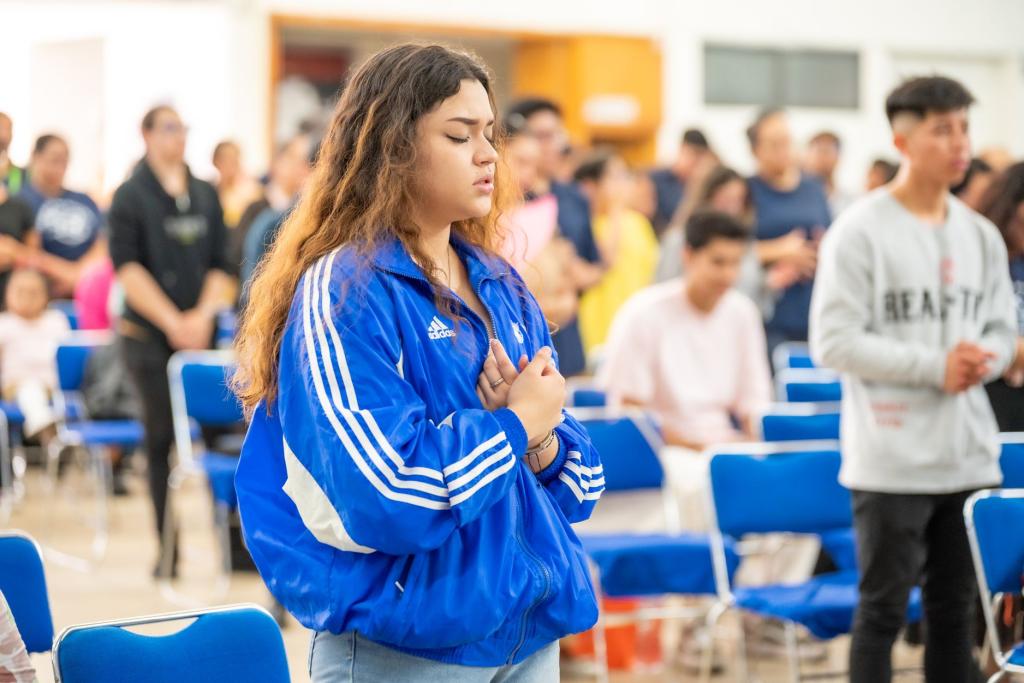
Gen Z faith revival is the story a new national survey just told, and it reads like a plot twist. The Harris Poll surveyed 2,136 American adults in early July 2026 about their beliefs, and the youngest generation came out on top: adults 18 to 29 were the most likely of any generation to call themselves religious. That finding flips a storyline years in the making: that they were on track to leave faith behind entirely. What the data actually shows is not a return to mid-century churchgoing patterns but a patchwork spirituality: church on Sundays alongside manifestation practices midweek and tarot readings with friends on the weekend. The Christian Post reported the findings in late September 2026, with generation-by-generation breakdowns.
The numbers behind the turnaround
The topline numbers are striking. One in three Gen Z adults describes themselves as religious, more than any older generation. Gen Z is also the least likely cohort to say they are neither religious nor spiritual: 19 percent, against 20 percent for millennials, 21 percent for Gen X and 23 percent for boomers.
| Generation | Ages | Say they are "religious" |
|---|---|---|
| Gen Z | 18–29 | 33% |
| Millennials | 30–45 | 19% |
| Gen X | 46–61 | 22% |
| Baby boomers | 62+ | 18% |
The engagement goes beyond identity. Gen Z led regular spiritual engagement at 88 percent, ahead of millennials and Gen X, who tied at 84 percent, and boomers at 82 percent. The activities ranged from prayer and Scripture reading to religious services, meditation or ritual, manifestation, astrology or tarot, and energy work.
That ordering marks a genuine reversal. A 2022 survey from the American Survey Center found Gen Z the least religious cohort at the time, with roughly a third of respondents saying they were neither spiritual nor religious, according to reporting from the Daily Signal. Four years later, the youngest generation holds the highest share calling themselves religious, and the lowest share disavowing both religion and spirituality.
Stacking, not choosing
The second headline is that Gen Z is not picking one lane. Libby Rodney, the firm's chief strategy officer, said the generation is not choosing religion instead of everything else. It is "stacking it," she told Tipp Insights: "Church on Sunday, manifestation on Wednesday, tarot on Friday." The quip captures a generation layering old and new spiritual forms rather than trading one for the other.
The practice data backs her up. About two-thirds of Gen Z say they pray, just over half read Scripture or other religious texts, and nearly half attended a religious service in the past year. On prayer, only boomers score higher, with three-quarters of the oldest cohort reporting regular prayer. But the same generation that fills pews also leans on practices outside traditional religion: a majority said they have turned to manifestation practices or spirituality to feel greater control over their future. The share was 59 percent among millennials, 46 percent among Gen X and 30 percent among boomers. The impulse is strongest among the young and fades with age.
The Gen Z faith revival looks less like a return to a single tradition and more like a spiritual mixtape. Prayer and Scripture sit in one column; manifestation, astrology and tarot in another. The columns do not cancel each other out for the people living with both.
Faith wants a room of its own
The Gen Z faith revival also has a social engine. Six in ten Gen Z adults said they belong to more real-world, in-person communities than they used to, naming run clubs, faith communities, hobby and volunteer groups. Seven in ten said they want to belong to even more such communities. Millennials match that seven-in-ten figure; the share drops to 62 percent among Gen X and 48 percent among boomers. The urge is not confined to the religiously inclined, but it gives faith a natural home. GenZ NewZ's culture coverage has tracked how offline hangouts are replacing endless feeds as the default social plan.
College campuses are showing their own version of the trend. The College Fix has reported on mass baptisms and growing interest in Christian campus ministries. Dan Allan, a campus director with Campus Crusade for Christ, told the outlet that for three years running, the ministry has seen a higher share of students come to faith when someone shares the gospel with them. Campus conversions are anecdotal, but they point the same direction as the national numbers.
The counterpoint is real
The revival narrative has real tension inside it, and the full picture requires holding both. Barna Group's State of the Church research found Gen Z the most likely generation to expect a spiritual revival in the next year, and separate research from Barna named this cohort the most frequent churchgoers. Yet nearly 40 percent of Gen Z women identify as atheist, agnostic or having no faith. Both things can be true at once, and that split is part of why the revival looks nothing like a single movement.
What this means for you
If you are Gen Z, the takeaway is not that you need to pick a side. The data describes a generation assembling belief the way it assembles everything else: curated, plural and tested in real life. That can look messy from the outside, and debates about whether manifestation counts as faith will keep going. What the numbers say is simpler. The generation once labeled the least religious is now the most spiritually engaged, and much of that engagement is happening in rooms with other people rather than on feeds alone. For more on how younger generations are redefining identity, browse the voices section.
The Gen Z faith revival is real, but it is not simple. It is church plus manifestation plus tarot plus the run club, held together by a generation that would rather stack its options than choose just one. Future surveys will show whether the pattern holds or fades. For now, both the pews and the astrology apps are fuller than expected.
Comments 0
No comments yet. Be the first to share your thoughts!
Leave a comment
Share your thoughts. Your email will not be published.