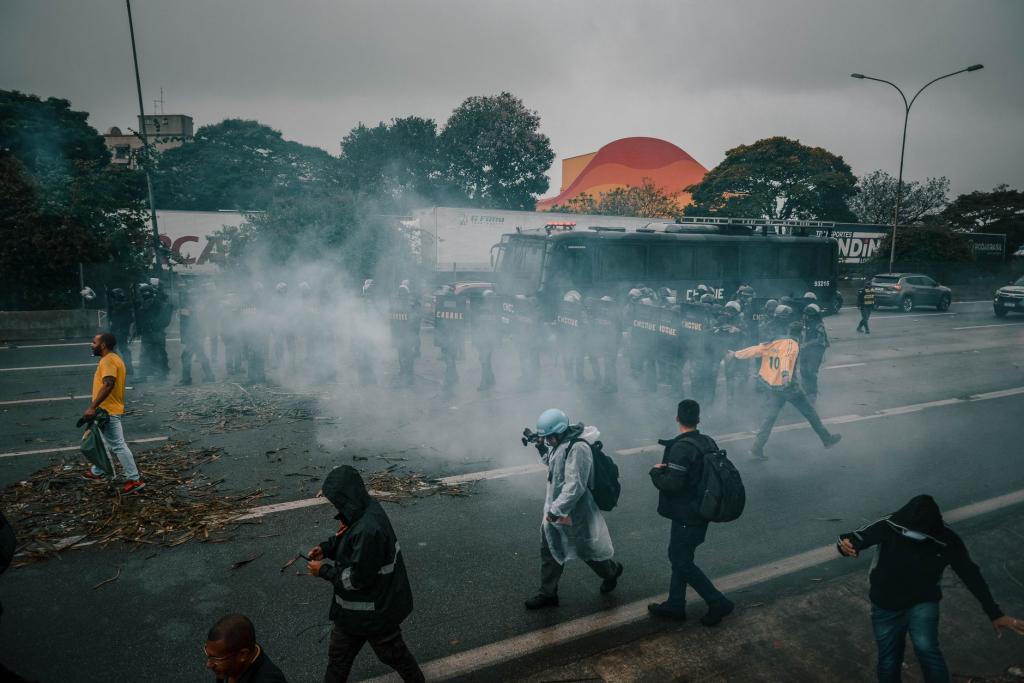
Student protests swept through central Santiago on October 1 as thousands of students, teachers and workers marched against possible cuts to public education funding in the Chilean government's proposed 2027 budget. The demonstrations, held a day after President José Antonio Kast presented the budget bill to Congress, were dispersed by riot police using tear gas and water cannons before the march could complete its agreed route, according to Al Jazeera.
A march cut short
The march had been authorized along a route agreed with regional authorities, but police intervened before demonstrators could finish it, according to reporting by the EFE news agency. Reuters Connect reported that police dispersed parts of the demonstration as tensions rose in the Chilean capital, deploying water cannon against the crowd. The demonstrators — described by EFE as thousands of students, teachers and workers — took to the streets to demand that funding for the education sector be maintained. Video from the scene showed students carrying banners through downtown Santiago as police moved in with crowd-control vehicles.
The protesters' core demand is straightforward: that the 2027 budget protect public education funding rather than erode it. According to Reuters Connect, the demonstrations come as Congress prepares to debate the budget, with students and education groups demanding stronger guarantees for public education funding and opposing any reductions they believe could affect schools and universities. For many of the young marchers, the protest was their first direct confrontation with the Kast administration's economic agenda — and the government's response set the tone for what comes next.
What the 2027 budget actually says
President Kast's government presented the 2027 Budget Bill a day before the march. According to Reuters Connect, the proposal increases overall public spending by 1.5 percent, with public works, employment and security listed among its stated priorities, while the government says health and education will also receive priority. The administration has framed the budget as a responsible plan for stabilizing the nation's finances — a pitch that has so far failed to reassure the education sector.
Student and teacher organizations say the headline numbers mask the real question: how the money is distributed, and whether education funding keeps pace with rising costs. They argue that without explicit guarantees, schools and universities face effective cuts even if the overall budget grows. Congress is now preparing to debate the bill, and the education sector's lobby will be watching every amendment. Similar budget fights have defined Chilean politics for years, and student movements have repeatedly shown they can force concessions from governments of all stripes.
Students say they are not convinced
The police response drew sharp rebukes from protest organizers. Mario Aguilar, president of the Chilean Teachers' Union, characterized the state's reaction as a deliberate escalation, stating: "The government sought to provoke this, to create this situation to justify repression," as reported by the World Today Journal. The outlet also reported that the demonstration drew a broad coalition of students and labor unions, with some protesters mobilizing against the government's wider austerity program alongside the education cuts.
The clashes underline how quickly the education debate has become a defining fight of the Kast presidency. Student protests have a powerful place in Chile's political culture — young activists made headlines just this week in New York, and Chile's own student movements have repeatedly shaped national education policy. The question now is whether Thursday's march was a one-day outburst or the start of a sustained campaign. Teacher unions and student federations have signaled they will keep the pressure on Congress as the budget debate unfolds.
What comes next
All eyes are now on Chile's Congress, where lawmakers will debate the 2027 budget in the coming weeks. Student and education groups are demanding concrete funding guarantees written into the bill, not just assurances from the executive. If the budget passes without them, organizers have made clear that more demonstrations will follow — and after the tear gas of October 1, the next march is likely to be larger, angrier and harder to disperse. For President Kast, the student protests are an early test of whether his economic program can survive contact with the streets. For the students, the fight is simpler: they want to know their schools and universities will still be funded next year, and they are not taking promises for an answer. (Al Jazeera; Reuters Connect)
Comments 0
No comments yet. Be the first to share your thoughts!
Leave a comment
Share your thoughts. Your email will not be published.