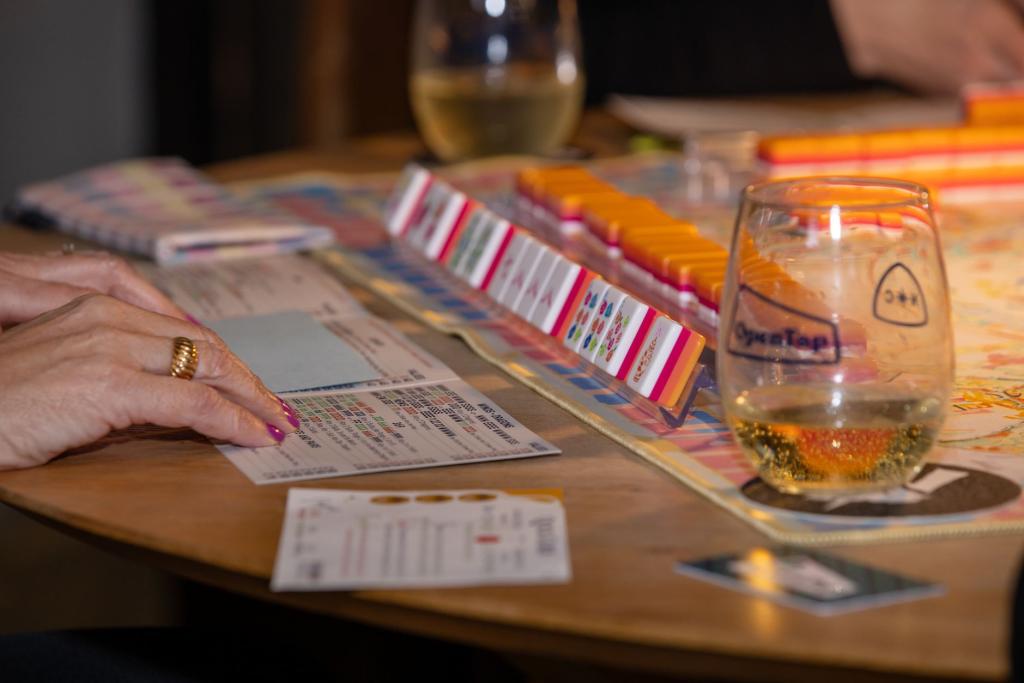
In years past, a Friday night for young Sydneysiders meant a queue outside a Kings Cross bar or a round of tequila shots to kick off the weekend. These days, connection shows up somewhere else: between the click of mahjong tiles, the chalk dust at a bouldering gym, or trainers hitting the pavement at dawn. Gen Z drinking less is not just a statistic anymore. It is becoming a whole social scene.
Young people are drinking less than previous generations, and they are building communities in what sociologists call third spaces instead. The numbers say the shift is real, and Sydney is where it is most visible right now.
The numbers behind the shift
A Flinders University study tracking alcohol consumption among more than 23,000 Australians over two decades found that drinking is on the way out for younger generations. The researchers used data from the Household, Income and Labour Dynamics in Australia survey to follow five generational groups, from the Silent Generation born before 1946 to Gen Z, born between 1997 and 2012.
The headline finding is striking. "Gen Z are nearly 20 times more likely to choose not to drink alcohol compared to Baby Boomers," the researchers said, even after adjusting for income, education and other socio-demographic factors. The paper, titled "OK Boomer" and published in the journal Addiction, is the first Australian study to use longitudinal data that separates the effects of getting older from genuine generational change.
"This isn't just a phase," lead author Dr Gianluca Di Censo said in a statement published by Flinders University. "It appears to be a sustained change in behaviour that could have long-term public health benefits." The study also found that Gen Z not only abstains more often but drinks significantly less per week, while millennials are drinking less than Baby Boomers too, further evidence that Gen Z drinking less is part of a broader cultural shift rather than one generation's quirk.
Industry data backs up what the researchers found. According to new ClassPass research reported by Newsworthy, 53 per cent of surveyed users aged 18 to 34 booked a workout or wellness experience instead of drinks or nightlife in the past year, and more than half said they had suggested a workout to a friend instead of drinks.
Sydney's new third spaces
Rose Marie (Lim) Pengelly saw the change up close. "A lot of the younger crowd ... are not necessarily drinkers," says Pengelly, founder of No Flowers Mahjong Club. "That's why they love mahjong, because you actually can't drink when you play mahjong. You have one drink, and you're like, 'What was that?'"
In November, Pengelly founded the club as a beginner-friendly Hong Kong-style mahjong night, and it now runs weekly social meetups across Sydney's city centre, popping up everywhere from the Ace Hotel to PS40 to the Mitchell Reading Room at the State Library of New South Wales. She describes the draw as instant belonging: "You're all here because you all want to connect, and you all love this game."
The game's pull started earlier for some. Wayne Lee, 20, an events director of the UNSW Mahjong and Chinese Boardgame Society and a volunteer teaching assistant at No Flowers, first picked up mahjong in Year 12 because he was too young to drink. He and his friends chose the mahjong sets beside the pool tables at Sydney's Cityheroes billiard hall. "How about we try that," he remembers saying, "instead of playing pool for the seventh time this month?" Over 150 people turned up to his mahjong O-Week event this year, with about 40 members returning weekly since.
Across town at the Blochaus bouldering club in Marrickville, young Sydneysiders find that community is built into the sport itself. "Even if you're doing a solo climb," says regular Kylie Chan, "there's multiple people working on one problem to solve it together. So even when you go solo, it can turn into more of a community experience."
For Chan, bouldering has not replaced drinking. She still drinks socially at birthdays and dinners, but says the sport has definitely added to her social life.
The power of the sober sprint
One of the clearest signs of the shift going mainstream came in August, when 90,000 runners packed Sydney's streets for the City2Surf. A 2025 report from the Clearinghouse for Sport found running was the most popular form of exercise for Australian youth aged 15 to 24, while Strava recorded a 3.5-fold increase in run clubs formed from 2024.
Brianna Liao, 20, joined the movement by accident. She started running toward the end of 2024 out of curiosity, joining her boyfriend on regular runs, with cutting back on drinking "more at the back of [her] mind." By early 2026 it had become a habit. "Running was giving me something that drinking never really could," she says. "I've genuinely felt such a difference in my body and how I feel since cutting back. At this point, drinking just doesn't feel particularly attractive to me anymore."
Earlier this year, a Sydney run club made headlines with a viral video captioned "Sydney is replacing night clubs with this," showing a mass of young people on a pre-dawn run. The video split opinion, with some people criticising the state of Sydney's nightlife and others cheering a generation prioritising health and wellbeing.
The cost of connection
There is a simpler force driving the switch too. Lee points out that a single drink costs roughly $10 to $20 for "maybe five [minutes of fun] if you stretch it out," while a mahjong table costs about $15 an hour, split across up to seven people rotating in and out. Chan's bouldering pass is $18 for an entire day. Running, meanwhile, needs little more than a decent pair of shoes. "Especially in this economy," Lee says, "that's a financially wonderful way to spend one hour."
Co-author Dr Kirrilly Thompson says young Australians are growing up in a world where "abstaining from alcohol is increasingly normal, and where digital socialising, rising living costs and health awareness are reshaping how people spend their time and money."
What ties mahjong, bouldering and running together is not abstinence. It is connection and community without the next-morning hangover or the heavy price tag. Across a mahjong table in Surry Hills, a bouldering wall in the inner west and a running path along Bondi Beach, the pattern keeps repeating. Gen Z is not waiting for a nightclub to hand them a social life. They are building it themselves.
Related reading: Gen Z Loves AI Shopping but Will Dump Brands Over It and The Gen Z stare Is a Myth: They Make More Small Talk Than Anyone.
Comments 0
No comments yet. Be the first to share your thoughts!
Leave a comment
Share your thoughts. Your email will not be published.