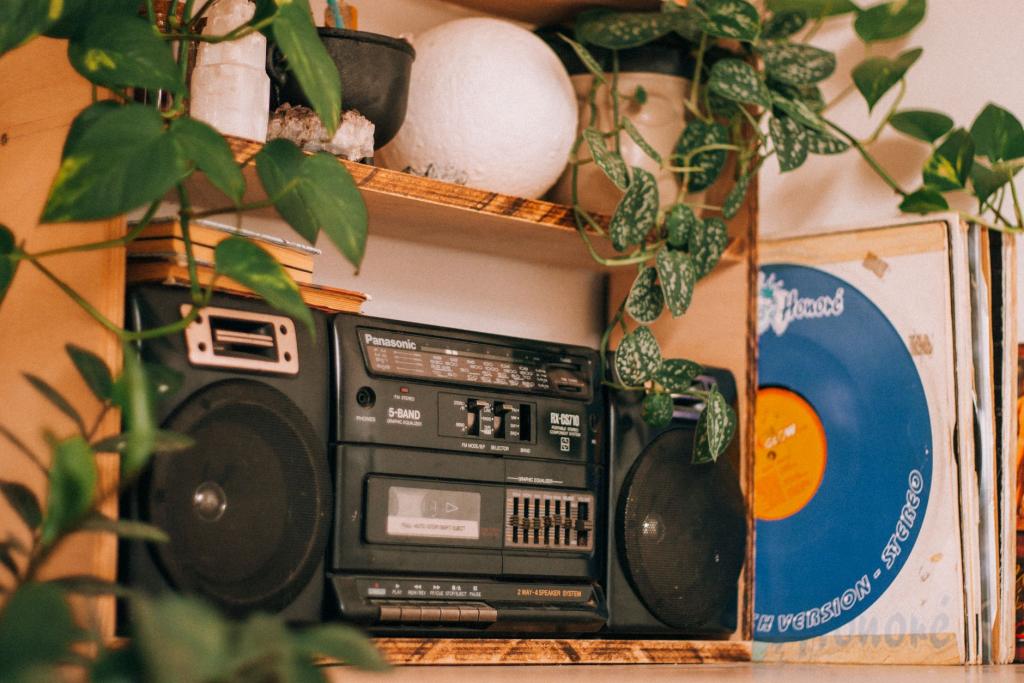
The most digital generation alive is going analog, and researchers are calling the wave Gen Z analog nostalgia. According to a new study from YPulse, a market research firm focused on youth intelligence, two-thirds of people ages 13 to 39 say they are turning to analog tech. Flip phones, film cameras, record players and Polaroids are back in rotation as a practical exit route from apps engineered to keep them scrolling.
Yearning to unplug, younger consumers are snapping up vintage tech in an effort to escape addictive apps and stay offline. They are also replacing endless scrolling with what the report calls "granny hobbies," like crocheting and photography, a shift of a piece with the boom in Gen Z estate sales hunting vintage treasure. The word researchers use for the pull is anemoia: longing for a time you were not even alive for.
The study behind the analog summer
Dr. Don Grant, a media psychologist and national advisor on healthy device management for Newport Healthcare, told the New York Post that this goes further than rose-tinted longing. "Nostalgia may have sparked the trend, but it's the benefits," Grant said. "It started as nostalgia, this whole return to the analog deal, but it's sticking because it feels good."
The sales data backs him up. Brick, the $59 device that physically locks a phone to limit distractions and doomscrolling, saw downloads jump nearly 600% year over year in January, according to estimates from research firm Sensor Tower. Flip phone purchases among users ages 18 to 24 increased 148% between 2021 and 2024, according to a 2024 report from the Partners Universal Innovative Research Publication.
Film is following the same curve of Gen Z analog nostalgia. According to Fortune, roughly 35% of film camera users are now under 30, even though the smartphone in their pocket can shoot circles around a point-and-shoot. YPulse's own reporting on the trend notes that eBay saw steady increases in vintage camera sales, with Canon, Nikon, Pentax and Leica all climbing between 42% and 79%, while Etsy recorded a 76% jump in searches for SLR cameras.
For some young people, the answer is hardware plus boundaries. Autumn Parks, a 27-year-old stay-at-home mom from Indiana, told the Post she keeps her Brick on a schedule so it locks her out at 10 p.m. and unlocks at 8 a.m. "I usually don't unlock it," she said of the moment her phone becomes available again. "So then naturally my screen time has lowered." Her reasoning is blunt: apps are engineered to defeat self-control through infinite scrolling, endless notifications and addictive algorithms, and at some point she stopped believing willpower alone could compete.
Why "regulation" beats nostalgia
Grant's read on the trend is that the driver has changed. "This isn't an anti-tech movement; it's an anti-overload movement. Analog isn't nostalgia necessarily; it's regulation," he said. That framing fits what young people describe: they do not want a world without phones, they want a phone that does less, a camera that makes them wait for the photo, an evening that does not get eaten by the feed.
There is a catch worth noting. YPulse's 2025 Tech/Device Usage report cautioned that the headlines overstate how many young consumers actually own vintage tech, with the real ownership numbers running lower than the "cool again" stories suggest. The trend may be real in attitude and visible in sales spikes, but most young people still carry a smartphone. That is consistent with Grant's regulation framing. The goal was never to live in 2004 again. It is to borrow some of 2004's friction and put it between themselves and the scroll.
That matters because the design of the problem has not changed. Apps still compete for attention with the same machinery Parks described. What has changed is that a generation raised inside that machinery is naming it as the problem, and buying older machinery to get some distance from it, joining the broader pullback from high-stimulation living that has Gen Z drinking less and swapping bars for mahjong, bouldering and dawn runs. Anemoia may have started as a feeling about the past. It is turning into a strategy for the present.
The New York Post reported on the YPulse findings on September 25, 2026, drawing on the study of 1,500 young consumers and interviews with Dr. Grant.
Comments 0
No comments yet. Be the first to share your thoughts!
Leave a comment
Share your thoughts. Your email will not be published.