The France riots have shaken the country after a huge day of cost-of-living marches turned into arson, looting and clashes with police. Authorities say thousands of people were arrested, and a historic town hall in Limoges was nearly destroyed.
What happened on Saturday
Hundreds of thousands of people marched across the country on Saturday against rising fuel prices, low wages and struggling schools. According to the Associated Press via ABC News, authorities estimated turnout at about five hundred fifty thousand, while organizers put it closer to eight hundred thousand.
The marches were called by a labor union, student groups and activists hoping to revive the yellow vest movement, which began in 2018 over fuel taxes and grew into a fight over inequality. In many places the day started peacefully, and a group of young people told the BBC they were pacifists who just wanted change.
As evening came, masked groups lit fires, torched vehicles and ransacked shops. Burning cars lit up Place de la République in Paris, and riot police used tear gas, batons and water cannon in several cities. Marseille, Lyon, Avignon and Grenoble all reported attacks on public buildings or businesses.
Limoges town hall goes up in flames
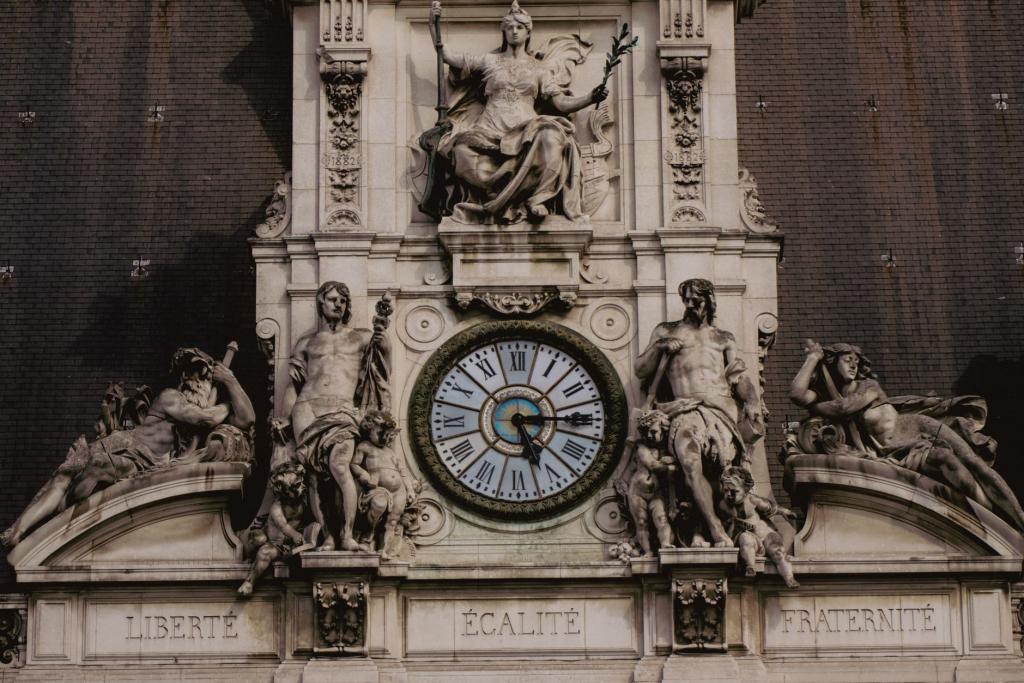
The most striking image came from Limoges, a city in central France known for its porcelain. According to DW, rioters set fire to the historic city hall, leaving much of it gutted. Local officials said the roof collapsed and the nineteenth-century building was nearly destroyed.
The regional prefect said radical troublemakers broke in while elected officials, employees, security staff and members of the public were inside. Mayor Guillaume Guerin told broadcaster LCI that the country is in chaos, adding that there are no words to condemn what happened.
In Marseille, protesters used a metal fence as a battering ram to get into city hall and briefly entered its lobby. A group in hoods and masks also damaged a police station there, while a fire broke out inside a tourist office in Lyon.
Arrests, injuries and the damage bill
The arrest numbers climbed through the weekend. Early tallies said about one thousand two hundred people, then about one thousand eight hundred, and by Sunday authorities were reporting almost two thousand four hundred. Paris police alone reported eight hundred fifty-five arrests, which they called a record, and prosecutors said hundreds remained in custody.
Police were hurt too. Reports on Sunday put injured officers near one thousand, and the prime minister earlier cited one hundred fifty. One person in Paris died of a heart attack, and prosecutors are investigating the circumstances.
Protesters were also injured. Le Figaro reported that a seventeen-year-old lost a hand to a police grenade in Saint-Etienne, and prosecutors in Mulhouse opened an inquiry after a seventeen-year-old girl lost an eye. That has put police use of riot-control weapons under a sharp spotlight.
Shop owners are counting the cost as well. Hundreds of businesses were looted in Paris, Bordeaux, Nice, Strasbourg and other cities, and Paris Mayor Emmanuel Grégoire called the scale of the damage considerable and unprecedented.
Macron, politics and the road to 2027
President Emmanuel Macron addressed the nation on Sunday and said the country felt anger and shame. He said those who looted must pay for the damage and those who sought to bring down the Republic will be held accountable, and he separated protesters with legitimate demands from people who smashed and looted.
He also told prefects to work with mayors to protect public buildings and shops in the coming weeks, including by banning protests when necessary. The government has blamed a highly organized far-left group, though Jean-Luc Mélenchon, who joined the Paris march, said looting has no place in the movement.
Marine Le Pen accused the government of being exhausted and powerless. The unrest also lands ahead of the presidential election in spring 2027, with anger over living costs colliding with tight limits on government spending because of France's high debt and deficit.
US President Donald Trump posted that France is burning and tied the unrest to immigration, but AP notes that French authorities and police have not linked immigrants to the rioting.
Why it matters
For young people in France, the story is bigger than one night. The marches were fueled by school conditions, fuel costs and wages, the same pressures many students everywhere feel. The risk now is that the violence drowns out those demands and gives the government a reason to crack down.
Even so, the scale is hard to ignore. The arrest count is close to the roughly two thousand recorded during one day of yellow vest protests in December 2018, according to the AP. The mayors of Paris, Marseille and Lyon have asked to meet the prime minister this week. For more global coverage, check our world news section.
Comments 0
No comments yet. Be the first to share your thoughts!
Leave a comment
Share your thoughts. Your email will not be published.