The U.S. Army detonated the country's entire stockpile of lead azide at the Iowa Army Ammunition Plant in Middletown, Iowa, on Wednesday morning, ending a weeks-long standoff over a decaying explosive that officials said could go off on its own. According to reporting by The Guardian, the controlled blast happened at about 10 a.m. Eastern time and destroyed roughly 9,700 pounds (about 4,400 kilograms) of the chemical.
The early readings were good news for nearby residents. The U.S. Environmental Protection Agency said in a news release that one hour after the detonation, all of its real-time air monitors were reporting zero detection of airborne lead throughout the region. Those are first readings, though, not a final verdict, and testing of soil, dust and water is still under way.
What lead azide is and why the Army blew it up
Lead azide is a highly sensitive compound made of lead and nitrogen. As PBS NewsHour reported, it is used as an initiating explosive in detonators and blasting caps, the small charge that sets off a bigger one such as TNT. Because it contains lead, the main health worry was never only the boom itself but the toxic dust a blast could throw into the air.
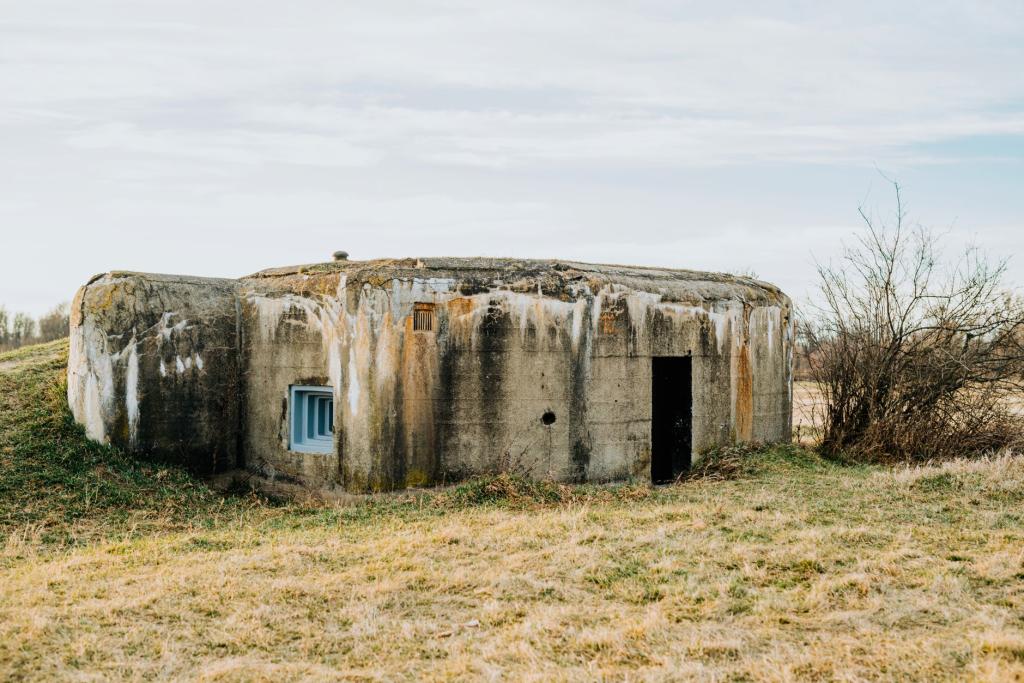
The Middletown supply was old. According to PBS, the material had been gathered from across the country in 2009 and kept in bunkers at the plant. During a routine inspection in March, staff found that it had partially crystallized. The Army warned that this made it more and more sensitive to friction, shock and cold, which raised the risk of a spontaneous explosion as winter set in. That is why officials argued that leaving it in place was the bigger danger.
How the detonation unfolded
The blast came after a messy run-up. Here is how the timeline developed, based on reporting by PBS and The Guardian:
- 2009: Lead azide from around the country is consolidated in bunkers at the Iowa Army Ammunition Plant.
- March 2026: A routine inspection finds the stored material has partially crystallized.
- Last week: The detonation is first scheduled, then delayed amid public concern, environmental lawsuits and a temporary hold ordered by President Donald Trump pending court rulings and local sign-off, according to The Guardian. PBS reported it was the third time the Army changed the date.
- Monday, November 23: A federal appeals court clears the way after finding that the EPA and the Army had adequately built in safety measures, The Guardian reported.
- Tuesday, November 24: Officials warn residents near Middletown to be ready to evacuate to avoid toxic dust, according to PBS.
- Wednesday, November 25: The Army carries out the controlled detonation at about 10 a.m. Eastern time.
To keep lead dust from spreading, the Army put barriers around the blast zone and used ballistic gels to absorb the dust, PBS reported, along with foams and thousands of gallons of water. The Federal Emergency Management Agency sent emergency alerts advising people within a 20-mile radius, including Middletown, Augusta and Burlington, to shelter in place with their windows closed. The wind was expected to blow southwest, away from Burlington and the Mississippi River.
The Guardian reported that the blast risked releasing plumes of toxic chemicals across a 100-mile radius, with the projected path shifting as forecasts changed. Images and local reports showed a white plume of smoke rising over the area right after the explosion and then dissipating quickly. Some residents and reporters described a loud boom and a shockwave, while others found it underwhelming.
What officials are saying
Federal officials described the operation as a success. EPA Administrator Lee Zeldin said the blast "caved inward perfectly," according to The Guardian. In the agency's statement, Zeldin said the EPA had collected 1,200 samples of air, land, dust and water before the detonation, and that its 300 employees and contractors on the ground would keep "taking samples of air, land, and water, and deploying remediation efforts if necessary." The EPA also launched a website where the public can follow live air readings along the plume route.
Acting Army Secretary Adam Telle said "the threat of an uncontrolled spontaneous detonation has been eliminated," The Guardian reported. Maj. Gen. Eric Shirley said that all of the barrels were removed and destroyed with no secondary explosions or damage to infrastructure, and that the risk to health and safety was cut "as close to zero as it's absolutely humanly possible," according to PBS. He added that the result "wildly exceeded my expectations."
Why it matters, and the open questions
Not everyone is ready to move on. Iowa Gov.-elect Rob Sand called for immediate transparency about how the stockpile became a crisis in the first place. According to The Guardian, he said that while federal officials reported limited dispersal, further testing over time will provide certainty. The Iowa Environmental Council argued that Iowa and neighboring states are owed a full accounting of how the aging chemical was handled, PBS reported.
For people who live and farm near the plant, the concern is longer term. PBS reported that some residents and farmers are still worried about lead in soil, crops and livestock, and environmental groups have raised questions about runoff into water. Others near the site said the explosion itself felt minor compared with the warnings, with one saying simply, "it was nothing."
The key point for now is the gap between air and ground. Zero airborne lead in the first hours is a strong early sign, but it does not by itself rule out lead settling on surfaces nearby. The EPA says sampling of land and water will continue over the coming days, and those results, not the first air readings, will show whether the containment held all the way down. Anyone in the area with questions can reach the EPA's public line at 1-833-649-9624, according to the agency.
This story is based on reporting by PBS NewsHour and The Guardian and on a statement from the U.S. Environmental Protection Agency. It will be updated as soil and water test results are released.
Comments 0
No comments yet. Be the first to share your thoughts!
Leave a comment
Share your thoughts. Your email will not be published.