Microbiologists have filmed living Asgard archaea, the closest known microbial relatives of all animals, plants and fungi, crawling across surfaces by reshaping their cells. The study, led by Philipp Radler in Christa Schleper's laboratory at the University of Vienna, was published September 30 in the journal Nature. The crawling motion was previously seen only in eukaryotes, and its presence in these ancient microbes suggests complex movement evolved far earlier than thought.
Asgard archaea sit at the center of current models of the origin of complex life. Scientists believe the first eukaryotes emerged about two billion years ago, when a bacterium fused with an ancestor of today's Asgard archaea. Until now, however, almost everything known about these microbes came from DNA sequencing and frozen electron-microscope images. Their living behavior had never been observed.
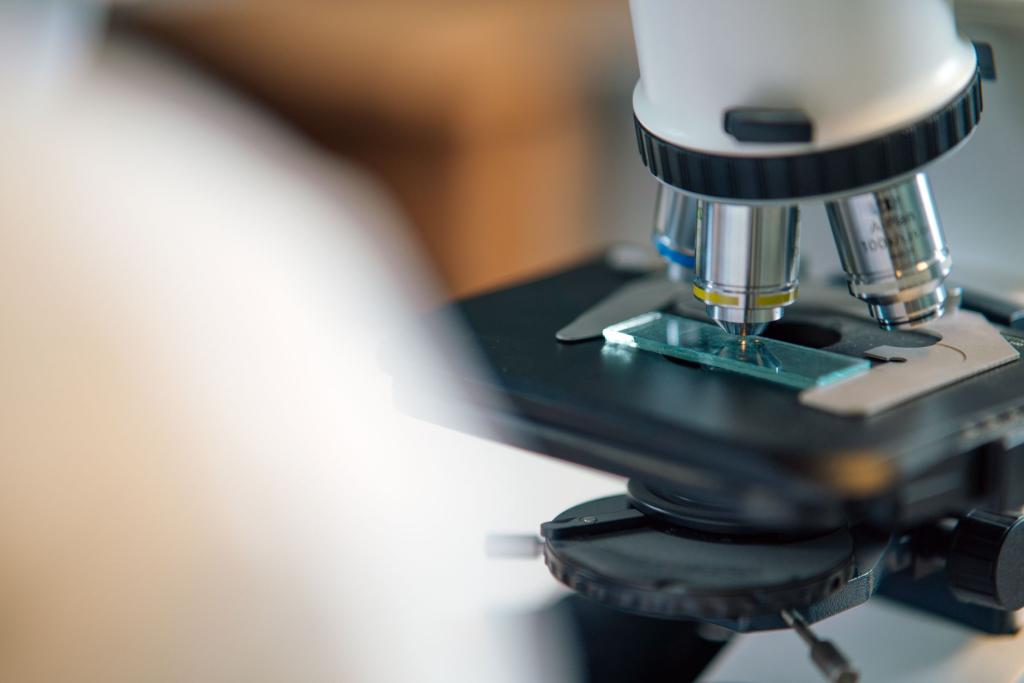
To observe it, the Vienna team placed the cells in an oxygen-free environment and filmed them under a microscope, the first oxygen-free live-cell microscopy achieved with these organisms. The cells changed shape dramatically every minute, pushing out long protrusions, pulling them back and using them to grip surfaces and crawl. According to the study, the movement resembles the crawling of human immune cells.
Caught alive under the microscope
The team worked with a Lokiarchaeon strain grown in Vienna and a Heimdallarchaeon strain grown in Japan by scientists at the JAMSTEC institute, who are co-authors of the study. Cultivating Asgard archaea is notoriously difficult. The first specimens were grown only in 2020, in Japan, and then in 2023, in Schleper's Vienna laboratory. Before that, researchers could only guess at their behavior from genetic data and still images.
Those still images were striking. Electron microscopy had shown a round cell body ringed by delicate projections that can stretch to twenty times the length of the cell body. But a still image cannot show movement, and movement turned out to be the main finding. The cells, whose volume is about a thousand times smaller than a human cell, explored surfaces with a novel crawling motion that had not previously been described in microbes.
To find what drives the crawling, the international team, which included collaborators from IST Austria and HZI Braunschweig in Germany, treated the cells with actin inhibitors. The drugs suppressed the shape changes and the crawling. The result points to an actin-based cytoskeleton, the same fundamental machinery that controls shape changes and motility in human cells. Earlier research had already identified an actin-like protein, Lokiactin, in these microbes; the new work shows that machinery in action, driving live movement.
Why it matters for the origin of complex life
The finding pushes the origin of complex cell movement back to before the first eukaryotes existed. That has direct bearing on how the first complex cells may have formed. One hypothesis, known as the inside-out model, holds that an ancient archaeon used protrusions like these to reach out to neighboring microbes and eventually engulf the bacterial partner that became the mitochondrion. According to a Nature news feature, cell biologist Buzz Baum of the MRC Laboratory of Molecular Biology said the new observations fit that model.
Schleper said the results were exciting and that each new experiment with the cells reveals something unexpected. More importantly for the field, the study makes it possible to test models of the origin of complex life by direct experiment rather than by DNA comparison alone, the first time such empirical tests have been possible.
What comes next
The Vienna team and its collaborators plan further experiments to map the proteins involved and to learn whether the protrusions help the microbes capture partners. Open questions include how widespread crawling is among other archaeal lineages and whether this ancient movement machinery is a direct ancestor of the actin cytoskeleton in human cells. The answers could reshape the story of how simple microbes became complex life.
Radler, P. et al., "Dynamic protrusions mediate crawling motility in Asgard Archaea," Nature (2026). DOI: 10.1038/s41586-026-11063-9. Reporting via Phys.org.
Comments 0
No comments yet. Be the first to share your thoughts!
Leave a comment
Share your thoughts. Your email will not be published.