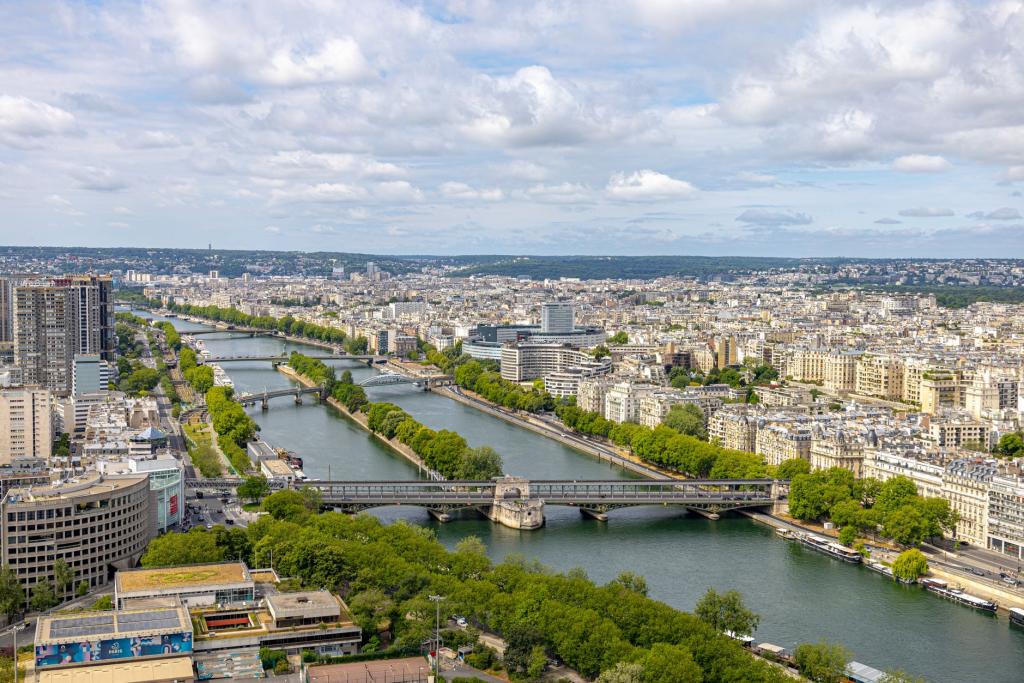
Paris just won the world's top prize for turning a concrete jungle into a living one. On September 15, during the 78th AIPH Annual Congress in Bari, Italy, the International Association of Horticultural Producers named Paris the Grand Winner of the 2026 World Green City Awards for its "Retrofitting Paris into a biodiversity friendly city" initiative, according to AIPH's official announcement.
The win puts a global spotlight on how the French capital is weaving plants and green infrastructure into buildings, streets, and public spaces to restore ecosystems, cut climate risks, and reconnect nature across the city. Green roofs, new parks, ecological corridors, and large-scale tree planting sit at the heart of the effort, which takes direct aim at the city's limited green space, rising temperatures, and the urban heat island effect. The green city awards recognize cities that embrace nature-based solutions to address the major challenges facing urban communities.
Jury member Kotchakorn Voraakhom, CEO and founder of LANDPROCESS and the Porous City Network, said Paris stood out for showing that even a crowded, historic metropolis can bring nature back. Rather than simply advising developers, the city made greening a legal requirement, she noted, with a target of greening 5,000 social housing units a year and scaling up to 40,000 private condominiums annually by 2030. AIPH Green City Committee chair Bill Hardy added that this year's edition featured some of the strongest entries yet, with many submissions expanding what their categories could cover through innovation and measurable impact.
Green roofs, sponge soils, and a city without pesticides
The science behind the plan is straightforward: vegetation cools. Data cited in the AIPH case study on Paris shows greenery can lower urban temperatures by 2.5 to 3 degrees Celsius on average, while tree canopy can cut them by up to 8 degrees during heatwaves. That matters in a city where Météo-France described 2022 as "the summer of all records," and where summers comparable to the deadly 2003 heatwave are expected to become normal by 2030. The coolest corners of Paris today, the Bois de Boulogne, the Bois de Vincennes, and Père Lachaise cemetery, are also its most vegetated.
To spread that cooling effect, Paris wants to become a "sponge city," restoring soil permeability across at least 55 percent of its territory by 2050 under the ParisPluie plan adopted in 2025. Thirty green roofs across the metropolitan area are being monitored in the regional biodiversity agency's "Grooves" study on verified ecosystem services. According to the AIPH case study, early results show the roofs hold large amounts of rainwater depending on substrate depth and composition, and spontaneously host more than 268 species of plants and mosses, proof that even dense rooftops can function as biodiversity reservoirs.
The city also changed how it maintains its green space. Paris was one of the first global capitals to eliminate chemical pesticides, completing the ban in 2015. Maintenance now adapts to each site's ecology, letting some areas grow wilder and richer in wildlife, while eco-grazing cuts mechanical work and fertilizes soils naturally. The Paris Green and Blue Infrastructure Scheme, known as Les Chemins de la nature, has been folded into the regulatory framework, treating nature as structural city infrastructure rather than decoration. That shift is locked in through a set of city-wide policies covering the climate, bioclimatic planning, biodiversity, health and environment, sustainable food, rain management, and trees.
Eight winners and a youth prize from the Congo
Paris beat out 21 finalists to take the grand prize, and seven other cities took home category wins. Surrey, Canada won for biodiversity and ecosystem restoration; Ahmedabad, India for its "Mission Million Trees" drive to plant 14 million trees; Fortaleza, Brazil for health and wellbeing; Malacca, Malaysia for water; Chiang Rai, Thailand for social cohesion; Mexico City for urban agriculture through its Programa Altépetl; and Sheffield, UK for urban infrastructure and livability.
The youth angle may be the most exciting part. The AIPH Youth Award, run with the Global Youth Biodiversity Network, went to Bunia in the Democratic Republic of the Congo for its "Bunia Climate-Shield: A Green Belt for Urban Resilience." A jury of 14 young professionals picked the winner from the finalists. The project turns schools into hubs for urban greening and water management, combining tree planting, school gardens, agroforestry, and planted water systems to fight flooding and erosion, restore ecosystems, and strengthen food security. More than 6,000 students are already involved, learning practical skills while directly building their city's resilience.
Why Gen Z should care about a greener Paris
This is not just a feel-good trophy. The heat that made 2022 the summer of all records is the same heat now scorching much of Europe every year. For more on how brutal those summers have become, see European wildfires are the new normal for Gen Z summers. Paris is betting that plants can do real work against that trend: cooling streets, soaking up stormwater, filtering pollution, and giving people space to breathe.
The bigger message from the green city awards is that the playbook is open source. Cities are copying one another, and AIPH is publishing the winning projects as case studies so others can follow. If a two-thousand-year-old city built on stone can write greening into law and let its rooftops go wild, newer cities have fewer excuses. For a generation that will spend most of its life in cities getting hotter by the decade, that might be the most important result of all.
Comments 0
No comments yet. Be the first to share your thoughts!
Leave a comment
Share your thoughts. Your email will not be published.